A question in the mindset of Mrs Merton.
What first attracted you to the role of Education Director (part time) in Nottingham, after all the City now “runs” very few schools?

Not so long ago this role would have been one of the biggest in education in Nottingham running secondary, primary and special schools, responsible for everything from admissions to outcomes and most stuff in between for about 41,000 children. As the ‘new world’ of academisation has emerged resources have passed from the local authority to the new trusts except for some statutory services. As the landscape no longer looks the same, the role of a City Education Director needs to change and I’m not sure anyone in any LA has worked out how, but we are well on the journey in Nottingham. Much of that is thanks to the pioneering work of Pat and Sarah Fielding and their excellent work in many areas pre-eminently with our City Primaries and with safeguarding. So how does it appear picking up the reigns?
For me, there is still a rather wonderful, overwhelming desire by everyone I meet in the City linked with education, they want to improve the lives of young people. Whether I speak to people at the City LA : SEND colleagues, those working out how best to help refugee and asylum seekers with EAL issues, those working with the very special, children in care, they have massive professional and personal commitment to their roles. When I have spoken to headteachers, teachers and CEO’s of Trusts or governors, they always begin by talking about children, young people, families they are working with and only rarely and then usually a moan about systems and structures. Hang it I even found the same in my meetings with Ofsted inspectors, with the RSC and other ‘officials’ – what can we do to improve things – though of course some of the latter are stuck with their systems. There are actually good starting points from organisations like EEF, who are also keen to help Nottingham. I think we are also fortunate with our local and national politicians who are supportive, understanding and yet not afraid to challenge us all.
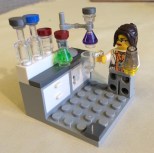 As a chemistry teacher who has loved the job in the classroom, and on corridors, who was challenged and supported in school leadership roles I loved working with young people and…still do. At the heart for all of us is working with children to help them learn from all their opportunities and that is my hope, to bring something of that perspective to the role. Working in partnership and in collaboration.
 A key energy for us in the City is so-called school improvement, frankly I don’t really like the title and as a headteacher refused to have a SIP (school improvement plan). I wanted a “school development plan”. Schools are full of people trying to do their very best, and we can’t keep asking for more and more. Schools might be able to genuinely improve some parts of their work and service but they face almost constant and considerable change. As a teacher I might work to understand how assessment works for my GCSE students, how best to help them learn science, to achieve and how to motivate them and excite them – but then…aha, the content changes (probably not too much) and the assessment changes (probably a lot) and the way me and my school are made accountable for their progress changes.
  Then my next class have different needs, a child coping with bereavement, one struggling with domestic violence, one with mental health pressures, one just lost in the world and a fair few just confused by my explanations. In classrooms, in staffrooms and in head’s offices alongside governor meetings there are always discussions happening to see how to help the children learn. As well as staff having to manage the wider changes in technology, in policy, in society and in the world around us. For me improvement and progress are part of the school day, routines, habits not goals. It’s not about forever improvement it’s about having the best job in the world and feeling you are doing a great job for young people because that’s why you came into the role, and we need to support each other and make it a sustainable rewarding job.

So knowing classrooms reasonably well, understanding a good bit about leadership from long experience and something of the local educational world from most of my working life spent in Nottingham, you know what? I think I might be able to help make a difference working alongside you.
Sometimes it does feel impossible, even just in secondary our 17 schools are in 9 very different multi academy trusts, complex communities. We have great Universities, we have a revitalised FE sector wanting to help but they are big organisations. We have agencies like Futures and a voluntary sector, often with great ideas but struggling to get engagement as they see it. It feels impossible when data shows a disappointment, maybe a dip in achievement or progress or a bump in attendance. However, whoever I have spoken to, they are willing to roll their sleeves up look at the problem and try to find a solution. ( heck, we chemists are good at that too) …and the starting point – what can we do to improve this situation and improve things for those children. So I hope to bring partners together and improve the landscape, to eventually proved some agreed strategic direction, and to work with the Education Improvement Board to do just that….Improve Education.
 Nottingham is the 4th poorest City in England, we have some long-standing historical deprivations and some major lack of aspiration but you know what, we have a workforce and a commitment from the professions second to none, and a personal effort from so many showing time and time again a willingness to go the extra mile. We have some great young people, and large numbers who buck trends. At Trinity, I often spoke to the staff, children and parents about hope – ‘there is always hope’. It’s my hope to help make partnership work, have high levels of collaboration, to share good ideas that genuinely work, and to try and find solutions to complex problems in order to bring hope to the children in Nottingham and pride to their families, friends, teachers and themselves.
Here’s hoping you will be able to find some time and energy to commit to working with us on the project!


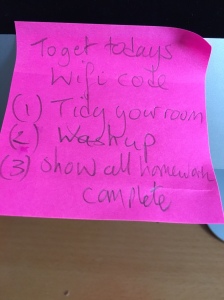
 We began by asking our pupils a series of questions – we did make an important assumption that our community of parents, pupils and teachers see a value in homework so this wasn’t about forgetting or abandoning homework. It was more to pinpoint any stressful areas for each group and see what improvements we might make.
 The following action points came from the pupils:
 The following action points came from parents.


 Why would you want to do a PGCE? It is often a question that gets put to me by many of my family and friends, as well as people I’ve just met, on an almost daily basis. Many people see the headlines in the newspapers and the media portrayal of the teaching career is one which may scare many potential student teachers out of teacher training. So why should people consider it?
 As touched upon earlier, other student teachers will play an important role in your year! The friendships and professional relationships you develop with each other is another exciting element to the course, and by supporting and helping each other, the time spent on the PGCE course will go by even faster, on a course in which the weeks already fly by! Another advantage of developing lasting friendships on the course is the sharing of good resources between each other. This will not only help build up a ‘bank of resources’ which you will find useful for your NQT year, but also help to reduce the time spent on creating resources, helping to create a better working-life balance.
 . You need a big erudite quote talking to a load of PGCE mentors at a prestigious University so I went for a Cloughie quote.
  The school curriculum, the school content never changes hey have in my subject I can tell you a topic like Solubility has come and gone and came back it. The Born Haber cycle was in then out then back in a new form then gone and I’ve not checked the new specs!
 ot just about knowledge. Back in the day when I did a PGCE we had what we called books and if you were asked a question the answer was in a book so you found it there or bluffed. Now you can google it, so can pupils, but learning is much deeper matter and, it’s really all about
 re understanding not teaching to test – PPS (past paper syndrome). No teacher reading this hasn’t had the frustration of a pupil asking “whats in the test?” or doing past papers sometime in January and not doing very well. We need to use our own deep understanding of our subject to show pupils just how to grasp, understand, learn and progress.
 the screen appears the word “pop” what do you think of that? It’s quite nice but I’d rather g
 ep up with our knowledge, we should enjoy that. It will get us excited: a new material anew discovery, scientist on the international space station. I teach my pupils about DNA and the structure and hydrogen bonding and it’s fascinating and actually give them the 1953 article (a single side of A4 paper) that was in nature and I remind them that in




 Mr John Dexter blogs about school