So thought it might be appropriate for a small reflection on the rather excellent #learnfirst conference that I have been to today. There  were a couple of profound moments the second one was when was when Mick Walker (he the wise owl of QCA and curriculum) reminded us that the average age of teachers in the profession is 42. Though great to see so many today well under that age today. Hence his point that very few of them have taught without there being a national curriculum and an assessment system. They are ‘ after or during levels’ teachers not ‘life before levels’ teachers. So for a very experienced (ie old teacher) like me who started teaching in 1981 we were reminded of the more creative ( frankly happier) days before the NC when it was up to us to choose what to teach ( how to teach) and what to assess although in secondary schools we still had to prep for O Level or CSE etc. A second moment came from a tweet from a valued colleague who tweeted me in the middle of the afternoon “I hope you get time in the next few weeks to separate the lessons from the hollow truisms” it was a very important tweet and I think it’s a good reminder that some of the things we hear as teachers we know very well are true and in the twitter tweacher sphere can sound and probably are a bit trite especially to those not with you on a conference.
But there was inside that bubble a little key to a profound truth mentioned by Sean Harford and John Tomsett a reminder of what we came in the job to do and well worth us reminding those of us who are leaders why we still love the classroom. Shedding a light into the heart and soul of teaching, compared to “understanding employment law and cutting budgets”. But also a reminder to step back into the shoes of the teacher in the classroom. I did find myself feeling fairly optimistic in the morning because a number of comments and sessions just reminded us of the true purposes of being in a school and I think that was heartening mainly because so much of what I read and bother about even pick up from the odd conferences I go to, are focused on imposed “Stuff” appraisal, Safeguarding changes, OFSTED inspection frameworks, governance changes and yes budgets and employment law. I always try and talk with teachers and children every session every day to remind myself of our moral purpose. But hey ho such is the nature of being a school leader there are a lot of sideline issues, so I was glad to just clarify my head space and start to think again about issues like the differences between marking, feedback tracking and progress. I am as committed as anyone to ensuring we minimise overload but t’s worth a fresh visit to the topic from a big vista not just the finer details, as we do need a system but no system should overburden classroom teachers. However teachers will need to record something after all. JT gave another great story to say he likes to ‘break the rules’ and that’s OK because he is the head and I am totally with him, as leaders we need to be able to say to a parent or even a child ‘we do have data but let me tell you a bigger story’. it is really bad that we ever let education get to become well this child is 4.3.2.1b – actually we didn’t but it sure let like that. SH also made me think again about KS3 something I have done since publication of the Ofsted “wasted years” as to how we use KS3, and with every dept wanting more time for their KS4 we do need to look carefully. But Sean reminded us that there is no assessment at KS3 and thus KS3 should be more of an amazing curriculum adventure and not just the build up to KS4 I think that was a very helpful. I want our pupils to be inspired by passionate teachers in those three years between year 7 and year 10 and although I appreciate Shaw’s comments I do think we would need to start getting things prepared for KS4 because there’s just not enough time.
The final summary of this seemed to be that we should spend more time collaborating (agree) that we have to think how to engage those people that were unable to get to the conference ( agree – twitter is only a small world still for teachers, influential, growing arguably committed (Saturday conference!)) but we need to spread the story. Also that we should look to see if College of teachers would spur us all in the right direction ( again is the COT an issue dominated by twitter teachers?)
 Most important I think to say that assessment has got to put children first and children’s learning and if we get that bit of assessment right then it doesn’t matter on systems. That assessment helps us in classrooms and in pastoral work to show our children what to do next and as Mary Myatt reminded us to set high challenges. However at the other end of the school someone like me is going to have to be answerable to governors and to inspectors and perhaps others and then there is appraisal….So it’s worth just thinking what sort of system you set up in order to deliver those requirements. At least in school we can make our internal assessments suit our children and even if SATs or GCSE still feel like they are designed as something for measuring schools or measuring teachers we can grab back some control.

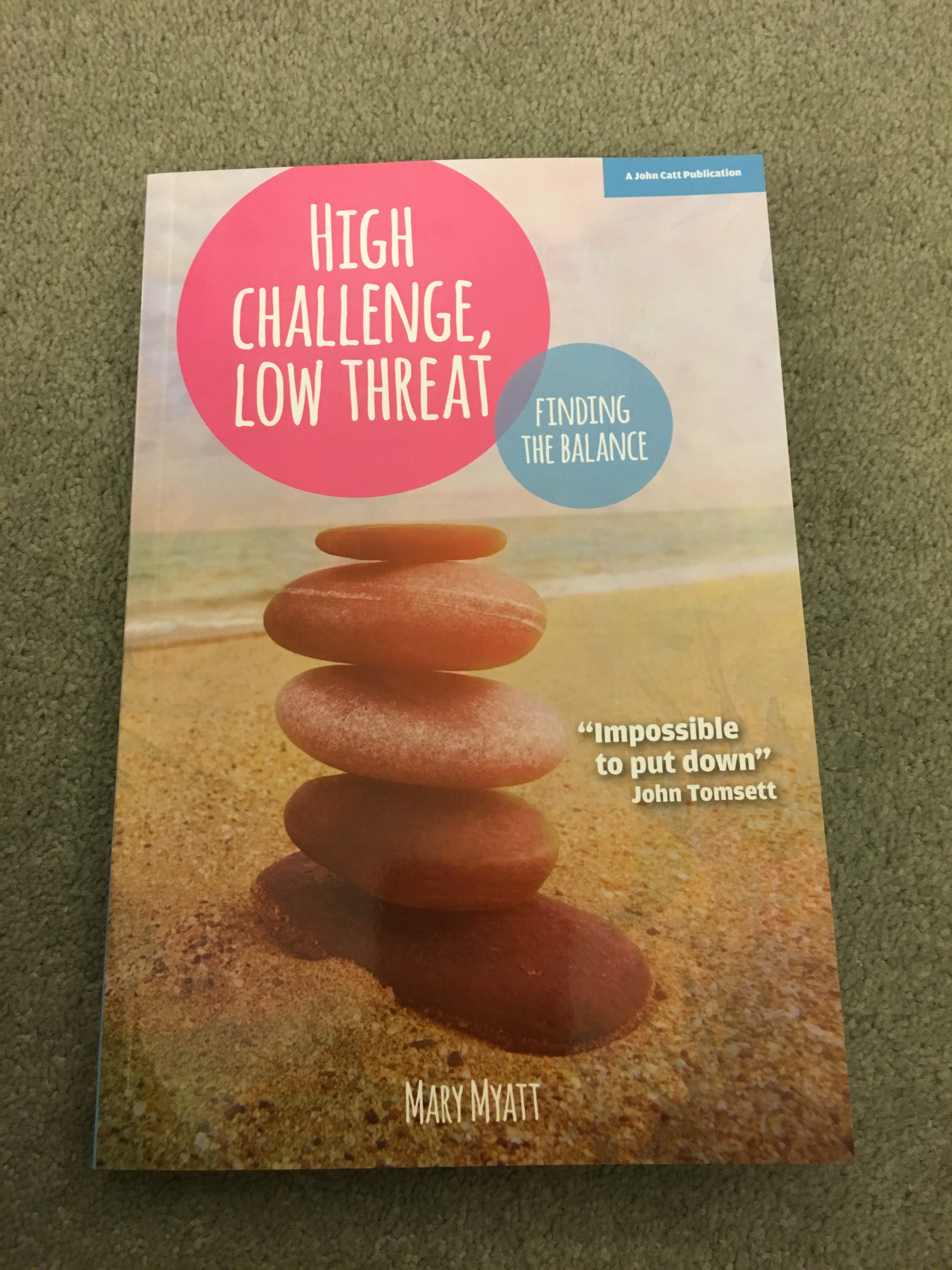
I think it was very good to see so many governor colleagues there to hear the same messages and help us as school leaders to think about what information they need but also for them to see that some of the information we used to produce is unnecessary. I gave in and bought Marie Myatt’s book ‘High challenge low threat” and will resist the temptation to pass it on before I have read it thoroughly. I love Mary’s commentaries and look forward to reading that and we’ll see if it makes any difference in our school. PS no reflection on Mary but I still have so much to read, dare I buy another without having applied all the ideas from the stack on my shelf?
As Mick Walker concluded, we need to face up to the fact that assessment isn’t a bad thing it has to happen, we have to see where children are and help them move on and when they can’t we need our creative minds and pedagogy, and we have to do a bit more formally at certain punctuated times in the year. The purpose should not be lost to help pupils as they make progress and therefore more important than assessment is what marking we do and what feedback we give but actually it doesn’t have to be onerous long written comments or elaborate : blue penguin 3.6, in red or purple pen kind of stuff. We do assessment all the time back in the lesson when we noticed a child not really listening that’s really assessment isn’t it and we challenge them and got them back on task to help make progress. It’s just we don’t record all that and put it in a spreadsheet and email for the head of department or the head teacher or the governors who then pour over it and comments come back down the chain but make no difference to learning.
As a teacher born of the 80’s and a trad kind of person it’s all a bit back to basics: spend time preparing, teaching, assessing and helping pupils learning by interventions from that assessing – record what you have to but use that to drive your planning, and in the middle talk to colleagues to find creative solution cause talking teaching and learning with colleagues is one of the best bits of the job.

Few thanks
Dame Alison Peacock for organising and inspiring
Prof Sam Twisleton for letting us into Sheffield Hallam
Teresa Roche who sent me a ticket when I nearly missed out
All the speakers and those who prepped stuff and the loads of enthusiastic teachers and Ed people who continue to remind me the Ed future might actually be safe.
oh and twitter people, some of whom came to life!
Oh and two of my favourite quotes
Ros Wilson – What you doing? Why you doing it? What will you do with it? If the answer is you don’t know -don’t do it.
Mary Myatt – “The word assess comes from the Latin assidere, which means to sit beside. Literally then, to assess means to sit beside the learner.”









 of the school systems such as those for behaviour management and discipline those for reporting problems and those for reporting achievements and awards and merits etc. You know when reports are due and mocks or tests come along BUT by now you should be able to work a system which suits you and your subject. No whole school assessment system can suit every subject, so where do you need to branch out? When do you need your own mock, when do you need an extra assessment. You also know the rhythm of school and seasons, for example it’s not a good idea to leave a really difficult 3 week topic to mid winter; you know when illness is at its worst and can sort out work around it. You have a sense of the need for a really really outstanding lesson to lift spirits ( yours and theirs). You know what to do about ill pupils, about those who get stuck ( see me after the lesson? – not really going to work is it; what does work?). So within this class this group add a layer of your own systems to supplement the schools




 s and spend a bit of time searching for new ones. Talk more with staff and pick their brains. think and plan ahead, ask around, join twitter or the TES forums and networks, get to a teachmeet. Hey throw that weight around and move from good to great!
 as of what worked too. Do that in department meetings, tutor team meetings and mostly just in conversations in the staffroom. build some self confidence as a teacher professional in helping others. I had a great RQT colleague a few years ago and she showed me some new resources and ideas….yep teach the old dogs in school, new tricks.
 All of us feel there were things we just about got away with, what were yours and what do you need to do about them? Did you not prepare for a parents evening but fortunately they were mainly pleasant. Did you let a pupil off but they didn’t bring any extra issues? Did the head ask for something and you forgot but heck so did she? What things must you do better?





 er helped out with questions that you had or issues that arose. Now you have to find them in other ways. There should still be a mentor and there should be a senior leader in charge of NQTs. Speak to them often. There should be a programme of support, get along, take notes listen, learn act. However systems can be complicated and schools have a habit of socialising them such that experienced teachers just seem to “know” what to do. So don’t be afraid to ask even the simplest of questions, however you might need to put aside time to get to grips with say ICT systems for management information, for reporting, for taking registers. Just ask, ask, ask. Pay attention at all those sessions on child protection, health and safety, data protection dealing with…. the school knows what it is doing training you, make sure you learn.
 ems non stop. You must work out a sustainable way for marking and feeding back. Guess what, that is just like the rest of us, so again ask, ask, ask. Don’t think you can spend 4/5 mins on every book for every class. BUT do not get behind, if you letting it slip, talk to your mentor. What is the school policy, mark every week, what do they mean by mark, and what are they marking? A lot of judgment rests on the quality of what is in a pupil’s book – mentors will look, other assessors, in due time Ofsted but perhaps more importantly parents and children. You can have a big impact here. Personally I am not a scary kind of teacher but I get good behaviour in part by what I put in books, odd comments about the written work but odd comments about behaviour, contribution:
  k these activities are vital

 d #NQTChat . The TES supplement “new teachers” published September 18th is a good read too. Meanwhile make sure you join a teacher union they often have lots of very useful stuff for NQTs. Here is a good article from the





 Mr John Dexter blogs about school