part 4 – from good teaching to great teaching


image
I am deliberately avoiding calling this “Good to Outstanding”. Ofsted can do what they wish but I want to see great teaching and learning and do very often. We teachers always try and produce good lessons and positive learning but we have bad days, pupils have bad days; whole school stuff disrupts, SLT disrupt! However we can consider moving from good to great with a sustainable manageable approach, bringing inspiration, inspiration, inspiration – that get’s pupils learning by definition! Here are my top ten:


1 Great teachers know their subject inside out

Not only do they have good knowledge of their specifications, they have a wide grasp of their subject. They understand it very well, they can apply ideas and synthesise them. This is not about pedagogy (yet) it’s about wisdom in the subject. It’s about keeping up to date, reading, identifying interesting stuff in the news or other media. It’s about maintaining a network of contacts to follow the latest developments. It might even be about visiting places of interest like museums or going to lectures, of picking up podcasts. It might even mean rereading text books. Always try to find time to read and expose yourself to new stuff in your subject.


imagesCA5QXQ852 Knowing the tough topics and lessons

It takes time to suss out what pupils find hard and of course it varies by ability and age but this is the next critical aspect to make a sustainable difference. What topics pupils find hard and challenging ; what skills they need that prove difficult to develop. Its about knowing the best introductions to topics, the best conclusions, the most effective assessments ( formal or informal) that help build confidence and show the teacher what needs to be done next. Our big duty as teachers of KS4 and KS5 exams is to ensure our pupils know what they have to do to achieve a given grade and then teach them to those standards. Be absolutely clear what they must do to get that A* or that E whatever is appropriate. Phrases like “they need to work harder” or “just understand more” are probably correct but of little value to the pupil who is willing and works hard. However knowing what they need to know and do, we work backwards to build that into the day to day week by week lesson plans. I’m not keen on lots of past papers and exam practice I’m very keen on my students understanding my subject. This is a big challenge when we all face new specs but hang it we all face that – so look out for blogs, read exam boards support stuff and  well much won’t change – if pupils find equilibrium difficult now in the GCSE spec, they probably will next year with the new spec.
3 Maintain enthusiasm, humour and jazz

imagePupils love a teacher who knows their stuff, they enjoy the relevant anecdote or story telling and they like a touch of humour. (Great teachers do not grow old they just lose their class) They like to try and distract you and …you know it. You have taught for a good while now, so you know what works, what goes down well and you should milk it for all it’s worth. Hone and refine the skills – you should feel like the conductor of the orchestra.

4 Know your pupils inside out

G0414677Some of the older pupils you taught when younger or came across in your football team or orchestra, maybe even had a run in as a head of year. You might well have taught an older sibling. So you understand the dynamics of the family and you know how they are likely to respond and for those you don’t know so well, you know your school community better. You also know how to handle the reactions. If you have to call home about homework there are after all only a few responses from parents: “thank you for telling us/so what/we don’t have any issues from other staff it must be you”. So you know what to say in response, you know who else to mention on the SLT if necessary. Exploit this to raise standards, to flush out more work and better quality work. All that investment in the craft of the classroom over recent years should after all bear fruit. It really isnt a blank canvas. You should know the G&T the SEND and more-so you should know what works and what doesn’t, so take it in your stride.

5 Systems

You know all ISS_Flight_Control_Room_2006of the school systems such as those for behaviour management and discipline those for reporting problems and those for reporting achievements and awards and merits etc. You know when reports are due and mocks or tests come along BUT by now you should be able to work a system which suits you and your subject. No whole school assessment system can suit every subject, so where do you need to branch out? When do you need your own mock, when do you need an extra assessment. You also know the rhythm of school and seasons, for example it’s not a good idea to leave a really difficult 3 week topic to mid winter; you know when illness is at its worst and can sort out work around it. You have a sense of the need for a really really outstanding lesson to lift spirits ( yours and theirs). You know what to do about ill pupils, about those who get stuck ( see me after the lesson? – not really going to work is it; what does work?). So within this class this group add a layer of your own systems to supplement the schools

6 Confidence and Resilience image

You can be confident in the classroom, a confident teacher, a confident behaviour manager, a confident leader. Ooze that confidence to your pupils and ooze it so much that your pupils pick it up. They need more confidence and resilience, make sure you pass that on to. How? Well by inspiring their progress and pointing out how far they have come -as much as the distance they still have to go. Help develop them as independent learners; it wont be easy and it definitely wont be less work but it will likely be a greater impact on their state of mind. Tell them -this topic is tricky and tell them when they’ve got it and of course when they have not got it. They need to go into your exam full knowing a) this subject is tricky b) I have to work hard but I have worked hard and c) I have been well prepared and can perform. It’s no different to the big football game or England vs Australia for the world cup ….oh hang on.

Then there is resilience, the ability to cope with stuff thrown at you and designed to throw you. You cope quite well with that, have a think how you do so, think what wisdom has brought you to the point of coping better now than the last time you faced that issue. You need to bottle this, not least for yourself ( see end of post) but also to start to work out how to pass this on to those pupils who need to develop it all too.

7 Activities and resources

You have plenty now, as above you know what works and what is still weak. Look ahead if that Powerpoint didn’t work last year it needs a tweak. That lesson which was rather boring and lost the pupils, does it need something extra. SOmetimes though, be frank the topic is boring the lesson can be boring and this bit of learning is boring that’s how it is but you should know this now.You alos know the subtle bits, you know sometimes that some content isn’t covered so well and needed more time but it’s now time for revision. OK you are the wise professional balance the time carefully for the pupils. When they say ” have we finished the spec yet?” reply confidently “not quite yet but we will and more importantly how do you feel your understanding of the spec is going?”

image


8 Talk, converse, chat, discuss…..

I have taught for 34 years but I still love chatting Chemistry to my colleagues. Still asking what I might do to improve. Still observing an NQT or a student and thinking that is clever. Still talking about classes. I recently had a Y13 who were very quiet and so I spent much time with a colleague discussing what we might try to do, even discussed them with other subject staff. Talk to SENCO, talk to HoYr talk to parents and most important talk to the pupils. Check you spend as much time talking children and subjects as you do moaning about me (the head/SLT) or the government or the weather. However do have a moan. we all need that.

9 Data, pupils or surprises

imageYou must know by now there is a lot of data for you. FFT (new)  Sims, prior knowledge and especially exam board performance data on question level etc etc Use it but not without care or discrimination.  Your own analysis of previous pupils performance tells you a lot – do they do better on exams or coursework; this bit of this unit is really challenging. When you check how your pupils performed on Q3 of paper 1 last year that was to inform you as to what to do this year – the same or different. Yes maximise those marginal gains. Data should show no surprises. I had a conversation the other day ” We were disappointed not to get more A*”. Should some pupils have got A*? Did they get A* in other subjects? Were their various targets A*? If the answer was their prior performance  predicted no A*, like everyone be the optimist and sure “aim high” we all need that. However stop beating yourself up, be realistic, be of sober judgment, sure aspire, we heads love all that but the job needs to be sustainable and enjoyable as well as all the inflicted pressures – try not to add to that yourself or on your colleagues. However more important then being level 5b or blue ladder 6 or smiley face yellow is “you know this, understand that can do the other and NOW to improve you need to do this….” Knowing pupils not knowing data is critical. Data should avoid surprises – I had no idea she was that good/bad/struggling etc

10 Inspire, Reward and Challenge……and honesty

You teach a great subject, yes? You teach generally great pupils yes? You know how the classroom heart beats yes? Good, good, now capitalise on all that inspire them, praise them and when they slip challenge them or when they get it challenge them even further. Oh and you make a few mistakes, the odd idea doesn’t work – you are big enough now to admit it, share it and sort it, not under the table but on the table.

other responsibilities

My last point isn’t advice but challenge. My guess is you also have responsibilities three

1 Family – don’t neglect your rightful duties to families not just children but parents and grandparents too and friends who need you. It’s a challenge

2 Other responsibilities in school . After 4/5 years you might well have other responsibilities: pastoral as a heads of year or academic as a subject lead or other jobs like student mentor etc etc. You need to fulfil these duties swiftly, clearly and deftly but the key difference you make is as a classroom teacher and that is in the day to day in the classroom.

3 Yourself. I’ve seen too many people who end up burnt out, or cynical or the poorer in the job. It’s never simple to say why but make sure you look after yourself. Personally this is the one I find hardest. Getting to the gym, taking enough time off, reading for pleasure etc etc check out the #teacher5aday and enjoyreading what others are thinking about and doing and check yourself. Why not get a critical friend to help you? My previous head often emailed me at 10pm saying get off that **** computer and talk to the family.

imageAND be uplifted to be a GREAT teacher isnt even rocket science you can do it and be the great teacher you can be.



part 3 – from NQT to RQT

This is a bit new, even to me, the term RQT presumably a “Recently Qualified Teacher ( as opposed to retired, or rare, reformed, regular, revolutionary , and hopefully not yet a regretfully ..this could go on.

So with a full year (or maybe two) under the belt, what now?

1 Improve your teaching

You should be confident by now that you can sort out basic issues with learners. Like behaviour and background disruption. these are never going to go away but the mistakes of PGCE/training and even the odd error of judgment last year are put behind. By all means read, research, listen and then try new things but the basics of classroom craft should be learnt. Now ask yourself ” is there a better way to teach X or Y”. Relentlessly try to improve your teaching.

2 Improve the lot of learnerspareto_principle_improve

You have many resources, you might have a Y11 class following  their Y10 time with you and therefore new content but a majority will have been taught once. Get those reflective planners at the ready and where you put *** Must improve this if I ever do it again then…improve it. Oh you didn’t do that annotation, shame! Still revisit and re-edit and talk to experienced staff. You have tried one activity in the classroom to help learners on this unit/topic, so what else might work? Really work out what works in your classroom for different groups: SEND Gand T, PP, EAL after all you know the acronyms and know the children so sort out even better learning experiences for them. You are the true professional now…nearly.

Oh and another important matter, you have taught some of these youngsters before. You know their family a bit but you know them well, you know what they find hard or easy; a richer information than any data number – so really rock and roll in pushing their learning. It will not be easier, if anything it’s harder but it’s much much more effective teaching.

3 Keep even better records

Plan, annotate, add resourceIMG_2499s and spend a bit of time searching for new ones. Talk more with staff and pick their brains. think and plan ahead, ask around, join twitter or the TES forums and networks, get to a teachmeet. Hey throw that weight around and move from good to great!


4 Share

You felt like you were the end of the queue, and you were but you aint no more, so share your idesparkleras of what worked too. Do that in department meetings, tutor team meetings and mostly just in conversations in the staffroom. build some self confidence as a teacher professional in helping others. I had a great RQT colleague a few years ago and she showed me some new resources and ideas….yep teach the old dogs in school, new tricks.

5 Volunteer

You might have a label RQT but most pupils think you are a wise, experienced and knowledgeable member of staff. SO get stuck into some new things this year, take on a bit of responsibility that you are genuinely interested in. it could be extra curricular, sport drama music. It could be within the dept, there is plenty to do: use of data, work with EAL or SEND pupils. help with the planning of a new GCSE or a new  A Level. It might be within the pastoral work? are their seeds of your first promotion in getting to know much more about…..x, then get on with it.

6 Stimulation

The last two years had pressure now it’s you as an autonomous teacher ploughing ahead in the fields to plant in the minds of enthusiasm sat before you. What challenges do you need for yourself? Which classes have had a bit of a raw deal from you? tackle them. Check out the teacher standards, identify your weakest three areas and sort them.

7 TransparencyimageAll of us feel there were things we just about got away with, what were yours and what do you need to do about them? Did you not prepare for a parents evening but fortunately they were mainly pleasant. Did you let a pupil off but they didn’t bring any extra issues? Did the head ask for something and you forgot but heck so did she? What things must you do better?


8 Challengechallenge

Teachers can be professionally socialised by their schools. You have probably been in the same school for a this year and NQT year. There were things surprised you – the Y7 data collection came very early, you wondered why but obviously kept your mouth shut last year. Maybe you jot down a few questions like this to help improve the school. Share with an experienced colleague or even the SLT link you know best. Dont be afraid for a asking a sensible challenging question. there may be a good sensible answer but you might just have asked a really good one.

8 Keep talking

talk-clipart-RTAk5EqTLThe PGCE or training courses (remember them) have structures to support and help and encourage you. So too, NQT year BUT now you have made it to RQT and they all disappear. No more meetings about you it all becomes informal ( save number 9 below). So please keep talking to those you have found helpful or found as critical friends.


9 Performance Management

You now come under the appraisal umbrella. Chat to others about how it works, read the school documents. Do not see it as a threat, just find out what others do, prepare for you first meeting with an appraiser, who will hopefully know you well. Maybe look at what I said in 6 above and ask for some extra training in an area, or try and spend a lesson observing someone to fit the direction of travel you have set. Oh you haven’t set a direction? Shame cos in the rough and tumble of teaching if you don’t choose, the winds will blow you around.
storm

Sunday period 4 – *Packing the Head’s briefcase

picture


Like many a teacher and many a headteacher I packed my bag as part of my rituals on a Sunday afternoon. Then started my thinking of the week ahead. Here is a light hearted list but with a hefty dose of truth.

1. A proper fountain pen and proper ink
IMG_1891Heads sign a lot of documents, contracts, policies, orders, cheques. Be prepared. there are also letters, lots of them but the best are my own letters. I often wrote to thank people for their work or contribution, if I was a banker of course that would be a £ cash  bonus but this is the public sector, people had to make do with a letter. However a letter with an additional hand written note from the head is good. We don’t receive many letters these days in a world of text, twitter and email so a letter or a postcard from the head should stand out. When I left one student thanked me saying “Sir, I have 7 letters from you…..all pinned on my wall.”

2. Chocolates, biscuits and fruit
Lots ofimage people in a school are very busy and don’t have time to look after themselves; late lunches, no breakfast. Rushed. We need to get better routines but in the odd crisis, the head’s stock of biscuits and fresh fruit on the table helps. Hey it helped me the number of times a meeting overran, or a conversation of 2 minutes becomes 20 and it was hardly fair to say, sorry I need my lunch. Top up on good quality fruit, nuts, biscuits and why not – chocs.

331fc590baf0d26198ce7f5646e590ec                             Swisss JAD (989)

3. Batteries

BullshitButton-mainI had a few things in my office needing batteries but the one which ran out most was my “B*ll**it” detector. A legacy from the previous headteacher almost worn out with detecting. Not just meetings in my office or elsewhere, it was sometimes pupils and parents, occasionally colleagues and officials and most often twas me. It is good to listen more, think more and say less. Whatever you decide to do make sure you have a cr*p detector, and have it switched on permanently.

4. A set of clean clothes
There are long days, not always a 3.30 pm escape as you know, it’s a normal school day then meetings then plays, or shows or parents meetings and a change of clothes helps freshen up. But I have also discovered other occasions like when our y 6 transition day on the Anglo Saxons saw me demonstrating the stocks and surprisingly needed cleaner and drier clothes after the event. At my school we needed a new umbrella – a split site school and trying to still see our children onto their buses at the end of the day – when just a few times it…..pours

5. Tip top organised briefcase .
No one ever helps teachers understand their paperwork, not even my NPQH; it’s a bit of an unspoken task we are all expected to manage, maybe no one knows how to do it. My colleagues always urge to read any document just once. This is often difficult for a scientist like me. I liked to ponder and think but that took far too much time, so get a system, get a new system, get advice and make life as comfortable as possible. Believe me decisions come in thick and fast, some are simple and straightforward and often made by others – so the head gets left with those complex and difficult ones, but that’s the job. I never had a PA, I did use our office staff to help me hugely but I liked to keep myself organised – others can judge.

6. Diary
I had a diary, paper and electronic, I knew what I was doing but I tried to add reflections and also use it as a reminder of the bigger picture. The days can be full of operational stuff, and interruptions so a chance to stand back and re-engage the bigger picture needs noting. the person who stops you in the tracks and makes you think – get that in a notebook/diary. Capture if not for now, for later.IMG_2499

7. Tissues
Yes there have been a few tears. not too many from me but some from the other members of the community. Staff under pressures, pupils under pressures and parents. Even some difficult conversations with parents can end in tears. My tissue box was a part of offering hope ( see blog) There was no deliberate attempt to get tears but they happen and need dealing with in order 1) tissues 2) hope 3) solutions. A simple fact of dealing with families and a reminder schools are communities NOT businesses.

8. Photographs

img_4031img_4032-1img_4033-1


What do you decorate your office with? Timetables, DfE updates on curriculum changes, teacher standards, rotas? I had one small notice board and the rest of my four walls were covered in photographs of school – activities, opportunities, pupils learning, studying, working chatting, playing. Pupils in classrooms, on the yard, playing sport, performing drama and music. Teachers, TAs, secretaries, groups. I regulalry renewed a few but I loved those photos and when bogged down in some policy or reading a long-winded update from the LA or DfE I reminded myself of what schools are all about. I actually think no data in school should ever appear just as a cross or a point on a graph they should all have a photograph of that little person.

cropped-groups-tr1.jpg


9. Any presentations or papers for the week ahead.
One thing I learned if there was a talk to do, an assembly to give, an important meeting to lead, it must be done by Sunday evening.  There is unlikely to be any other time in the week save a chance to check and edit. No time to write so get that done and in the briefcase.

10 Fresh cover work.
I hated covers, actually I grew to love them. They did interrupt me in whatever I was doing – but hang on that was a me me me type cry. I loved covers, they reminded me of the job staff do day in, day out and children’s experience day in day out. They gave me a chance to talk to pupils and hear from them, to see their books and hey to teach them. Even my weakest subject ( not telling) I am prepared. ( PS had a copy of “Stig”, I carried him with me for all my early years and if there was no work, we read a bit of Stig – nostalgia isnt what it used to be.)stig

In fact with that number 10 job done , am I prepared  for anything………oh hang on


11. Hope – my bag was full of hope , but it needed topping up fairly often.Road-Sign-with-Hope-and-SkyIMG_8725


Feel free to add in a reply the most important item in your packing for the new term, or tweet them back and I’ll add them here:

Some Questions

Q1 What are the important items in your bag to do the job properly?

Q2 What stuff is there and worried about but unnecessary?

Q3 Any advice for an NQT briefcase/bag ? a new middle leader’s briefcase? or even for an old SLT member’s briefcase?


and for those working in a church school:

Matthew 26:19 So the disciples did as Jesus had directed them and prepared…

Matthew 3:3 This is he who was spoken of through the prophet Isaiah: “A voice of one calling in the wilderness, ‘Prepare the way for the Lord, make straight paths for him.’”

2 Timothy 4:2  Preach the word; be prepared in season and out of season; correct, rebuke and encourage—with great patience and careful instruction

You might like to read other posts from my timetable of teaching – each is set out from lesson in the school week, before or after school or at the weekends, appropriate to the time of day. I have also started a  class lists or “set lists” which was to answer the questions: “why be a teacher?”or “why have other responsibilities in a school?” Shortly I am starting a new area about progress from one role or experience in teaching to another with hints and tips about successfully moving on in the job and your teaching career.

7YBA Teacher in Nottingham (Set 7YBA Tn)

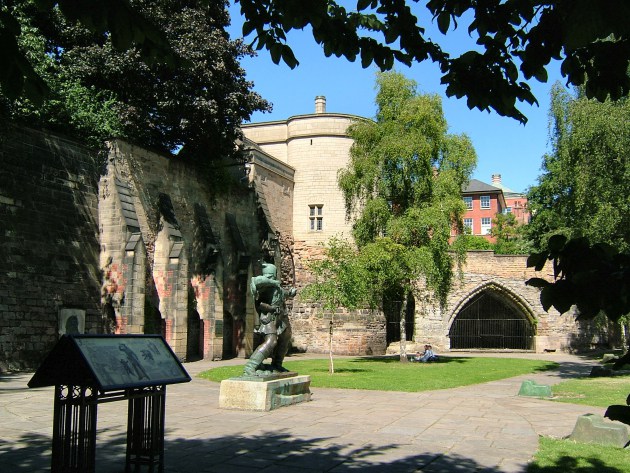
I wrote this post because it seems to be getting more and more difficult to get teachers and School Leaders and other staff who work in schools. It is difficult especially in City areas and in Coastal ones. So I had a think aboutRobin-Hood-Statue what there is to like about a career working in Education in Nottingham:



You can also check out this website which has some brilliant links and advertises posts in local schools. If you still need persuading please check this video with local secondary and Primary teachers AND Nottingham University Vice Chancellor Professor Sir David Greenaway.


1.It’s a great City There are good shopping facilities – including a John Lewis , House of Fraser and a huge number of independent shops in two large City Centre areas, the Victoria Centre and the Broadmarsh centre. People travel for miles to visit the shopping centres.

Victoria Centre shopping

Newstead-Abbey_620

Newstead Abbey


There are great sporting links, two football teams with history, Nottingham Forest and Notts County but also the Panthers Ice Hockey team and the International Cricket ground at Trent bridge. Not to mention Holme Pierrepont the home of many watersports. There are Cultural and Arts Centres, two theatres, the Nottingham Contemporary arts centre. Like most Cities we have many historical links, not least with the oldest public house, underground caves, even a mansion we call Nottingham Castle, Byron’s home at Newstead Abbey etc. The City centre is a thriving place but we have places to escape to such as Clumber Park and Sherwood Forest and you might even see batman at Wollaton Hall, or at the least hit a festival there. I wont mention the clubs and bars though! If you can get out further afield we are on the edge of the Derbyshire Dales and  National Park as well as Chatsworth house to the West or by going South into North Leicestershire countryside. There are many villages and market towns around the County and it’s not far to the likes of Lincoln and York.

Mind we do know how to party, come along to Goose Fair in October and try it out – should be there next year, its been here for over 600, can’t see it stopping yet
robin-hood-statue-castle-gatehouse-20051349191366_1

wollaton-hall-aka-wayne-manor-in-the-batman-movie-the-dark-knight-rises-952566657

2. Transport and housing. Nottingham is in a great spot in the UK being so central. Easy to get to the main M1 ( 3 major routs out of the City) or to the A1. The train station has recently had a massive upgrade and trains to London take about 1hr 45 minutes. The bus system locally is very good and we have a very efficient tram system too. East Midlands Airport is about 30 minutes drive away. Oh and a canal and a big river with cruise boats and rowing clubs. Housing is also available and reasonably priced because of the large student population.

trent-bridge-2

Trent Bridge

tram_7

Tram in Market Square


3 We are actually very good at Education. Most young people know about the high reputation, in fact the world class reputation of the two Universities at Nottingham and Nottingham Trent. These organisations also host Education Departments and the National College for Teaching and Learning is based on the Jubilee Campus. So this is where many prospective teachers start their careers as PGCE Students but remember this also gives great opportunities to ongoing CPD for teachers and other Career opportunities. There are also significant teaching school and teaching school alliances.( Like the LEAD Urban alliance and Transform). They are fairly new but they are all working on programmes to attract young people to work in schools and then support them whatever stage of career, from NQT, RQT, Middle Leaders, SLE’s etc You might benefit from a programme but in due course be contributing to the programmes. Then there are large FE Colleges, with more opportunities to move career into working with the post school sector. Check out NCN, and Castle College.

jubilee


4. Schools Despite what you might think, or read or have heard, Nottingham schools are pretty good, some are outstanding, some are good and others are getting to good. Check their web sites and if you are thinking of a job here then go and visit.The staff are very committed to improving the lives of local children and working in a City or Urban environment isn’t without its challenges and rewards. There are 16 different types of Secondary schools mostly academies, some sponsored some are MATs. There are 6 special schools and these have a considerable reputation for their work for SEND children. There are 7 Independent schools some are small and the two main City schools are the boys and girls high schools (although the boys goes mixed this September). there are about 80 Primary schools. Within each of those schools is a massive amount of wisdom and experience. In my school for example the leadership team have worked at the school over 120 years between them and longer if we add in time spent in City schools. Nearly all the City secondaries and many of the primaries are in very new buildings as they were part of the labour governments BSF programme (Building schools for the future). the City Council has always had a big commitment to Education and whilst not really controlling academies, they have a target to have every child in a good or outstanding school. they also work hard with the local business community to ensure jobs and apprenticeships and a clear progression route after school.

5. Progression. Hey we do this well, for teachers and for pupils. We have a very low NEET ( not in Education Employment or Training) figures in the UK. So something is working well, and there is commitment to helping young people follow their dreams into jobs, apprenticeships, or further their education. We laso have a lot of clver and successful initiatives to help widen participation locally from Nottingham University and NTU which involves our pupils but also families. We also see the journey being made by many professionals in our schools, so we might have someone volunteer for a project as an older pupils who goes off to University and then returns and does some teaching assistant work, and eventually get a formal training as a TA or maybe as a teacher. Once bitten by the “working in Nottingham City schools” bug it can be hard to escape.

6 Other services There are other agencies linked to schools of course and in Nottingham they work closely together, again teachers can move their careers into these other areas. this includes social services, children’s’ services, the local NHS. Also Nottingham Futures ( careers service)  and their initiatives such as  Aspire. Then there are organisations which pop up in any City to help with Outdoor Education, to help with Music and Sport as well as Duke of Edinburgh, Youth Parliament and so on. So our children get lots and lots of opportunities. There are also many community links, these can work very well in City areas but be less obvious than in rural ones. Local Churches and mosques and other religious groups support education. The voluntary sector is huge and not only do they support schools they also offer opportunities for our young people to serve in their work helping in everything from foodbanks, to the homeless.

7. Great Pupils and great teachers and support staff. Almost all schools say they have great pupils and the City has many many. Of course in a City area there can be issues of bad behaviour and low aspiration and that makes the job a challenge but it is often a minority and therefore the majority can be encouraged, can be motivated and can be taught successfully and will get qualifications. in fact just the sort of result you hope for as you contemplate a career in education. But these pupils need you, they need keen enthusiastic teachers. In fact you will also be working with some great teachers, school leaders and educationalists. There are many many fantastic support staff too, who are also committed to the local community and the City. All those in senior positions are passionate about schools and young people – come and join us and commit yourself to working with us, we’ll support you and you won’t regret it,

brian_clough_statue_forest_by_mlt1-d2z4l9n

Even ol “big head” would love to see you working in Nottingham

Famous Locals:

  • Robin Hood – entrepeneur, thief, potential film star
  • William Booth – founder of the Salvation Army
  • Jesse Boot – founder of the Pharmaceutical Co Boots;
  • Brian Clough – football manager;
  • Sir Peter Mansfield – Nobel Prizewinner and inventor of the MRI Scanner
  • Jane Torvill and Christopher Dean – Ice dancers – oh yes we have a great ice rink!
  • Sir Frank Bowden – Raleigh bicycles
  • John Player – cigarettes
  • D H Lawrence – literature
  • Lord Byron –  literature
  • Alan Sillitoe – novelist
  • Sir Paul Smith – fashion
  • Dr Stewart Adams – discoverer and inventor of Ibuprofen ( Brufen, Nurofen)
  • Frederick Gibson Garton WHO? – inventor of Brown Sauce HP
  • Edgar Hooley WHO – inventor of tarmac
  • John Peake Knight WHO? – inventor of the traffic light ( gas powered!)
  • Harold Larwood – bodyline test series 1932 -33
  • Thomas Hawksley – civil engineer famed for ensuring safe water supplies in the 19th C
  • Albert Ball – First World War pilot and winner of VIctoria Cross
  • Stella Rimmington first female head of MI5
  • Samuel Fox – Quaker abolitionist and founder of Nottingham Building Society
  • Doug Scott – mountaineer
  • Ken Clark; Ed Balls; Geoff Hoon – recent political figures
  • Oh and Harold Shipman!
  • COULD it be you on here?


Friday period 0 – “Hope” in the head’s office

web-Balloon-girlAs a new head back in January I chose a theme for 2015. We are a church school and the previous head had been at the school 28 years as a deputy then as a head. He often told the children he “loved” them and they genuinely agreed. SO I long pondered on faith, hope and love BUT decided on…..

hope for a number of reasons but three compellingly convinced me:

1) I genuinely believe we need all need hope, and I ordered a copy of the Banksy shown here -well a copy not the original, for the office. “There is always hope” I wanted it up on the wall to point to and present for anyone who came my way be they upset, coping with tough stuff or on the edge of bad stuff. A daily reminder that we all need someone to have hope for us, in us and standing with us. A parent, a friend, a teacher can and perhaps must bring some hope in an age where we continue to worry over the health, especially the mental health and well being of each other.

2) This happened – I had taken a Y13 class a few years ago and it was the day all teachers so love when mocks are handed back. Their scripts were pretty bad. In those days I just went through he paper, we discussed exam technique BUT frankly they just didn’t know enough, understand enough and then applying tha weak gasp in a new situation as Salters’ demanded was impossible. I think few scored very well overall , some scraped an E or a D. There was me their committed energetic Chemistry teacher ( who had clearly taught them well) and their was me as Head of Sixth form having written great references as I did believe in them –  did they not see how they had done the proverbial ( let me down let their families down let the school down BUT worst of all let themselves down). Wow was I let down and wow did they get both barrels and although I was as nice as I could be and didn’t pick on individuals I made the points any reader knows well in the post mock debriefs. The class packed away and as the last Y13 left I just said “Are you OK with all that?” “Yes Sir” she said but her face told a different story full of angst and worry. “Go on ” I said “something is troubling you.” “well yes Sir – however bad it gets and you were dead right to tell us this was bad, you can carry on if you have hope, if you think someone still believes in you. ” She smiled and left. It was a critical moment, after that whenever I needed to deliver the same news (ie annually!) it was  a case of “you have a problem what can we do about it”.

3) When  I did my NPQH I have written elsewhere it wasn’t much help buntitledut I came across the writing of Alan Flintham. if you are a leader and have not read his book you should. “Reservoirs of Hope” The case is simple but profound. Heads and their offices should be places of hope, reservoirs of hope BUT what if the reservoir runs dry – what causes it to run dry and what can we do to ensure our own hope is “topped up”. That’s a gross oversimplification but read it and tell me if it isn’t full of wisdom from his time as a headteacher – yes as a headteacher not an inspector or advisor but sitting in that same office offering hope – and seeking ways to top it up.

If you are in a church school:

Hebrews 6:18, 19 that we can take hold of the hope set before us and may be greatly encouraged. We have this hope as an anchor for the soul, firm and secure.

Isaiah 40:31   but those who hope in the Lord will renew their strength. They will soar on wings like eagles; they will run and not grow weary, they will walk and not be faint.

Psalm 71:14    As for me, I will always have hope;

No Questions this week a few quotes:

To live without Hope is to cease to live.         Fyodor Dostoyevsky

Optimism is the faith that leads to achievement. Nothing can be done without hope and confidence.  Helen Keller

Fear less, hope more; Eat less, chew more; Whine less, breathe more; Talk less, say more; Love more, and all good things will be yours. Swedish Proverb

Iconic image of the 2008 Presidential campaign by Shepard Fairey,

Iconic image of the 2008 Presidential campaign by Shepard Fairey,

Walk on, through the wind
Walk on, through the rain
Though your dreams be tossed and blown
Walk on, walk on, with hope in your heart
And you’ll never walk alone
You’ll never walk alone


You might like to read other posts from my timetable of teaching – each is set out from lesson in the school week, before or after school or at the weekends, appropriate to the time of day. I have also started a  class lists or “set lists” which was to answer the questions: “why be a teacher?”or “why have other responsibilities in a school?” Shortly I am starting a new area about progress from one role or experience in teaching to another with hints and tips about successfully moving on in the job and your teaching career.

Monday period 3 – Qualified Teachers – What exactly do we mean by qualified?

There has been much discussion about qualified teachers and unqualified teachers in schools. Let me start off by saying I am qualified I have a degree in chemistry from a reasonable RG University (at the start of the river Thames)  and I could probably be a Masters but I never paid my £15. I have a PGCE and I did my NPQH. So I am I qualified I think.

untitled

So does that mean I’m a good chemist? I hope so or at least I was.

Am I a good teacher? I’d like to think so.

Am I a good  headteacher?Well that remains to be seen.

  • There is a distinction between a qualification and the practice and ongoing CPD or training so I was glad to do my PGCE before I got started as a full-time teacher. However it didn’t prepare me for every eventuality. By the time I finished my first year I knew that I could survive in a classroom, I could manage behaviour and yes I could teach pupils some things if not most, but some parts of my subject I could not teach very well. In my second year I taught some things again and inevitably they were a bit better but it was in my third year where I really thought I could do with doing my PGCE again. There were some aspects of Chemistry and some children I just couldn’t manage to teach.

graduation-caps-in-airI hadn’t taught these topics or children successfully  in the first year or the second or third time and I faced up to “I really don’t think the class are going to be able to get this topic and I don’t know what to do about it” – and there was no internet, blogs or twitter.

During my NPQH I quite enjoyed the reading and research it was good to revisit and understand some proper educational research however during the whole of my time I didn’t meet a practising secondary headteacher ( save my own) only a lot of aspiring headteachers. There were aspects of headship I was worried about such as the competency regulations or managing budgets weren’t really touched upon but more than that. I was looking for some inspiration some passionate headteacher who would tell me that the job was better than the job that I was doing, a job which I thoroughly enjoyed .image

Well we aren’t strictly qualified for many things we have to do in school:

  • I have had to do pastoral work in areas that I’m a little uncertain about and whilst quite experienced now (=old) so I have seen most things but in my early days I worried about some of the sessions I had to lead on relationships/news and sone questions were bounced away.
  • Sometimes I had to cover lessons in fact I think I probably covered every subject I’m not really qualified for every subject so some of those cover lessons were not very good. My favourite cover lesson was an English lesson, I went in and the work set was carry on reading the novel. the pupils duly took out copies oftake a copy of the Wolves of Willoughby Chase. imageI sat down to do some marking I looked up all the class was staring at me, what was the matter. One boy said we don’t really read the book on our own. My next suggestion was to read around the class. “Why don’t we start with you Robert you can start reading.” Nothing happened. “OK ” I say so I started reading a little bit of the book with a view to asking them to carry time in due course – “No! Sir, you have to do all the accents.” This polite young teacher “Oh shut up and read quietly!”
  • Sometimes I’ve taught other subjects which for me includes Biology – I have no qualification in Biology. At my school (all boys ) we didn’t do O-Level Biology! Ok so I’ve read it up but it’s just not the same, I’ve no idea how important basics are in fact unsure what basics are. I’m a little better at Physics but when we had a shortage of ICT staff and I taught that I was literally two lessons ahead of my Y8 class. I have an ability to kill interest in any other subject – compared to what I genuinely feel I can do in Chemistry. It’s now 2015 and a long long time since I did my PGCE, so I do hope and so do my pupils- that I have moved on since 1981, after all I only had chalk, blackboard, and a delightful banda machine and a few textbooks – no IWB No internet, mind no data, no microchemistry and little contact with other teachers.image 2(3)
  • Sometimes I’ve spotted a gap in my lessons of a pupil’s literacy knowledge or maths skills; maybe these are not done in the other subjects  or maybe they are done badly maybe not understood or more likely finding it difficult to apply the ideas in a different room with a different teacher. I’m not a qualified mathematician but I sure can teach the Maths my way to help my Chemists. ( Something very important in the new world where we have 20% Maths in Chemistry BOO)
  • Most of my career I’ve been a “head a sixth form” and over some 20 years and many a time I’ve said to myself I think I’ve seen every scrape a post16 person gets into, then just before I finish that sentence a situation will present itself which I’ve probably never had to cope with . No qualifications help but experience, some little wisdom and a good instinct is what we rely on.

So it is more than just qualifications, but dont get me wrong  I’m a headteacher and I want qualified people – those with a subject they love and a passion for young people.

My best teachers were my Mum and Dad they had no formal qualifications and at home we had very few books or resources, I have blogged elsewhere about going to the library weekly with my Dad. So my parents fostered curiosity, integrity, discipline, character, diligence. They set high aims and ambitions – I wish I knew how. They seemed to produce a son interested in Chemistry and Science yet they had no scientific background at all. How? Well I suspect that was about partnership my parents and their attitudes and my teachers with their “expertise”. My classes at school all had 32 boys in – the same 32 every day every year but at home it was just me and Mum and Dad and their questions and interest in me. That made them very special teachers – we can all learn from people like that.

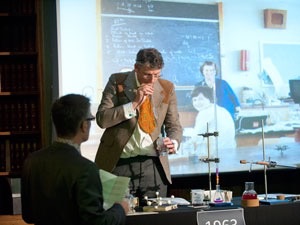
Mr Dexter at the RSC EIC 50th. School chemistry over 50 years

Mr Dexter at the RSC EIC 50th. School chemistry over 50 years

Questions

Q1 As it is obviour we cannot be prepared for every eventuality in a school, do we rely too much on “qualifications” ?

Q2 Are qualifications overrated? The most highly qualified person might not be the best teacher, let alone be able to communicate with the pupil who finds the subject very challenging.

Q3 Design the qualifications necessary for the job? – or get proper investment in CPD?

For those in a Church school

Daniel 1:3,4: Then the king ordered his court officials, to bring into the king’s service some of the Israelites from the royal family and the nobility— young men without any physical defect, handsome, showing aptitude for every kind of learning, well informed, quick to understand, and qualified to serve in the king’s palace. He was to teach them the language and literature of the Babylonians.

Hebrews 5:12 In fact, though by this time you ought to be teachers, you need someone to teach you the elementary truths of God’s word all over again. You need milk, not solid food!

Proverbs 5:13 I would not obey my teachers or turn my ear to my instructors.


You might like to read other posts from my timetable of teaching – each is set out from lesson in the school week, before or after school or at the weekends, appropriate to the time of day. I have also started a  class lists or “set lists” which was to answer the questions: “why be a teacher?”or “why have other responsibilities in a school?” Shortly I am starting a new area about progress from one role or experience in teaching to another with hints and tips about successfully moving on in the job and your teaching career.

Tuesday period 6 – “How was school today John?”

image

This is my Mother who sadly passed away in March 2016 having just turned 96. I am very proud of her, and although she was a little more frail in her final days, she was as sharp and good humoured as I can ever remember. I spoke to her every day, and our conversation had a reliability about it. She always asked me ‘how was school today?” it’s a question I have heard from aged about 5 to 18, and it re emerged as I started my PGCE back in the 1980’s. It’s a genuine question about me, about the day, about the children I teach and the colleagues I work with. In some ways it epitomises my Mum and perhaps a good parent. It didn’t end there, at tea time, oh No. Any spellings or vocab was tested to destruction, my books were looked at, not checked just read with a genuine interest, delight and conversation. Of course as a very little person I was read to, and listened to with glee, with enthusiasm and with endless patience. She did of course have to tell me off occasionally but I’m sure for every harsh word were a hundred of encouragement and hope. She was the eternal optimist and there was always bags of encouragement to me and my friends: ‘never mind pick yourself up, there is always hope’ there spoke a survivor of the Coventry Blitz.

image

As a young teacher I was a little scared about parents’ evenings, I had all my facts and wondered what I might be asked. I soon found and continue to find most parents want to know the same things wrapped up in many a question, it boils down to: how their child is progressing, how well they are doing ( just compared to where I think they should be) if their child is trying and what they as a parent can do to help – I need my Mum there to tell them! Over many years of such evenings and other meetings with parents I think this is what most conversations distil out at. Of course for some they really do want to know “what they can do” with something of an air of despair – perhaps about behaviour, or effort or attitude. Then there are a few who just want to have a go at the school, if not me personally but very few.image

Once I had got over my fears of meeting parents I moved into the rather arrogant place of wanting to tell some parents just what to do! I still hear some teachers say ” wait until I see the parents of ‘ ‘ and I’ll certainly let them know what their child is like and what discipline is necessary. I rarely hear this from teachers who have their own children. Once I got one of my own to bring up I understood how tricky, how tiring and yet rewarding and challenging is the whole parenting thing.
I have a little theory that many children behave better at school than they do at home and we might work on the assumption that the smaller indiscretions or bad habits in school, the more that will be on show at home. This means parents, often without the backup of a big organisation ( no tutor to refer to, no head of year, no SLT, no green referral system no access to sims) their tasks are even more difficult.

imageI am a strong believer in the vital link between pupil, parent and teacher. I am also keen on the support of the wider community, it’s one of the best bits of working in a faith school. However it just isn’t easy bringing up children, even now with my two grown up I keep thinking I’m glad not to be doing that bit again, especially in this generation ’twas ever thus’. However schools must work closely with parents, we must communicate sensibly with them. We have lots of data and lots of jargon – some of it we find confusing. Think of the word ‘target’ we might wrestle with ‘predicted’, ‘actual’, ‘FFT’ (which one again oh D) in school I do hope staff are clear but we need to keep it simple for parents. This goes against some of my other blogs where I argue a complex organisation like a school should not be summed up in a word or a number. Our reporting must be simple BUT not just data never ever just numbers – ‘oh she is secure level 3′ perish the day. I think it’s why parents get fairly incensed when they sense teachers use phrases from a bank of sentences on reports. I think they understand it must be difficult writing 30 or 60 reports etc but they really want to know we care, that we know their child and we can show that to them in an annual report and at a parents’ evening or if we bump into them

I realise there is another post here about dealing with awkward parents (awkward in being unsupportive and awkward in being helicopter parents) but I’m considering the majority, those who want to see their children do well and genuinely trust the school. They really want their child to succeed, discover their interests for themselves turn from children into young adults. They probably know there will be a few bumps in the journey, they will probably take their child’s view more often than we would like ( it’s our job to help show them there are 2 sides). It’s also worth reminding ourselves how intimidating school can be for some parents, especially if the school has had to have ‘a word’ with them about behaviour – already scared to come up to the school, they now expect an evening of ear bashing and don’t come.image

Key to me is the relationships built up with parents from the year 6 welcome evening to Year 11 or Year 13. Formal stuff like parents evenings, letters, emails, web stories, local media stories, imageand informal at the school show, or on the touch-line for sport or after the concert. In fact I think it even goes beyond Y11 (Y13) beyond that. We should ‘keep in touch’ not formally but as opportunity arises, a kind of ‘once a X school parent and pupil, always a part of the community’

imageEx pupils and parents are the future parents and grandparents, maybe the future teachers, or support staff, or governors, or political leaders. That’s why community is important, and ethos and expectations. Year 6 welcome gets easier when a majority “know” what a school stands for, and expects of their children and of them. They might want help too on bringing their children up – help with e-safety on substance abuse, on bullying etc. A headteacher visit from Brazil recently told me he had school part 1 and school part 2 where parents went to school in the evening for basic skills ; literacy, numeracy, IT etc I know we are beyond that but the school commitment to parents was a vital part of the role.

Our recent visitors from China wanted to know how we communicated our ethos into our children and I found it difficult to explain – we just do! In thinking of an answer I realised again the importance of considering the parents and carers and remembering they too have bothers, concerns and stuff happening in their lives. I’m not saying we compromise behaviour because of what happens at home but we need to consider it, support, help and educate.

Parents please engage, schools can help, pupils can grow in confidence. Last words to my Mum “How was school today John?”

I first wrote this on a Friday in February 2015 and sadly on Saturday night/Sunday morning my Mum fell in her flat and broke her hip. We spent most of the day being wonderfully looked after by the NHS – thank you Queens Medical Centre. After an ambulance ride, A and E, assessment and onto a ward, they decided to get her a new hip ASAP. So by Monday lunchtime she was with the surgeon and by the evening she had a new hip and was sitting up in bed chatting away, drinking tea and guess what? Yep she straight asked me “how was school today?” 🙂

Some questions to consider

Q1 Do young staff need specific training in speaking with parents’?

Q2 What do the most effective schools do to engage parents who are scared of school, hate school or are not so interested in their child’s education?

Q3 Do parent teachers make better teachers?


If you work in a church school:

Ephesians 6:4 Fathers, do not exasperate your children; instead, bring them up in the training and instruction of the Lord.

Colossians 3:20  Children, obey your parents in everything, for this pleases the Lord.

Exodus 20:12  Honour your father and your mother, so that you may live long in the land the Lord your God is giving you.

Proverbs 6:20 keep your father’s command and do not forsake your mother’s teaching.


You might like to read other posts from my timetable of teaching – each is set out from lesson in the school week, before or after school or at the weekends, appropriate to the time of day. I have also started a  class lists or “set lists” which was to answer the questions: “why be a teacher?”or “why have other responsibilities in a school?” Shortly I am starting a new area about progress from one role or experience in teaching to another with hints and tips about successfully moving on in the job and your teaching career.

Thursday period 3 – UCAS deadline, hey maybe that can change.

ucasThere are some jobs you miss in the profession when you move on (up, sideways or down) and some you don’t. I am ambivalent about missing UCAS references. At my school sixth form tutors do references and do them spot on (pretty well) – another of the sixth form pastoral staff polish, check etc. Over the last 20 years I have done all that, and I enjoyed writing and most of all talking with students about opportunities perhaps not enjoy because some , most are very stressed. I saw it as a bit of a privilige really. So it was always good to add a calm voice, a sensible view but of course not magic wand. It was also a collosal amount of work for me, for tutors and for students and a massive pressure pot for staff, students and parents. I daresay HE might feel the same.

Even with a new job as Head I still did three references and forms this this last week. One of those was a “Please Sir do you remember me, I left years ago but… can you lastminutereference help me out?”. Soft that I am I did – just by hours!

Meanwhile in another Universe I am trying hard with subject leaders and SLT to work out how we manage the ‘dogs dinner’of a curriculum for post 16. Whilst some changes feel bad (please don’t ask I’m a Chemist, we change to new specs, new assessment and no practical assessment but at least the spec for teaching in 6 months is now approved (as of December!). Some specs change so AS does not count in the end but at least remains coteachable, some do not. I think the staff are pretty clear on their own subjects but across the piste? Mmmmm. And what they need to consider, not much chance of that because you politician types forget we aren’t sitting around waiting your latest ideas we are…teaching a generation now.

I have always been bothered to explain to our Y13 that it is harder than Y12 because it brings the sharp end of A Level , stretch and challenge, and final exam chances, but also all those big decisions. I am also convinced those decisions can motivate and if we help students get them right they can achieve well, and aim higher than they might imagine. That has been my experience. Despite this here is my suggestion after 20 years as a Head of Sixth form

  1. Get HE to decide IF they want AS or not ( I do remember working with UCAS predictions before the advent of AS – I can tell readers it isn’t easy!) Maybe it doesn’t matter, we seem to be in a new world already whereby AAA or better gets you into most subjects in most places and probably AAB – and it feels like the rest get that same offer even if we know they may not make it. [don’t scream at me about medicine and English and RG Uni and Oxbridge I know I know]. However have these decisions clear. For example
  2. Give staff time to plan their schemes understand assessment and nuances, get to exam board training and have time to talk with each other to decide the very best way to carve up teaching and learning. Consult with SLT to design a great curriculum offer. Four subjects or three; extended essays or not, and please can someone look at the funding.
  3. Halt the AS/A2 changes now. Get the new specs for all subjects sorted for start in 2016 not 2015. Do AS and let it count or do AS and don’t let it count. Teachers and learners just need the rules ( and preferably the same rules to each subject!)
  4. Be radical on HE entry. I’ve never much favoured PQA ( post qualification application) because of the motivation I mentioned above but try this:
Which way?

Which way?

  • Minimise Y12 AS exams – one paper ( maybe or maybe not cwk) whether it counts or not. Preferably forget them as we are abandoning predictions see below! [Save some time]
  • Start the end of Y13 exams ( A2 +/-AS) at start of May. This drags exams on longer in school but staff can stagger their work in terms of revising with Y11 or 12 or 13 and all that means for schools and Colleges.
  • It takes 6/7 weeks to results, replan this. These exams start May not mid June so can have results early July?
  • After Y13 complete exams maybe mid June schools and colleges start all the practicalities of UCAS PQA. We help look at courses, we have Open days visits and we prepare statements and references BUT no predictions because the button is pressed mid July when we all know results. We will do background stuff but not forcing so many decisions so early on
  • E. do not know need to think “how many will get the grade?” “how reliable is the referee?” The form arrives with grades.
  • Over the summer there can be interviews and if not the time for HE colleagues just start term a bit later for first year UG.

    Maybe a Chemist maybe an astronomer, maybe a paeleantolo Oh hang it. I can't even spell that

    Maybe a Chemist maybe an astronomer, maybe a paeleantolo Oh hang it. I can’t even spell that

I am sure readers will say what about medics etc BUT we all see many students who think they should apply for X or Y but their results make us think they may make it and it’s hard to say a definite you won’t for some. WE also see an element of immaturity at application time, uncertain ideas which is fair enough and we make some decide by October 15th. In this new world, this all evaporates, no student will apply for the AAA course with predicted AAA ( which might mean AAA or AAB ( stats show most grades predictions are correct within a grade or two overall I recall) now they apply with AAA. I can imagine many courses offering a range of grades and I suspect they could, surely they know students with AAA down to BBC do or do not cope with this course etc

As for motivation I do like my students to do some visits in Y12 – well they can do, they can visit and be inspired to aspire, they can be helped to understand the basics by which I mean to get into this course you need….. these grades/this interest/these skills. Entry profiles take on a new highly significant meaning, this is what you aim for. It might benefit a subject like mine Chemistry maybe others where Y12 still feels like we are teaching much basic stuff and some of the more interesting work comes late Autumn and Spring of Y13. As we now stand it’s a bit late for a student who having had few ideas of what to study but been badgered by home and school to decide, and now finds a real interest in Chemistry. In fact we might all have that responsibility in our Y13 work to trumpet our subjects even more with this is what HE looks like and being nearer than a present applicant we might get those choices right and get a few more young people into the right courses and see better progress in HE.

There I’ve said it


You might like to read other posts from my timetable of teaching – each is set out from lesson in the school week, before or after school or at the weekends, appropriate to the time of day. I have also started a  class lists or “set lists” which was to answer the questions: “why be a teacher?”or “why have other responsibilities in a school?” Shortly I am starting a new area about progress from one role or experience in teaching to another with hints and tips about successfully moving on in the job and your teaching career.

Some Questions:

Q1 Might this make an optimistic call over what feels like an unwealdy future for post16?

Q2 HE Univeristy Providers what do you think?

Q3 SChools and FE Colleges what do you think?

Q4 Most important, Students what do you think?


Links
UCAS

Complete University Guide

Push University Guide

Telegraph article on choosing HE

Guardian choosing University – ideas from students

Unistats support data for making informed choices

The Student room advice


For those in a Church school:

Psalm 25:5 Guide me in your truth and teach me, for you are God my Saviour, and my hope is in you all day long.

Psalm 139:10  even there your hand will guide me, your right hand will hold me fast.

Romans 12:6   We have different gifts, according to the grace given to each of us.

2 Timothy 1:6 For this reason I remind you to fan into flame the gift of God, which is in you

1 Peter 4:10 Each of you should use whatever gift you have received to serve others, as faithful stewards of God’s grace in its various forms.

YBA Governor Guest post by @5N_Afzal

I have always had an interest in education, working, in the past, as a primary school teacher and a university lecturer. I stopped working when I became a mother. When my youngest was old enough not to need me constantly, I decided to go back to part time work and started working as an adult literacy tutor.  Unfortunately, due to budget cuts, the class was cancelled. At around the same time there was a vacancy for a parent governor at my daughter’s school. I decided to stand for the post. Having been a governor for over six years now, this post gives me chance to reflect on “YBA Governor”.

What is involved in becoming a governor?

Governors are the largest volunteer force in the country. So, if you are thinking of becoming a governor, you’ll be in good company, but will need to know what’s involved.

Governance is not something which can be accomplished easily over a few evenings in the year. It may be a voluntary post but it does demand time and hard work. Governance needs people who are passionate about education and about giving the young in our schools the best possible chance in life. Yes, there are two or three meetings per term but a great deal of preparation needs to be done before you can attend the meeting. There will be papers to read and digest and monitoring visits to be carried out. As a governor you should also make an effort to attend school functions so that students, parents and staff get to know the person under the governor hat. Juggling hats is another thing you need to learn how to do. If you are a parent of a child at the school or are a staff member then you need to learn when to wear which hat! You will be expected to attend induction training upon joining and then other courses as and when needed. These will help you understand you statutory duties and how to perform them. The one thing which we must remember is that governance is not something to be treated as a badge of honour! You have to work hard at it and be totally committed to the role.

What do people get out of the role?

Despite of all of the above, people do become governors, with many of us serving more than one school and many stay on for more than one term. So, there must be a reason (or several!) why people give up their time to join governing bodies.

Becoming a governor is one way of establishing/maintaining links with the education sector. Do remember, however, that you do not need to be an educator in order to be an effective governor. As a governor you would be serving a community. It could be your local community which is served by your school or it could be the community of an area which is not your place of work or residence. You would also be serving the school community, the students, parents and staff of the school. As a governor you bring a fresh perspective to the table.  Schools can, sometimes, become set in their ways. Governors come from different backgrounds and bring different skill sets. These can be beneficial in helping the school look at new ideas. Sometimes in order to “think outside the box” to solve a problem it may help that you yourself live “outside the box”. Part of the job is to monitor the performance of the school and ensure that the students are being afforded the best opportunities to realise their potential. Governors can use their day job skills to make sure the school is performing well. They can provide an objective and unbiased viewpoint. A governor’s role is to help set the vision and the strategic direction of the school. This means that you allow the Headteacher and the school’s senior leadership team to concentrate on the day to day running, the operational side of things. Both bodies, working together, can then help make the school into the type the school the students and staff deserve and parents desire. Like in other sectors, good governance will lead to good strategic decision making which will result in good overall performance. Lastly, becoming a governor is a very good way of gaining new skills. You will learn how to read and analyse data, how up set up long term goals, how to interview and appoint to senior positions including that of the head, how to appraise staff and how to conduct meetings and lead a team and get the best out of each member of the team. The skills you bring from your day job will be very useful in the boardroom and similarly you will find that the skills you develop by becoming a member of a board will be useful to you outside the boardroom.

So, although becoming a governor is a huge time commitment and requires dedication, it is a very worthwhile thing to do. The question, for me, isn’t why be a governor. The question is why not be a governor!


Naureen Khalid

Governor at a secondary convertor academy

Tuesday period 2 – #LoveChemistry, #LoveSalters’, Love Investigations

imageSo this post is about practical work in science, it’s not a review of the proposed changes to GCSE practical or those already in hand for A Level. It’s just my little world of practical work as a Chemistry teacher, and it is what I will be doing on Tuesday’s period 2 for a few weeks.

There are different types of practical work in science. When I used to plan on a scheme of work, we had various codes : PP pupil class practical; PD Pupils help in a demonstration.TD Teacher demonstration. AP assessed practical. I am so old that when I did my A levels we had science practical exams. In Chemistry this was usually a titration and mostly oxalate /permanganate ( ethanodioate/Manganate VII for the younger reader). We knew what to do, I had after all done one about a dozen times. We also had some analysis to do, a so called unknown and a few simple tests, flame tests and maybe some solubility tests to show this was Potassium Sulphate ( lilac flame, ppt with Barium Chloride). BUT oh how far we have come.

Let me tell you about my Yr 13 who have done practical Investigations now since 1994 and for a good few years of them I was also a moderator for Salters’ Chemistry. They have to choose their investigation, describe it including relevant chemical ideas and then plan the methods. In recent years we have had a new mark her for the difficulty and challenge of the topic, so if they choose an experiment we have done as an activity it scores low down. Modify the practical, use ideas beyond A Level and bring in a series of other skills and you might move to 4/5. Once planned we teachers have to mark the first sets of skills: planning, communicating, researching, risk assessments, references etc. The students work very hard, they score a full range of marks but maybe at the higher end of their grades. Why? Because they are A level chemists and quite good at this. However an Investigation means testing skills they don’t otherwise have

Mr Dexter at the RSC EIC 50th. School chemistry over 50 years

image Mr Dexter at the RSC EIC 50th sharing some differences between Chemistry in 1963 vs 3013 photographs from (c) Royal Society of Chemistry

So then we get going, usually three weeks of lessons and plenty of extra time. Students pop in during their free if staff allow, they come down at lunch or after school and we sometimes do a long twilight and Pizza. They start slowly in fact the first week I always wonder if they will make it but week two sees much progress and week three I see…experts! So now they have some results and observations to report ( and score) and they can analyse them (and score) and finally they do a decent job on what I usually think is the hardest area, evaluating what they have been through – scientifically evaluating that is, not a series of moans!imageBefore you say it cannot be assessed, I disagree the Salters’ mark schemes work. They work because back in the early 90’s teachers and boards worked together. They work because there were trials and developments. They work because there were good Chemistry teachers (who will remain nameless but you know who you are, ensuring marking and moderation worked.) but mostly they worked for being well designed, well thought out and because of the reactions we saw in our students ( not chemical reactions!!)
Why do I like Investigations?

  • It does feel as if this is what proper chemists and maybe research chemists actually do. A mix of researching methods, designing an investigation, carrying it out and persevering when it doesn’t quite do as it’s told.
  • We all learn lots of Chemistry, the students, the staff, the lab technicians but most of all the students. Even those who can just about understand concentration, dissolving, diluting etc get a much clearer understanding by doing it and by doing it AND being assessed.
  • The quality of work can be amazing. I recall in the early days of moderating seeing some truly wonderful investigations, given a relatively free rein it showed just what A level Chemists could do. they were ambitious, clever and often original. I even recall showing Professor David Waddington a project he diligently read it.’ What do you think?’ I hoped he would say it was ‘very interesting’ or’ innovative’, his reply: “probably worth a first”.
  • It’s one of the few bits of assessed work students enjoy. I know they also get stressed about the marks but if they plod on they usually enjoy the experience, usually do quite well and genuinely understand chemistry better.
  • They become mini experts. When we resume ‘normal work’ and revision they can teach their peers on kinetics, on errors, on calculations etc. I often turn to them ” tell us how you solved that”, explain how you worked ‘that’out.
  • It can inspire and motivate. In my day whenever did an A Level practical, let alone an assessed one, persuade me that Chemistry was exciting or innovative or frontier, though to be fair it showed me it was very useful. I have seen young people carry out their practical project and want a rethink on their HE choices. See n many of them get to grips with this fascinating subject in new ways.
  • It builds skills, all sorts from the practicalities of problem solving through to the softer skills of perseverance (though maybe if I say ‘Character building ‘ the politicians will listen). They also work on their own not in a pair or a group but independently – hey a bit like real Chemists?
  • It is perfectly assessable. Our students get a range of marks, from many 4/5 or 5/6 right down to 2 or 3/6. That’s a tribute to a good mark scheme, fairly properly applied, internally moderated and externally moderated. Practical work vital to my subject, should and can be assessed.
  • The hardest aspect back in the early days was researching ideas and practicals, it so often depended on getting the right books or articles, but what a great opportunity to raid the ASE and RSC cupboards. Now of course we can go on the internet. AND sure I know that’s why some people feel the whole of practical work can be cheating but really – have you ever met Chemicals?
  • No one gets a practice. You can’t do a four week project twice, you can’t rehearse, you can’t spend weeks researching and planning and then change your mind. It’s a good test!

imageAnd if Investigations ( let alone practical work) disappear?

I, for one , will be sad, I can’t think any other assessment building skills, showing off Chemistry, motivating and contributing to the student learning experience. ( although I do know learning for an ordinary test or exam does concentrate the mind). Maybe we can still do them, say the end of Y12 (Oh No) the skills won’t be quite so well developed and hey the AS is gone or going or something. Maybe we can do a mini project (Oh No)– you need four weeks, is there really that much spare time or are we refilled with extra content in the new world? Maybe there is after school, the Chemistry club – Oh No – how disappointing that something which should be done in lessons is reduced to ‘after school’ or ‘ in the holidays’.

If you are an examiner, assesor, moderator reading this, don’t worry we Chemistry teachers will make whatever yuou give us work, its what we do, but me, I am still allowed to mourn.

I never did an Investigation when I was at school, and it never did me any harm. I didn’t do one in my three years as an undergraduate maybe that didn’t do me any harm, but I did a part II whole year of research which I adored. That was back in the day without the resources we have now, I think I’ll just be that sad old Chemistry teacher…..”oh in my day”

My plea, please don’t throw out the baby with the waterbathimage

You might like to read other posts from my timetable of teaching – each is set out from lesson in the school week, before or after school or at the weekends, appropriate to the time of day. I have also started a  class lists or “set lists” which was to answer the questions: “why be a teacher?”or “why have other responsibilities in a school?” Shortly I am starting a new area about progress from one role or experience in teaching to another with hints and tips about successfully moving on in the job and your teaching career.