
Who am I to nudge any politician ? I’m a devoted teacher ( 26,000 lessons) that is I devoted my entire career and a lot of extra hours to teaching from 1981 to 2017 when I left and worked for my local authority – in a way something I might have done years before BUT I loved teaching and schools and yes I loved the children, my staff and our learning together. I think they loved me – watch this if you aren’t sure – it says more than any awards.
05-07-24
Dear (new) Secretary of State for Education
You are the 24th SoS since I started working in schools in 1981 and either the 18th Tory or the 6th Labour leader of the sector I loved. There are a number of issues in Education needing urgent attention post-election here are my thoughts for what they are worth. ANY politician or party needing more info, you know where to find me! In order 10/10
1 SEND – too many councils taking too long to sort them for families but more important not enough resource in the system to support those EHCP – so you might suspect the tardiness is about funding. Families struggle to access special school places – many perhaps don’t need (or want a special school) but if we are honest too many schools are not inclusive and therefore make excuses not to take some children with SEND needs. Sometimes this is very subtle – an open evening where for some reason the SEND team aren’t available! Sort funding, review SEND and implement the Timpson review on inclusive practice. I’m not against exclusions including permanent exclusion. Behaviour is really really important but – once you exclude the naughtiest pupil in the school, you then have to deal with……..the naughtiest pupil in the school. No doubt ( see below) we need better local services here to help. Look at helping make schools more inclusive or rewarding those that are. It is a great joy for a school community to have all sorts of children along with their interests, ambitions, needs. There is a place for Special Schools but these ought really be for those with much more complex need. Do simple arithmetic – 15% of pupils have SEND – what % should be in Special and therefore how do we help that majority in the maintained sector? Remember these families often have the hardest of times and feel they are constantly battling.
2 Teachers – it’s no good having great buildings if there are not great teachers or even enough teachers. There is an urgent need to review pay and conditions and talk with TU and with staff. Why are they leaving ? Why are so many retiring early? Why isn’t my secondary age child taught by a graduate or expert in that subject? Some of this is pay and conditions – graduates command better pay elsewhere – elsewhere in other sectors or elsewhere in the world. Some is due to autonomy and the school structure and regulation. Teachers might hate Ofsted not because of fear of accountability but because so often their leaders say ( rightly or wrongly) Ofsted (and the MAT) demand X or Y. Personally I loved teaching, I loved planning every day, every year, working out new content or even old content, new ideas, new ways to get over hard Chemistry and new ways to assess, or to help my students. I did not like being told how to teach – once a deputy told me I needed to return to the old ways of science ie heading/method/diagram/results/conclusion. I asked why when exams did not examine like that and science didn’t really work like that and how did he know when I was a mini expert in teaching and in my subjects (RSC award winner!) …. But if you keep getting “the MAT says so” or the LA says so” or “Ofsted demands ” it is soul destroying. BUT there is also something about the curriculum fit for children and young people. Please don’t negelect CPD, keep it local too learn from those around the corner doing better, use Univeristy ITT and research, forget the blob nonsense. There is great expertise to tap into but if you keep hubs move on from nepotism.
Many in a class are disillusioned, disengaged – it may be them of course BUT imagine what subject you hated most at school – for me that’s Art. Now imagine you have to do that all day every day except for a few hours of your favourite subject. Imagine all the creative stuff being downgraded, imagine all the extracurricular gone- few teams, no regular concerts or shows… and that school is dry. My old head allocated 1200 of 1265 hours and then said …” You have 65 hours unallocated, do something with children – a lunch time activity, an after school class , run a team, take a trip away…” difficult to argue and so we had one of the most rich extra curricular offers and we knew our children and families all the better I’ve blogged elsewhere on that.
I had the privilege as a local Director to visit many local schools and often, very often I met ex pupils, inspired by our school to teach, to be a SENCO, to be a TA to be a business manager. It made me very very proud, yep morally onto the high ground. Young people should want this wonderful job it shouldn’t be difficult to attract them again. [There’s a whole section here on why be a teacher!]
So this needs
3 A review of curriculum to fit a 21st Century world, a world where knowledge helps but a decent crap detector is better – where you learn how to find knowledge and discern its value, where you learn from an expert who absolutely loves and inspires you in their subject – how lucky was I to work in a school full of staff like that? And consider how assessment helps learning NOT constantly measuring it (P8 EBacc etc) these measures crudely comparing children or schools – move on- you know Gove, he might have been wrong! and by the way you need to do this for FE colleges too – FE could make the biggest of differences to your ambitions but fund them, listen to them – to quote Sir Keir Stamer ” If you spent more time listening you might not be so out of touch” Oh and by the way listen to professionals across the spectrum no decisions for the media, none – that gets us nowhere ( See Brexit).
Rethink P8 it’s distorting classrooms – sure Maths and English are important but we don’t need a formula to tell us and an emphasis that promotes subjects or demeans others – it may be too late for music, Design, Performance subjects but bring back a fair choice and subjects by their own value and merit- not the values of one politician (Gove) or favouritism.
4 Ofsted Much is written on this, here is my view. Get rid of judgments – I have always hated them, even when we sat on “Outstanding” for over 10 years. What did it mean? If you asked the staff, children or parents about our school they would mostly be positive, they would say some things, the music, concerts, sporting occasions, wider opportunities and outcomes were good and often amazingly brilliant. They would say mostly their children liked coming to school though not every day! You see they might also add some days were pretty ropey, some days behaviours deteriorated and some stuff really needed to change. Other parents in Nottingham might say – we knew that this school was Outstanding, thanks for the info but we will never get in ( which is true we usually had 500+ applications). How dare anyone sum up the work of 1200 children 130 teachers and support staff over 195 days in one word. There is an argument to get rid of Ofsted but I suspect that’s a step too far even for a radical majority led government, sadly. So Ofsted reports should be like the local area SEND reviews done by Ofsted and CQC. Spend time, not just a day – praise what is going well ( so we know and carry that on) tell us stuff you think we need to work on and tell us anything urgent needing attention. If if if the list of improvements needed is too long make us do an action plan and revisit in the year, give the LA or MAT some resource to help. One big issue here is the almost unspoken politics. The regulation is a way to create more academies -a one way move if your inspection is poor.
There is always a political argument that “Parents need to know and surveys show they like Ofsted”. This is somewhat disingenuous and naïve. As above a school rated good ( which now covers a huge spectrum, maybe brilliant some days and struggling on others. It may change in a short period of time ( we once had 6 English staff off on maternity leave, that was a challenge!). There is an argument about it helping when choosing a school but parents do not choose a school – they express a preference and in most areas they have no choice – in fact the schools effectively choose them especially if oversubscribed. There is a really tough issue her for a school labelled RI ( requires improvement) as parents see this as a ‘bad’ school and try to avoid it for their children and as some teachers may shun the ‘opportunity’ to work there. If anyone has been at school appeal panel they hear all these arguments – and the panel have to try and explain that an RI school isn’t that bad, it will get better, lots of children do well there etc. In the light of the tragedy of Ruth Parry and the mishandling of that by Ofsted, the least we can do is stop the one word judgment and at least get rid of those media stories ( our local Nottm Post “Here are all the outstanding schools in Nottingham” – which our local news outlet ran with 5 errors and no context that the framework has changed that 15% O became 12% O)). Make the media, make the parents read the reports and remind them some are 5 years out of date and were done by two adults in one day. It’s a pressure on inspectors too. Would we do this to industries? Imagine I visited Boots ( I am a scientist) and with a couple of colleagues found want and all over the papers Boots judged RI – and by the way we will be back in a few years, and the press ask about the consequences for profits and jobs and maybe even the companies existence. I realise in education we are talking public money but believe me we are accountable
5 The System. We now have MATs, we have some LAs still running schools – often Primaries and Special. There has always been a feeling the latter are second class, in terms of funding and favouritism. Just as an example when a poorly achieving school is moved to a MAT the Trust may get extra funding – perhaps if the LA had received that, the school wouldn’t have fallen over. There are really good MATs, I’ve worked with some in Nottingham, there are also poor ones, there were poor LAs and I’ve worked in some good ones ( Oxfordshire under Sir Tim Brighouse). This shouldn’t be about ministerial or political whims – such as ‘all schools should be academies’ or ‘stand alone academies can’t stand alone any more’ or bring back more grammars. Do some proper research on what works and what doesn’t; take time listen to a wide view run away from nepotism. make a long term strategic plan and win over cross party support to rebuild over 10 years
6 Governance – here is a question, when a parent has a complaint how easily is it resolved? Not the persistent offender parent the serial complainer, just the parent who feels their child isn’t say getting adequate support? They might try and talk to teachers, TAs, maybe the head but if not resolvable where then? My experience in an LA was that many exasperated parents turn to the LA, who has no powers over MATs. They might threaten Ofsted but they will rarely intervene unless it feels like a big safeguarding matter and then will seek info from others. Some schools now have little local governance. MAT governors at Trust level are very removed from the needs and the joys of the local school. Then there is the unspoken sponsorship – businesses or even political interests, donors to the parties, nepotism over schools -it’s not good enough. Run the school, hold people to account, support and challenge. Our CoG always rang me to see how things were going, she turned up at every concert, every Governor meeting, and every sub committee meeting, her children came to the school, she supported PTA events – she loved the school and when she was critical we all listened, we listened all the more carefully for this lady loved the school.
7 Universal Services Since council budgets have been cut schools are the places for many vulnerable and disadvantaged families to turn – for food, for clothing, for holiday hunger for help and for love etc. Schools helping them with paperwork etc. Teachers wanted to teach they might be Ok with pastoral work they understand wider responsibility but they’ve got tied up with too much universal support. Please urgently help sort the finances of councils for Children’s services esp for Children in Care where placements and costs, thanks to a market economy are ridiculously high and yet the children still get a poor service. Talk to Councillors and Officers who know their communities well and start working on solutions, and please talk to children in care. Think about libraries, children’s centres, youth services. You know why? They often reinforce good behaviours and help keep people on track – look at the Pythian community in Nottingham; look at the work of early years…..
Oh and whilst I mention it – councils are in a good position to create great partnerships – schools colleges Universities, other provision like AP and Early years but alongside cultural and sporting partners – they did really good stuff in the pandemic – give them resource for this and please please help with place planning – opening or closing schools is so painfully slow because of the academy obsessions.
8 Mental Health – why is that so bad here in the Uk compared to most other European Countries? Why haven’t we bounced back after the pandemic? Why is attendance such an issue? Talk to schools and work a strategy. Talk to young people. Locally our NottAlone website has been a great success – this may need money but it may need creativity, coproduction and better solutions.
9 Buildings.Schools had RAAC feel it’s probably been forgotten, BSF was Gove’s first cut and stole the investment which was needed to help transform learning. So too have the regular maintenance issues of boilers, leaky roofing, better ventilation etc. This needs a simple plan but a costed one. Do simple arithmetic- there are about 21,000 schools, if the buildings last 50 years we need to rebuild ( and set aside funds) for approx. 400 per year . If they last a bit longer because they are well built then that decreases. Why can’t our children learn in reasonable or even nice buildings. Most of my time I taught with leaky ceilings, cold labs in winter, stuffy ones in summer, unfriendly places – but give me a good school in cr*p buildings any day.
10 Locally good, locally accountable and local to me
This in realty is the most simple yet the most complex. What all parents want and all teachers want and all children deserve is a good local school. Yep, just a plain simple good local school – a good curriculum, staff who know their children and can inspire them and teach them and stay the course and frankly love them. In my very personal view too much resource is centred on the MAT team, the business and the CEO and senior staff, not only too much money but too much power. ( see the amazing work of Warwick Mansell on this. Restore that power to the governors and the headteacher, support the headteacher, challenge them but work out how to do that without a super head, without X who turned around school Y. Listen to the heads who love their schools, love most of their staff and love most of their children. You might be surprised just how many of them there are, awaiting the changes we need and already serving their local community.
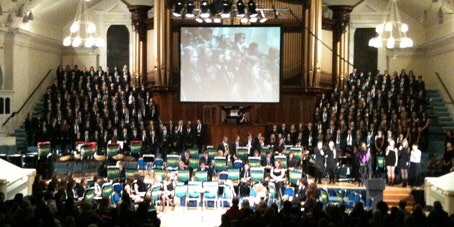
 will become professional musicians, some need the music for their profession but almost all pupils love music, spend ages listening to music and being moved by music, or composing or going to concerts……
 At Trinity the curriculum promoted music. Orchestra, singing and instrumental work. Every year 7 learnt a musical instrument, we had music lessons lessons and orchestra on the curriculum. then of course GCSE and Level music, music tech, performance…. we had concerts, lunchtime recitals, liturgies and celebrations with music often at the heart and soul. we brought in our primaries, we visited our primaries, we showcased the school to pupils, to parents and to the community.


 Over that period even I got cross at times, I recall helping him unload some kettle drums, I think they cost a bit less than my entire budget “but john wait until you see the effect on the orchestra” – he was right. It became almost a standing joke that staff were not appointed unless they could teach a bit of music, e.g. an instrument or play in the orchestras. I wondered how I got a job! He appointed genuinely outstanding music staff, hugely dedicated and an incredible music lead. Such incredible talent, creativity and industry alongside the amazing ability to find music to allow a beginner to contribute but a star to shine. Peripatetic staff who could bring young children on, who could encourage them in their instrumental but also to take part in a brass band or a jazz group or a strings group, the chamber orchestra etc. Not only that but singing echoed that – proper choir singing, high standards but also music for the ‘ boys vocal group’.

 Mr John Dexter blogs about school