Dear Secretary of State for Education – as of 5th July 2024

05-07-24

Dear (new) Secretary of State for Education

You are the 24th SoS since I started working in schools in 1981 and either the 18th Tory or the 6th Labour leader of the sector I loved. There are a number of issues in Education needing urgent attention post-election here are my thoughts for what they are worth. ANY politician or party needing more info, you know where to find me! In order 10/10

1 SEND – too many councils taking too long to sort them for families but more important not enough resource in the system to support those EHCP – so you might suspect the tardiness is about funding. Families struggle to access special school places – many perhaps don’t need (or want a special school) but if we are honest too many schools are not inclusive and therefore make excuses not to take some children with SEND needs. Sometimes this is very subtle – an open evening where for some reason the SEND team aren’t available! Sort funding, review SEND and implement the Timpson review on inclusive practice. I’m not against exclusions including permanent exclusion. Behaviour is really really important but – once you exclude the naughtiest pupil in the school, you then have to deal with……..the naughtiest pupil in the school. No doubt ( see below) we need better local services here to help. Look at helping make schools more inclusive or rewarding those that are. It is a great joy for a school community to have all sorts of children along with their interests, ambitions, needs. There is a place for Special Schools but these ought really be for those with much more complex need. Do simple arithmetic – 15% of pupils have SEND – what % should be in Special and therefore how do we help that majority in the maintained sector? Remember these families often have the hardest of times and feel they are constantly battling.

2 Teachers – it’s no good having great buildings if there are not great teachers or even enough teachers. There is an urgent need to review pay and conditions and talk with TU and with staff. Why are they leaving ? Why are so many retiring early? Why isn’t my secondary age child taught by a graduate or expert in that subject? Some of this is pay and conditions – graduates command better pay elsewhere – elsewhere in other sectors or elsewhere in the world. Some is due to autonomy and the school structure and regulation. Teachers might hate Ofsted not because of fear of accountability but because so often their leaders say ( rightly or wrongly) Ofsted (and the MAT) demand X or Y. Personally I loved teaching, I loved planning every day, every year, working out new content or even old content,  new ideas, new ways to get over hard Chemistry and new ways to assess, or to help my students. I did not like being told how to teach – once a deputy told me I needed to return to the old ways of science ie heading/method/diagram/results/conclusion. I asked why when exams did not examine like that and science didn’t really work like that and how did he know when I was a mini expert in teaching and in my subjects (RSC award winner!) …. But if you keep getting “the MAT says so” or the LA says so” or “Ofsted demands ” it is soul destroying. BUT there is also something about the curriculum fit for children and young people. Please don’t negelect CPD, keep it local too learn from those around the corner doing better, use Univeristy ITT and research, forget the blob nonsense. There is great expertise to tap into but if you keep hubs move on from nepotism.

Many in a class are disillusioned, disengaged – it may be them of course BUT imagine what subject you hated most at school – for me that’s Art. Now imagine you have to do that all day every day except for a few hours of your favourite subject. Imagine all the creative stuff being downgraded, imagine all the extracurricular gone- few teams, no regular concerts or shows… and that school is dry. My old head allocated 1200 of 1265 hours and then said …” You have 65 hours unallocated, do something with children – a lunch time activity, an after school class , run a team, take a trip away…” difficult to argue and so we had one of the most rich extra curricular offers and we knew our children and families all the better I’ve blogged elsewhere on that.

I had the privilege as a local Director to visit many local schools and often, very often I met ex pupils, inspired by our school to teach, to be a SENCO, to be a TA to be a business manager. It made me very very proud, yep morally onto the high ground. Young people should want this wonderful job it shouldn’t be difficult to attract them again. [There’s a whole section here on why be a teacher!]

So this needs 

3 A review of curriculum to fit a 21st Century world, a world where knowledge helps but a decent crap detector is better – where you learn how to find knowledge and discern its value, where you learn from an expert who absolutely loves and inspires you in their subject – how lucky was I to work in a school full of staff like that? And consider how assessment helps learning NOT constantly measuring it (P8 EBacc etc) these measures crudely comparing children or schools – move on- you know Gove, he might have been wrong! and by the way you need to do this for FE colleges too – FE could make the biggest of differences to your ambitions but fund them, listen to them – to quote Sir Keir Stamer ” If you spent more time listening you might not be so out of touch” Oh and by the way listen to professionals across the spectrum no decisions for the media, none – that gets us nowhere ( See Brexit).

Rethink P8 it’s distorting classrooms – sure Maths and English are important but we don’t need a formula to tell us and an emphasis that promotes subjects or demeans others – it may be too late for music, Design, Performance subjects but bring back a fair choice and subjects by their own value and merit- not the values of one politician (Gove) or favouritism.

4 Ofsted Much is written on this, here is my view. Get rid of judgments – I have always hated them, even when we sat on “Outstanding” for over 10 years. What did it mean? If you asked the staff, children or parents about our school they would mostly be positive, they would say some things, the music, concerts, sporting occasions, wider opportunities and outcomes were good and often amazingly brilliant. They would say mostly their children liked coming to school though not every day! You see they might also add some days were pretty ropey, some days behaviours deteriorated and some stuff really needed to change. Other parents in Nottingham might say – we knew that this school was Outstanding, thanks for the info but we will never get in ( which is true we usually had 500+ applications). How dare anyone sum up the work of 1200 children 130 teachers and support staff over 195 days in one word. There is an argument to get rid of Ofsted but I suspect that’s a step too far even for a radical majority led government, sadly. So Ofsted reports should be like the local area SEND reviews done by Ofsted and CQC. Spend time, not just a day – praise what is going well ( so we know and carry that on) tell us stuff you think we need to work on and tell us anything urgent needing attention. If if if the list of improvements needed is too long make us do an action plan and revisit in the year, give the LA or MAT some resource to help. One big issue here is the almost unspoken politics. The regulation is a way to create more academies -a one way move if your inspection is poor. 

There is always a political argument that “Parents need to know and surveys show they like Ofsted”. This is somewhat disingenuous and naïve. As above a school rated good ( which now covers a huge spectrum, maybe brilliant some days and struggling on others. It may change in a short period of time ( we once had 6 English staff off on maternity leave, that was a challenge!). There is an argument about it helping when choosing a school but parents do not choose a school – they express a preference and in most areas they have no choice – in fact the schools effectively choose them  especially if oversubscribed. There is a really tough issue her for a school labelled RI ( requires improvement) as parents see this as a ‘bad’ school and try to avoid it for their children and as some teachers may shun the ‘opportunity’ to work there. If anyone has been at school appeal panel they hear all these arguments – and the panel have to try and explain that an RI school isn’t that bad, it will get better, lots of children do well there etc. In the light of the tragedy of Ruth Parry and the mishandling of that by Ofsted, the least we can do is stop the one word judgment and at least get rid of those media stories ( our local Nottm Post “Here are all the outstanding schools in Nottingham” – which our local news outlet ran with 5 errors and no context that the framework has changed that 15% O became 12% O)). Make the media, make the parents read the reports and remind them some are 5 years out of date and were done by two adults in one day. It’s a pressure on inspectors too. Would we do this to industries? Imagine I visited Boots ( I am a scientist) and with a couple of colleagues found want and all over the papers Boots judged RI – and by the way we will be back in a few years, and the press ask about the consequences for profits and jobs and maybe even the companies existence. I realise in education we are talking public money but believe me we are accountable

5 The System. We now have MATs, we have some LAs still running schools – often Primaries and Special. There has always been a feeling the latter are second class, in terms of funding and favouritism. Just as an example when a poorly achieving school is moved to a MAT the Trust may get extra funding – perhaps if the LA had received that, the school wouldn’t have fallen over.  There are really good MATs, I’ve worked with some in Nottingham, there are also poor ones, there were poor LAs and I’ve worked in some good ones ( Oxfordshire under Sir Tim Brighouse). This shouldn’t be about ministerial or political whims – such as ‘all schools should be academies’ or ‘stand alone academies can’t stand alone any more’ or bring back more grammars. Do some proper research on what works and what doesn’t; take time listen to a wide view run away from nepotism. make a long term strategic plan and win over cross party support to rebuild over 10 years

6 Governance – here is a question, when a parent has a complaint how easily is it resolved? Not the persistent offender parent the serial complainer, just the parent who feels their child isn’t say getting adequate support? They might try and talk to teachers, TAs, maybe the head but if not resolvable where then? My experience in an LA was that many exasperated parents turn to the LA, who has no powers over MATs. They might threaten Ofsted but they will rarely intervene unless it feels like a big safeguarding matter and then will seek info from others. Some schools now have little local governance. MAT governors at Trust level are very removed from the needs and the joys of the local school. Then there is the unspoken sponsorship – businesses or even political interests, donors to the parties, nepotism over schools -it’s not good enough. Run the school, hold people to account, support and challenge. Our CoG always rang me to see how things were going, she turned up at every concert, every Governor meeting, and every sub committee meeting, her children came to the school, she supported PTA events – she loved the school and when she was critical we all listened, we listened all the more carefully for this lady loved the school.

7 Universal Services Since council budgets have been cut schools are the places for many vulnerable and disadvantaged families to turn – for food, for clothing, for holiday hunger for help and for love etc. Schools helping them with paperwork etc. Teachers wanted to teach they might be Ok with pastoral work they understand wider responsibility but they’ve got tied up with too much universal support. Please urgently help sort the finances of councils for Children’s services esp for Children in Care where placements and costs, thanks to a market economy are ridiculously high and yet the children still get a poor service. Talk to Councillors and Officers who know their communities well and start working on solutions, and please talk to children in care. Think about libraries, children’s centres, youth services. You know why? They often reinforce good behaviours and help keep people on track – look at the Pythian community in Nottingham; look at the work of early years…..

Oh and whilst I mention it – councils are in a good position to create great partnerships – schools colleges Universities, other provision like AP and Early years but alongside cultural and sporting partners – they did really good stuff in the pandemic – give them resource for this and please please help with place planning – opening or closing schools is so painfully slow because of the academy obsessions.

8 Mental Health – why is that so bad here in the Uk compared to most other European Countries? Why haven’t we bounced back after the pandemic? Why is attendance such an issue? Talk to schools and work a strategy. Talk to young people. Locally our NottAlone website has been a great success – this may need money but it may need creativity, coproduction and better solutions.

9 Buildings.Schools had RAAC feel it’s probably been forgotten, BSF was Gove’s first cut and stole the investment which was needed to help transform learning. So too have the regular maintenance issues of boilers, leaky roofing, better ventilation etc. This needs a simple plan but a costed one. Do simple arithmetic- there are about 21,000 schools, if the buildings last 50 years we need to rebuild ( and set aside funds) for approx. 400 per year . If they last a bit longer because they are well built then that decreases. Why can’t our children learn in reasonable or even nice buildings. Most of my time I taught with leaky ceilings, cold labs in winter, stuffy ones in summer, unfriendly places – but give me a good school in cr*p buildings any day.

10 Locally good, locally accountable and local to me

This in realty is the most simple yet the most complex. What all parents want and all teachers want and all children deserve is a good local school. Yep, just a plain simple good local school – a good curriculum, staff who know their children and can inspire them and teach them and stay the course and frankly love them. In my very personal view too much resource is centred on the MAT team, the business and the CEO and senior staff, not only too much money but too much power. ( see the amazing work of Warwick Mansell on this. Restore that power to the governors and the headteacher, support the headteacher, challenge them but work out how to do that without a super head, without X who turned around school Y. Listen to the heads who love their schools, love most of their staff and love most of their children. You  might be surprised just how many of them there are, awaiting the changes we need and already serving their local community.

Were (we) Teachers better a generation ago?

Better Teacher or just different, has time moved on and moved the job for the better?

I’ve retired, 26,000 lessons and finished, and now it’s time to  clear stuff away and reflect upon the world I absolutely loved.

Back in the 80’s and early 90’s there was no internet for schools as such, no video and not much in the way of copying ( Banda at best, OHP if a wealthy school). I loved teaching Chemistry but every lesson I wanted to bring my subject to life. How great it was to teach Chemistry – all curriculum subjects have advantages and disadvantages – ask PE staff how everyone tells them their job is great on sunny summer days as they set off in shorts to teach tennis, though no one says bad luck in the cold, grey, windy, frosty or grotty days of autumn when the gym is used for mocks. I had chemicals and unusual apparatus for practicals and demonstrations. There were tales of poisons, explosions, medicines, materials, from soaps to alcohol from amazing discoveries to problems to solve. We could do magic with solids and liquids; use that special fume cupboard or make a small firework, talk gunpowder and make amazing colours or metals from powders or tiny beautiful crystals grow – in fact much of that were part of the reasons I chose the subject to study for 4 years in the first place. And yet I constantly searched out better proper Chemical stories. I felt these would help young people understand more be more curious, apply their skills more and be hooked into doing my subject after Year 9, or after Year 11 or after Year 13…..and many did. I practised, rehearsed, fiddled to get things to work – though sadly didn’t have a book I only found after 35 years of searching Professor Fowles Lecture Demonstrations in Chemistry …oh oh oh if only!

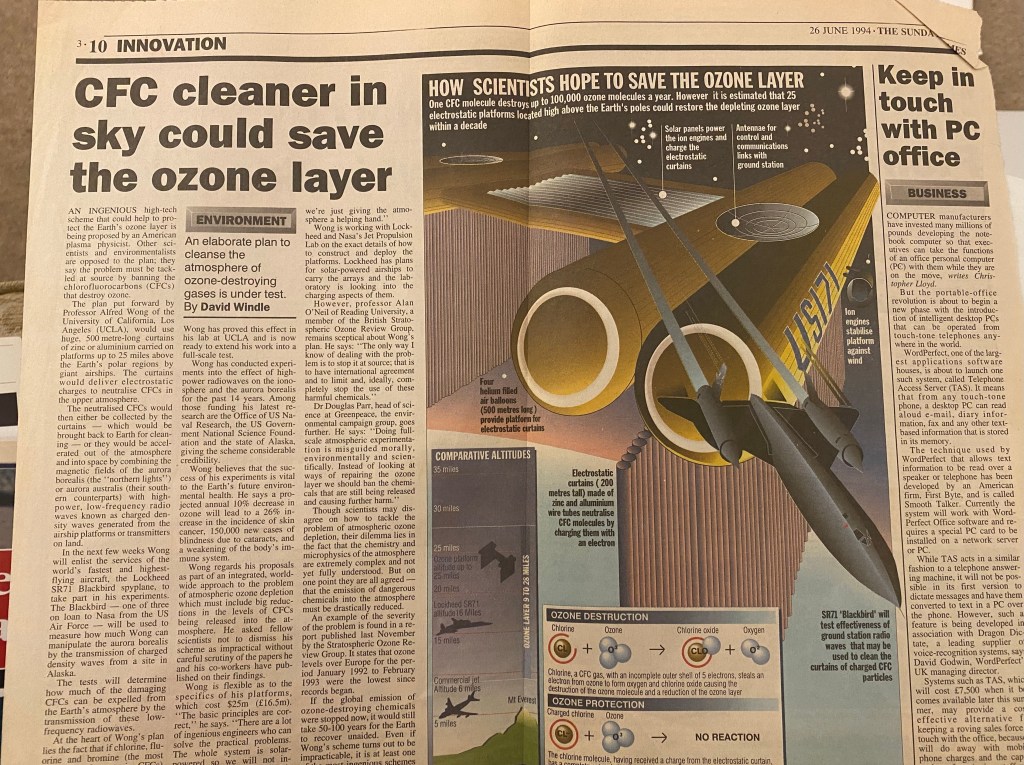
No internet, but also no videos, occasional TV but do you recall 80’s TV Science? “Tomorrow’s world” and well that’s about it. So everywhere I looked it was picking up of booklets and leaflets it was magasine or newspaper articles. If it was a conference then grab as much of their publicity literature…and frankly there were not many conferences but there were ASE events and RSC events as a starter. The joy of my Mother sending me an article carefully cut out of her newspaper folded in a letter “ you might like this?” . How right she was.

Then craft this information into my lesson, there wasn’t much chance to photocopy, maybe the odd expensive OHP but we could read it or share it or at the least I could do what all teachers do well – tell a good story. There were even the odd articles with scientific errors for my pupils to discuss and correct. BUT I had to think – will this help , will it bring more knowledge, better understanding, or maybe we can use this to see if they can apply their knowledge….maybe even might make them do some of that ubiquitous ‘wider reading’ – I sense these questions helped create good lessons, or turn good lessons into great lessons.

Preparing lessons, delivering lessons, getting feedback from marking was and still is, the bread and butter of the basics of good teaching. It was in the 80’s and 90’s and maybe still so. Marking was (and definitely still is) a slog – but the teacher learns what pupils don’t know and what confuses them and what is well understood – but frankly I got that from marking about the first 5 books the other 25 or so just reinforced that. The interesting and challenging part for me was as a new teacher through until I retired as a head still teaching in 2017, the favourite was preparing. I spent hours preparing – as my ITT tutor used to say every good one hour long lesson needs an hour prep and reflection and an hour of marking. In time it doesn’t need an hour my bare bones of a 4th year CSE Lesson in 1981 would be used every time I got to that part of the syllabus for 36 years – but I promise almost every year be it O Level, GCSE, double triple or single that lesson got better and the advent of the internet promised even better and  it delivered a richness and an opportunity to really bring to life to really help understand and apply knowledge and motivate.

Of course this “even better” improvement accelerated as resources improved. The internet brought modelling brought video, 3D images AND access to frontier research therefore does even better than my mission to “Bring Chemistry to life” back in the 80’s and 90’s. In 2017 I was challenging students to look at what Nobel prizewinners wrote and said…..not just the favourites of Chemistry specifications Rutherford and Haber BUT those of modern greats, less well known names but incredible discoveries and my endless challenge -please be the first Nob el winner that I taught! (PS that Nobel site is my favourite!)

This is epitomised for me in a favourite KS4 lesson- the group 1 metals – Lithium, Sodium Potassium. Haz-cards always limited the lump when adding that piece of sodium to water. A sluggish looking soft, cuttable, grey metal, slimily covered in its oil from the bottle. ONLY USE the size of a grain of rice but ask any Chemistry teacher and they’ve been heckled in this lesson “Oh Sir, add a bigger lump” or “show us Rubidium or Caesium” ….and so in 2023 we can. There is a great video of adding Caesium to water and an even better one of the quite wrongful addition of sodium to a lake a huge quantity around 9  tonnes off the back of a lorry, into a lake back in 1947. You can even see Professor Poliakoff explain and show many many elements. Now if that doesn’t bring Chemistry to life! Though I suspect that the live view of a little lump of grey metal fizzing around carrying an orange flame or purple one before exploding  – these are what will be remembered. Sorry Biology colleagues who dipped out and showed a video it’s just not not not the same. BUT then further Lithium we know is in all those batteries and my old tutor – take a look at his discovery and comments – the Nobel winner John B Goodenough. So the joy for me as I annotated my lesson notes and next year might be even more excited to deliver those new ideas even just for a few minutes of a lesson.

In any long career do those lessons we teach year in year out do they improve? Did they find a rich vein of interest and motivate young people?…….or were we driven by assessment results and “just learn this”. Yesterday we did page 45 so today we do page 46 “Yawn”. I really think not. Don’t get me wrong assessment, exam results were important to me and my students. After all qualifications open doors [ and Chemistry opens some significant doors like medicine and scientific research] and opportunities. By contrast with rumours that Primary SAT assessment has led to many pupils who really don’t love reading, I hope my careful planning opened doors to the wonderful world of scientific discovery.

To be honest this is misleading as I rarely wore a lab coat !

So were we old teachers better or just different….I’m beyond appraisal, you be the judge. Comment below.

Confession. Guilt exposed by THAT teacher look

I’m not sure if this happened to other colleagues but it happened to me often and I wonder if it’s an Roman Catholic schools thing. Read on…

I’ve blogged about Bus Duty elsewhere and so this is what happened. I was just waving a bus off and thanking their driver when a distant shout back down the path alerted me to stop the bus “Oh hold on Driver” and down the road came Liam (we’ll call him Liam because that was his name). The bus driver waited and Liam got on and I thanked the driver, waved him off BUT he didn’t leave and beckoned me on. That only means one thing, bus troubles.

“Mr Dexter please do something about that lad, he is so badly behaved on the bus”

“Oh like what?”

“Well yesterday he had a packet of polo mints which he broke into small pieces and threw around the bus at people.”

So I go on board ask a few other pupils who confirm the incident and all I can do is ask Liam to see me next day at break at the staffroom door – you know sternly, teacher look, teacher face.

If any of you are senior staff reading this you’ll know what I’m about to say very well. By the time morning break came around I had done or not completed a thousand tasks with hundreds of people. As one colleague said until you meet yourself going backwards you’ve not understood school leadership. An evening of emails, marking, preparation, a morning of assembly, cover issues, and lesson one taught  – ‘good lesson” I’d say – not sure ofsted would but then they just observed at that time they didn’t deliver 20 lessons a week and do all this !

So the bell goes for break I, like many other staff, head for coffee and the staff toilets. Just as I turn around someone says “Mr Dexter Liam at the door for you”. Do you know in all honesty I couldn’t remember what it was about. I answered the door remembered he was in some trouble ( polos and buses) and so we went into an office (doors open of course).

Me “OK Liam thank you for coming to see me. Why did I want to speak with you?” [Teacher look, teacher voice, disappointed ‘you’ve let yourself down’ eyes.]

Liam “ I know Mr Dexter, I’m very sorry.”

Me “Go on”

Liam “ Its about French isn’t it, and my behaviour with Mrs C. I really shouldn’t have spoken to her like that ….”

Me “ Mmmm thank you Liam, that’s important but actually it wasn’t about that”

Liam “ Oh is it about the incident in Biology, it wasn’t really my fault the scissors slipped, I don’t honestly know how they flew across the lab and hit Ashraf, it was an accident but I do need to apologise. Oh hang on is he ok?

Me “ Mmmm thank you Liam, that’s bad isn’t it  but actually it wasn’t about that, Ash is fine”

Liam “ Oh Sir it’s not about English homework, I just didn’t understand it and that’s why I copied off Heather, I didn’t think Mrs W actually noticed but nevertheless it was wrong.

Me “ Mmmm thank you Liam, that’s helpful to know  but actually it wasn’t…”

BELL

Break over 15 minutes up

Me quickly “ actually Liam it was about the polos on the bus”

Liam “Oh that , that’s nothing really Sir”

…..and that’s why our heads of year and form tutors got loads of detailed referrals 

I thought it was exceptional but it happened over and over. On another occasion I had to speak with a sixthformer about an incident at the drinks machine. We had a number of problems with a vending machine and made no progress in solving what was happening. So we put up and told the students about a temporary CCTV. I think Rick has been away or not paying attention when we told the students and day one a colleague sent me a video clip of Rick not just shaking the machine but obtaining three drinks and then selling two onwards. 

Once again I called Rick to the office and asked him if he knew why I wanted a word

  • Is it all my lates?
  • Is it all the referrals from my Business Studies teacher?
  • Was it because I skived off Maths?
  • Is it my incomplete UCAS form with only a few days left to the deadline?

The great thing here was me nodding and just waiting. [teacher eyes, teacher expressions, teacher timing.]

  • Oh Sir has someone complained about my lengthy excuses for not meeting deadlines?
  • Oh No don’t tell me you are kicking me out ( We didn’t really do that!!)

That’s escalation for you and again another lengthy set of confessions to sort. He was all the more mortified when I showed the video and just as he reverted to character – ‘are you sure that’s me Mr Dexter?’

My dear teacher friends you remember raising that eyebrow using that voice and condemning those actions if not the student and many of you do so thousands of times to great effect. Thank you

England expects – Do your Duty, Teacher

Duties. Teachers have to do them, sometimes paid sometimes for love ( which we do a lot): bus duty, playground duty, detention duty, dinner duty. Schools run these on rotas – in my time we did one break a week (no extra pay), we volunteered for detention, bus and others but were paid for lunch. I did all of these once a senior leader but I never took any pay. Duties matter to keep children safe and happy BUT can they help teachers too?

As a young teacher I disliked break duty

  • I missed the break which I often really needed
  • I missed the staffroom gossip and adult conversation for those short 15 min moments
  • Playground duty often brought more work, behaviour referrals or someone’s quiet words needing a safeguard referral
  • I needed max time to prep for my science lessons – setting up etc

But once mentored by an older colleague I started to see the value. For me this was most stark for bus duty. I did bus duty on and off irregularly when asked as a young teacher. Seven buses lined outside our school, staff saw children onto the bus and sent the bus on its way when everyone was on board. Some of our buses were the public bus ( No 76) which slightly diverted to collect our children, but wouldn’t hang around. 

How many times had I heard  – “let the children out promptly at 3.30pm or they might miss a bus” and then as a senior leader how often did I say the same. You try cajoling a local bus driver already stressed to “please hang on a moment”. BUT my big error came week one of being a new assistant head and now firmly on the bus duty rota. My teaching lab was close to the gate, I did not want my lessons finished ‘early’ even by a few minutes as other SLT did – mmmm my mistake.

“Sir, sir that’s my bus leaving early!!”

So that first week as a new AHT I was busy and often stressed but on Friday worse was to come. An A-level group deep in conversation with me and each other about global warming, greenhouse gases comparisons to the Ozone hole ( yes we taught all that) and suddenly I realised it was gone 3.30pm I mean only 3.35pm BUT I WAS LATE – I flew out the lab and sprinted to the gate to see the first two buses departing and leaving a load of children running down from lower school “Sir, Sir that’s my bus”. Disaster and about 30 pupils missed their  bus or rather their bus left them. Some took other routes, but there were about 5 left and so it was to the school minibus…. I never did that again, my lessons finished early. 

Other days I dug in my pocket and lent the £1 OR £1.50 etc with a promise you’ll pay me back tomorrow – promises kept and unkept but favours done and won other favours. Other times I waited in the rain, snow and even nice summer days for 20 minutes for a bus  to show up, but I came to see it as a safeguard and a privilege. Initially I must admit I resented all this, as other colleagues had those moments to sort themselves out at the end of exhausting days or coffee with a colleague and opportunity to unwind, even a chance to escape quickly before a rush hour. Some staff ( maybe cover staff) still kept children behind who I had to arrange to get home. But like many aspects of the teacher role eventually I really enjoyed the duty.  I made it my place to wish the children well to ask those in the queue how their day went, ask if they had had any good lessons, what they had learnt. Had the chance to say to the odd youngster who was struggling, well done. To someone I had to sort out in the day, to say have a good evening, tomorrow is another day. And yes sometimes used the moment to create the bridge back for them. For others they might just call out on the way “Thanks Sir” or “ Can I chat to you tomorrow?”

Even better I watched children grow up – I remember many many like the little girl in Y7 who struggled with a violin, a school bag and once a week her basket of cooking, running, worried she might have to sleep at school if she missed her ride home. She told me she wanted to be a journalist one day when the bus was late and 7 years later having taught her in y10 and y11, I gave her that infamous brown envelope which took her to Leeds University to study broadcast journalism and start her now considerable career in the media

I talked to parents who occasionally intercepted their children to take them to the doctor or dentist, or who had news ( good or bad) to share, and news shared with me.

On a few odd occasions,  behaviour was awful and we always told the driver to return to the school. Children marched to the hall, and asked who did what. Rarely any confession but a sheet of paper each to write anonymously what happened , esp under the pressure of 5 mins or the bus leaves you here and we had all the names and info needed.

Apart from my lungs full of diesel fumes I grew to love those duties simply because I used them to help make me be a better teacher and halep develop an ethos and culture in a school.

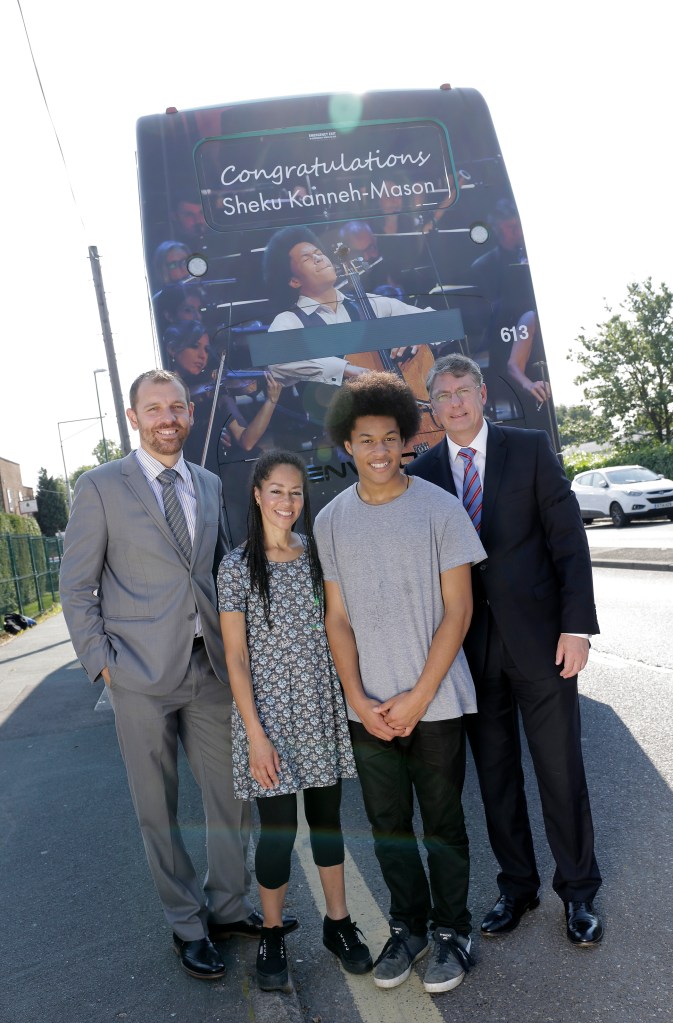
And here are two special moments – one when Sheku Kanneh-Mason had a surprise as Nottingham City Transport generously named a bus after him when he won BBC Young musician – though he did on occasion slightly oversleep, run for (his) bus and miss it! Secondly the kind of letter you just love to see

You are a b***dy teacher!

In 1981 I started teaching and was that new shiny teacher. At the end of my first year, my head of department who was an amazing teacher I was so glad to learn from, asked me to attend a faculty meeting on his behalf. It was a significant meeting because “set lists” were to be handed out.

Hard to imagine a time before a national curriculum when children still chose the majority of their subjects. You might think they could have chosen any 10 or so in any combination but schools were not stupid, so they had little rules like, one subject from option A, one subject from option B plus maths plus English etc. Remember there was no Ofsted but even then we knew what to do to help children.

However, this meeting was to give out the lists of those children who had decided to do your subject in fourth and fifth year or year 10 and 11 in new money. So I went to collect the list of pupils who had chosen O-level or CSE chemistry . It was a scary meeting for me, this was a comprehensive school that not so long ago had been a secondary modern, the pastoral system was a vertical one with heads of house who were frankly formidable characters and I was privileged to learn so much from them including my own head of house Marian Davis. So the lists were passed around the table, hand written and I looked down the list of names recognising some of those whom I had taught. There were of course pupils you were very pleased to see had chosen your subject, in fact these were probably names that everybody would have been delighted to see on their list. Then there was a moment where you looked down to check certain names were missing and yes there were those pupils who I had struggled with and my wisdom at their parents evening to suggest subject X or Y might be better, well that had worked I was quite pleased they decided not to carry on with chemistry (such naivety and inexperience).

Silence dropped over the meeting as people viewed the lists handed down from the deputy head. Then there was a muttering which came from the head of PE, with a bit of sighing, a bit of umming a bit of ‘somebody not very happy’. As that continued one of those heads of house spoke and we all looked at him:

“What is the matter Tony?” said the head of house, a man who maintained outstanding discipline and who we all knew a majority of children absolutely adored.

“Well”, said Tony “I’m just looking at this list. The first time we’ve tried to get PE as a qualification in this school you all know how hard I’ve worked to get this off the ground and I am so disappointed by the names of people you have allowed to choose PE.”

The head of house looked directly at Tony and said “give me an example”

“Well down here is Richard James … he can’t even swim how am I expected to get him any sort of qualification in PE?” I sat there and thought to myself: that’s a fair comment I wouldn’t really like to have anybody doing a serious chemistry qualification with me, who did not know how to handle basic equipment or understand the basic rules in a laboratory or who had done Ok in those first three years at secondary.

However the room dropped to silence …”Tony” said the head of house “ you’re a bloody teacher, teach him to swim”

This was a phrase which rang so true it lasted with me the remaining 40 years of my teaching career.

I was so glad that somebody nailed it, that day.

Whatever we think about the way young people behave or young people take to our subject, do or don’t conform, we are teachers and it’s our job to find a way to teach them.

There’s a kind of question I and many others are asked at first introduction to a stranger in company…..“Oh what do you teach?” to which the answer is …. geography chemistry English etc though the clever answer is “I teach children”. I think that day seared into my mind was that I teach children wherever they come from, whatever their experience, and my job was to do my best to inspire them and …. teach them, to help them learn my subject it was a deeply profound lesson. Thank you Tony and that extraordinary pithy Head of House.

The Ambition literacy campaign in Nottingham

This was written for the Nottingham City Council campaign and is on the NCC intranet but it might get more publicity for reading out in the open


We are encouraging more children to read as part of the council’s new literacy campaign ‘Ambitious for every child’. We know that an early love of books and reading can help children to be more successful in the future. In this blog, our Education Director John Dexter reflects on his early experience of books and the impact it had on his life and teaching career…

The great children’s writer Roald Dahl said of reading: “I have a passion for teaching kids to become readers, to become comfortable with a book, not daunted. Books shouldn’t be daunting, they should be funny, exciting and wonderful; and learning to be a reader gives a terrific advantage.”

When I was a child, we had very few books at home, only one or two suitable for children, so I read those several times, but my Dad took me to the library every few weeks. I loved those trips, partly being with him, which was rare, and partly as I entered a new world every week:

  • Outer space, imaginary planets, inconceivable journeys, hideouts, far off islands, distant countries, danger…
  • The world of pirates, ancient peoples, Victorians, Romans, firefighters, commanders, heroes, ghosts…
  • Safely in a war zone, a baking hot African country, the freezing ice sheets of Antarctica, the beauty of mountain landscape, the enchanting Far East, the hill stations of India, an adventure with superheroes…

Sometimes escaping, often fantastic, occasionally scary, always learning. But so grateful for the world I entered. It’s not just about learning the basics of reading to access the modern world, it is about being literate, about learning and sharing, enjoying and getting ideas, or having ideas challenged.

As a teacher, you might expect me to say all this but I was never very comfortable with English, let alone English Literature (a subject I failed aged 16). Not until I met with Mr Scholar (great name for a teacher). As I chose to study science, my school insisted we had “extra” English lessons – I almost despaired but probably not as much as Mr Scholar. So we came to an agreement, there was no syllabus, no exam so why didn’t he tell us what he loved to read: fiction, non-fiction, plays poetry… that set me on the road to enjoying reading and that helped me become literate.

When I worked in secondary schools, I am proud of the literacy challenges we put in place: every Wednesday, 25 minutes of silent reading, save those who struggled to read helped by trained sixth form literacy coaches. This routine said:

  1. reading is important enough to have on the secondary curriculum
  2. there is a need for time set aside to read seriously and
  3. promoting discussion between pupils and between staff and pupils about reading, about books, about fiction or non-fiction is healthy
  4. ambitions can be fuelled by literacy

For me that was great, I honestly believed reading was just so undervalued. I once made my Year 11 Science class read aloud for a whole hour lesson. At the end, one student said: “I can’t believe how much I have learnt Sir, it helped me make sense of many of our lessons.” This said something about me, probably, but I just hoped he would read the rest of the book.0_Hoodwinked-book-bench3

I was sooooo enthusiastic to get my own children to read. But here sits a secondary teacher with no idea how to teach reading, so it was the obvious: read to them, read with them, listen to them, tell them stories, find stories, get them to find stories… and I remembered that’s what my Dad did too; he took me to the library and he took books out as well. Adults can model the importance of reading by reading themselves, set aside time, and help choose books or give them as gifts.

I am envious of the wonderful array of books available today, and at reasonable costs, but the Dolly Parton Imagination Library sending 60 books over five years to small children offers a great opportunity to start reading, start imagining, to relax reading and even to find a better balance in life. But most of all to learn and enter the funny, exciting and wonderful world Dahl describes.

Go on, be ambitious and give it a go.

If you wish to support Councillor Mellen’s big read, please do so here.

OR BETTER Still tell us all about a book you loved as a child, or loved reading to your children or grandchildren or would give as a gift?

China > curiosity, culture and challenge

China – a visit thanks to Access China UK and the Nottingham Confucius Institute and Nottingham City Council

An amazing experience, which would have been incredible and fantastic but was made even moreso or as we teacher’s say “EBI” ( even better if) for the fact I went with 9 great Nottingham City colleagues and we had a wonderful Chinese guide and interpreter,  all of whom added the value to make it totally amazing.

img_9008

Feifei our interpreter at the Ningbo library

IMG_2801

The Ningbo 10 (ignore the man on the right he wasn’t with us!)


\


You cannot go up the Pearl of Shanghai and look over the biggest City in the world (population 24 million) and not think – this is where the future of the world will be centred and so we need a plan, not a Brexit neither an educational plan but a proper plan.

IMG_3171

img_9151


China is a long way away – 5750 miles to be precise or exactly 24 hours from me leaving a hotel in Shanghai to arriving at my front door in Nottingham. But it’s also a long distance away culturally and we so enjoyed discovering just touching upon something of its culture.

It’s a country of the highest population 1.4 billion –roughly 24 times the population of the UK and yet the 4th biggest by area which means a lot and I mean a lot of tower block apartments offices and hotels. Shanghai is the biggest City in the world. (24.2 million). We travelled to Ningbo about 4 hours away, including crossing a bridge of 16km to Ningbo, a City the size of London. It’s busy on the roads but those on cycles, motorcycles or even walking seem to just move at random and hey the cars stop and we saw no accidents. Green spaces are precious.

IMG_9106

Red amber green >GO GO GO

img_3185

Bicycle check, mobile check, helmet -what? Few cares in the world, hoping everyone else will stop.

We enjoyed wonderful cuisine – not like westernised Chinese food. We ate like royalty with exquisite food brought out for us, vegetable dishes, meat, noodles, all kinds of tastes, flavours and textures but not too much rice, rice comes at the end and you are not really expected to eat it. Oh and we used chopsticks all the time. Meals were very sociable, no distractions and plenty of conversations, and no rush, no TV, little wifi. That’s less cultural and more….common sense.


We were very well looked after by our guides, interpreters and hosts, who took us to the most interesting of places from tourist spots, to restaurants and of course to ensuring we travelled to time. In China one is never late. They could not have been more helpful, supportive, informative and generous, as were the hotels we stayed in and all the colleagues we met. And there was a thing – I asked one teacher what she hoped for her pupils “to give them every opportunity to learn”. QED the commonality of the vocation.

The culture is well documented but we were shown honour, respect, admiration and treated with huge kindness and generosity by our hosts. I was delighted to be part of a team that did exactly the same for one another on the trip especially when ‘stuff’ happened and they looked out to encourage, share and support even though we hardly knew each other beforehand. Representing different sectors the conversations gave us all further insight and arguably the best of CPD (one early years, two Primary heads one Primary adviser, four middle leaders from Secondary, one partnership lead and me from the LA). Such enthusiasm to ensure “this works” for our children.


To be a tourist and see the bund and river at Shanghai as well as to go up to the 263m Pearl of Shanghai were something but also wandering the tourist shops and trying to bargain was fun. A privilege to visit the oldest library in China (Ningbo) founded in 1561 and be welcomed as honoured guests was special. More special for us educators as we value our school library or local library and we value lifelong learning. Nevertheless our visit enabled us to consider just how ignorant we were of Chinese history and culture and the potential in the Far East.


What did we miss ? – very little, we had tea, it tasted different but we were ‘tasting’ China. We did not have access to facebook, twitter or google and we had withdrawal but we chatted and we asked questions and discussed education and other matters and we enjoyed the company, well until we hit wifi in a hotel then we caught up on messages via a message/chat system called wechat. We missed traffic jams, we missed litter, we did actually miss a few hours of sleep somewhere along the way. You know something else? We didn’t miss pupils, even English pupils, at that even Nottingham City pupils because we stopped at a service station in this vast country and met 10 pupils from one of our local primary schools – having an incredible time – though perhaps a little tired ( much like us) they were full of the experience.

And so to education and some things I have learned and of course I may be wrong that the whole system looks like this but here are my ponderings :

• Families really value education. Politicians value education. Children value their education. Teachers are highly respected (highest in the world according to this survey). This is a deeply cultural matter and about ethos, respect for schools, for teachers and for learning. We met teachers (sure a small sample but the message overwhelms) full of enthusiasm and diligence, we saw little disruption, and amongst pupils a willingness to work hard and and try your best. There is the extreme high pressures involved in the Gaokao exam but setting that to one side the atmosphere in schools was overwhelmingly positive

Proper resource follows the commitment – beautiful buildings; pride in showing us round. I saw huge sportshall ( possibly 4 full size basketball courts and on the floor above about 30 ping pong tables ( I even played the Principal). Their lecture theatre seated 500. We did not hear any complaint about lack of funding – of course that may be for other reasons, However the conversations reflected on their pride in schools and I was glad to be with a group of Nottingham heads and teachers also proud of their schools. Pay not be better ( not sure really about buying power etc) but most of us would trade a bit for having a culture and pride and a community which hugely respect teachers given consideration and of course good behaviours. [Although my own view is that a vast majority of parents do respect us in the UK – just some politicians and the press don’t always and look where they sit in terms of trust and respect.]


• Teachers teach large groups of 40, and whilst they had nice staff areas to work in, with space to share and discuss, to plan they too felt pressures. It maybe around (only) 3 hours a day at the front but they have no technicians or TAs or other adults in classes. Oh and those evenings when pupils are back in school for several hours studying and doing homework, guess who supervises. Heads and teachers take pride in pupils and in their learning. We heard about two schools at the Bureau sharing speeches and we shared about our two, and common features – pride in the opportunities we offer, in the children’s achievements and the aims and ethos in every school and that included to help our children be global citizens. I asked how the head got his children to work hard – “I don’t have to do anything” he said. Just think what all that means for attendance, punctuality behaviour, background disruption, offering opportunities…..


• I loved the creativity I saw, in particular pride in traditions, but also in creating new traditions. IMG_2883We saw some amazing artwork, incredible calligraphy, beautiful ceramics, others saw sport and music to an amazing standard. We met artists in residence and I was invited to play a computer at a board game, a computer that literally picked up pieces in response to my move and you guessed it – the programme and the hardware created by ….a pupil from scratch.

IMG_2991

a CRT – a what?


I also had a discussion with a Chemistry teacher – he had created something but our interpreter didn’t know the words, we had a small hand held device that translated and he said it was a ‘CRT’ and I said ‘oh a Cathode Ray Tube’ and we whooped! I mentioned Thomson, electrons, Crookes and we needed no interpreter –  science can be such a powerful language in itself but check out these facilities:

img_2996


• Willingness to stay and learn and take every opportunity including boarding, yes boarding for the weekdays because half an hour journey home was “too far”. Long days without TV, without Facebook, without mobile devices and perhaps without immediate family because, they all believe in the benefits from social activity and learning. So we saw some pupils who did more hours of homework in a two days than some of our pupils would do in school in a day. Of course there are concerns about resilience and pressure too.

Hospitality and generosity – we took gifts with us for our school and Bureau colleagues and received many back but sometimes individual  pupils wanted to give us something they had done, some  clearly stayed up to make gifts for their visitors.

IMG_3357

MrMcNeill with a beautiful painting made especially for him

I was privileged to pass as one of my gifts the music of Sheku Kanneh Mason ( an ex pupil at my old school) who also kindly wrote me a personal message for the schools which I had translated – that went down really well. ( thank you Sheku). But oh, we had fun – trying out our mandarin, working out currency, bartering, wondering where we were heading when taken by taxi to a school, getting trapped in hotel door (me trying to metaphorically to “open doors”) – looking out for each other and smiling our way through.


• Education bureau officials welcomed our vision for future work with them, they are interested in what we are doing and especially how we measure impact. How we know our City wide plans and also our school plans are being effective, as well as our regulator (ofsted) view. They are keen to foster further links Ningbo > Nottingham and Nottingham > Ningbo. we have lots of ideas from championing exchanges and learning mandarin through to just a better basic understanding of China and our own Chinese community. To be honest they struggled to understand how our system works if it means a local area does not have any control of schools. Welcome to my world!

It is quite an amazement that across the world they are interesting in learning from us.


IMG_3356My colleagues are now busy working out how to manage exchanges, to plan visits with children and to welcome children here to Nottingham. We are looking at how we can work together across the distances and cultures but with an internet and with colleagues here and our own traditions – Nottingham has a University campus in Ningbo which we visited and so there is much to consider and challenge and much remains to be curious about. For me I am committing to try and open more doors with friends in Ningbo – and not these doors.

Happy New School Year – new beginnings

In a way it doesn’t matter if it’s a NEW week or a NEW term or a NEW year – or all three in one!

Schools start the new term with INSET and those slightly odd first days of admin and assemblies, but they will nevertheless ring out with their ‘year group assemblies’ and classrooms and numbers of teachers saying “It’s a new start“.

HP mark bkIt is so good we can give a fresh new clean start, some children really need this, probably some adults need it too. There is something special about the first page of the new book, the new uniform, the new shoes. Almost all the new year 7 will have had  a photograph taken at home before they came to school in their new uniform at their new school. Its a new world as well as a new beginning.’

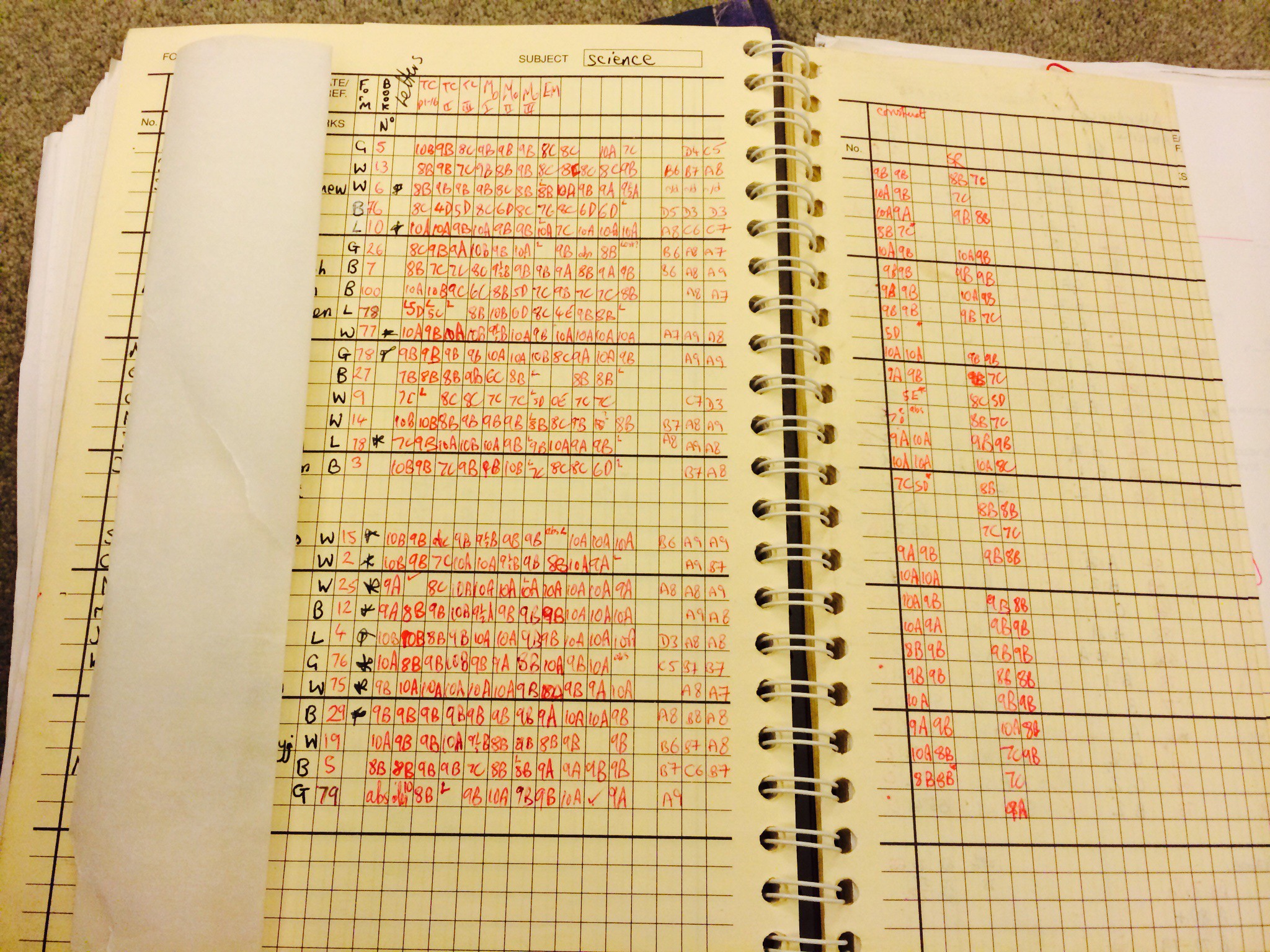
Even staff love their clean, new mark book, new planner and new diary. I wonder when do they become those old tattered friends filled with details of lives? Whilst I appreciate what ICT can do for us, opening a new ‘Word document’ just does not have the same effect. As for my new exercise book – does writing on any page get better than that crisp new page at the front after writing “your name and subject”? In my career two pupils when asked to do this have actually written ‘your name’ and one pupil wrote ‘Fred Bloggs‘ after I actually said don’t write your name’ but write your name for example Fred Bloggs – hey ho I’m such a poor communicator.

photo

Of course it isn’t really a brand new start, unless you are Y7 or a brand new shiny teacher, but it is a new year. It is a chance to start afresh, staff have had a break, and the rhythm of school brings us full circle with a new intake and the school year has rewound to the start once again. I worked outside of education a short while and talking with friends it does not happen so clearly elsewhere, people holiday at different times and the ‘new’ does not happen. I know that some blog readers will not be believers but there is an echo of the church calendar. When a church gathers on a Sunday it’s the first day of the week, and some time is spent reflecting on the last week, seeking forgiveness before looking to the new opportunities in the week ahead. There is no doubt we need to reflect in school. My first teacher planners which I genuinely treasure are hand written with the left column my plan and the right hand column my reflection. A reminder how I sat with my ‘old’ planner to see what had gone well and what had gone badly, to do more of the former and none of the latter. Following the story of my lessons I can see (and still recall) sometimes it worked sometimes it didn’t BUT it was vital in that important aspect: ‘ how can I improve?’

image

A new journey starts here

Back to the new term, new opportunities, new ideas to try and and meanwhile forget the rotten, bad bits of the past, to an extent putting that behind us. This is also a time when we tend to think a little about what is really important to us as we begin a new year, you probably heard some of it in the head’s ‘Welcome Back‘ speech. Pupils often need a new start, and not always at the start of the new school year, a little bridge back into their school community and a new opportunity, probably not too many if the action plans don’t work but forgiveness might be important for some. They too will embrace the challenge of the new year, maybe the new school for Y7 or the new Y10 curriculum they had a say in choosing for themselves, or a very big shiny new Y12 confidently or with a big dose of trepidation starting those A levels ( hey it’s a big jump this new year). Fear and joy, it is just so exciting, well and scarey. Pupils need support and bags of encouragement – some secretly want to take part in the school play this year, learn a new instrument, take up a new sport, or even make new friends or just make amends. Parent and teachers can help them – or hinder them.

contemplationI always found the first full ‘normal’ week back quite hard, I’m not sure what the next class would bring into the room, I got a bit sick of the sound of my voice, the holiday had no bells and now they ring the lesson start and end. Nevertheless it is the start, it’s the beginning of an exciting new journey. Welcome back to the new term and being in the challenges and opportunities of teaching and learning.

And some questions for you to think about in the nouvou world:

Q1 When we and our pupils are so busy how do we find time to reflect?

Q2 I made my Y12 write themselves a letter about how their revision and Y 12 mock exams went immediately after they were over in the summer. We then opened them this week and reflected. What activities do you use to help pupils (and staff) reflect, in the busy routines?

Q3 Is there a limit to how many times can we give a new beginning before we say that really is enough?


and a bit more thinking about the mundus novus in Church schools:

Genesis 1:1     In the beginning …

2 Corinthians 5:17:    Therefore, if anyone is in Christ, the new creation has come: The old has gone, the new is here!

Hebrews 8:13     By calling this covenant “new,” he has made the first one obsolete; and what is obsolete and outdated will soon disappear.

Ephesians 4:24    and to put on the new self, created to be like God in true righteousness and holiness.


You might like to read other posts from my timetable of teaching – each is set out from lesson in the school week, before or after school or at the weekends, appropriate to the time of day. I have also started a  class lists or “set lists” which was to answer the questions: “why be a teacher?”or “why have other responsibilities in a school?” Shortly I am starting a new area about progress from one role or experience in teaching to another with hints and tips about successfully moving on in the job and your teaching career.

What next after post 16? What August brings!

Middle Thursday in August, big day for 17/18 year olds, their families and teachers. A Level and BTec results out and some decisions about the steps after school or college. Here is a bit of advice from my 20 years as a head of sixth form

Don’t muddle up two pieces of news: Results and Next Steps

low angle photo of fireworks

1 Well done on your results, even if you wished you had worked harder or had more luck, you have your results. Celebrate the success, even if, or especially if you found it hard and persevered, you got them.

2 The more complicated bit is what you do next and for that I think there are three likely outcomes:

a) You got your dream

contemplationAfter all the UCAS stuff or maybe the searching for the right apprenticeship or even the  world of employment, your grades opens that door of opportunity. Still some advice for you: if you are continuing in education you’ll need to carry on with more and improved versions of what got you to here. Ok you might be and should be excited about University or leaving home or having autonomy and independence. More thoughts about the opportunities of student life than the messy sinks of student accommodation. However you are off to study and so whatever you’ve been doing you’ll need to step it up. More reading, more organisation, more independent learning, more work and probably less feedback and support than school or college gave you. The latter matters, you need to be more of your own judge and set your own standards. I recall a good friend excitedly awaiting her first feedback on an essay which got a β+ ( that’s beta plus) and she asked her supervisor what that meant. ‘Well’ he said ‘its not as good as an α- ( alpha minus) but better than a β.’ She asked what she needed to do to improve he took the essay back and said ‘maybe work on the English’. For a young lady with full marks in AS modules for English she realised at that point she had to work out what learning meant in this new world. Vital to success here is to img_0962read, read, read and to discuss the standard of work with peers and those on your course but a bit older. Heck and start now, yes now, find a book or two on that dreaded reading list and….start…reading. My own two daughters got fed up with me saying “you are reading for a degree in” Of course the new world offers wonderful opportunities but the priority one is your learning because….that gets you to the next step….( but lets leave that for now).

Meanwhile if it is an apprenticeships or employment, get the details right..know when and where to start, what to wear and find out about expectations. Be prepared to throw yourself in, be polite, listen, ask questions if uncertain and speak to those who work close to you to ensure you do everything you can to get off to a good start too. Put all your energy in for the early days, be fresh and optimistic and make sure you learn what you have to do and do it with skill, if necessary with the same ingredients of hard work, perseverance and being part of a team.

b) You just miss your dream but get a healthy second

This is a bit tough, maybe you knew the first choice was a bit over ambitious and you are ok with second choice, maybe the HEI offers an alternative. However maybe you never thought second choice would become your next step. Make sure you know what you are letting yourself in for here. Did you visit the institution, was it a positive choice or one to get the form filled and get a sixth form tutor off your back? Well you can and should still celebrate those results BUT think carefully now. img_0951Think, research and write a few advantages and disadvantages down and talk, talk talk. Talk to peers, talk to family, talk to teachers or talk with local careers officers ( Futures in Nottingham) even talk to the Institution. Oh and I realise you hate talking , this isn’t email, text, ‘whatsapp’ territory this is picking a person to speak to…rest assured it will help, people like to help! img_0959Take a bit of time but clearing can be mad and busy and you will feel pressurised. Remember you are off to study for 3 or 4 years, you will be doing lots and lots of ( *subject X*) and there is a considerable financial investment from you – it might be a loan but it’s still a loan. You wouldnt buy an expensive new mobile on a quick whim and this is life enhancing, life changing or possibly totally wrong! Remember all the research you did for choice one, do it now to ensure you are making a good decision. If you are doing all this to please great Aunt Ethel and who keeps ringing to ask what you are doing next, just stop, tell her and yourself it’s not that easy and simple. Never make the decision to appease family or friends – they won’t be sat there as you wonder why on earth you ended up studying sand castle building at the University of Little Piddle in the Paddocks. If necessary visit the place, that is visit if you have not already visited, yes that’s right, even if you have a holiday job get some time off, surely you won’t sign up for big expense, big commitment and your next 3 years without doing that, surely! That’s like signing for a big mortgage on a house without seeing the property because you are staying home to watch “Cash in the attic”.

As one Dean of admissions told me ” I fear some students spend more time researching their post exam holiday in Ibiza than they do their future degree.” and the next day I was pulled out of a lesson by an urgent request from two A Level students arguing about which flat, in which island in Greece….you couldn’t make it up. A student who had a B in my subject (Chemistry) and an E in Maths and ICT, was refused his first choice of computing but offered Chemistry at the same University…”should I take it Mr Dexter?” Me “Do you want to study Chemistry for 3 years or still try to do software design?” Steve ” I honestly don’t really like Chemistry Sir”. QED. PS He now works in the creative IT industry.

Much the same applies to apprenticeships or employment…do your research especially if it’s a late change of plan. Be realistic, some apprenticeships are more competitive that HE places, get on that internet and get answers and do your research too.

c) You miss both plan A and B

It’s not the end of the world, not at all, it may feel like it but plenty of people have been exactly where you are just now. Ok so hold tight, first of all well done on those results, and you might need a good reflection on them. There shouldn’t really be any surprises, your teachers and you should have known quite closely how you were doing. You might have been very optimistic and thought you would do better but this is reality now.

Should I retake?

Rarely works in my view. It might if you had a critical incident, a family crisis coming up to exams, a serious health issue which is now resolved etc But the reality is that you are looking at doing a year of study that you struggled with for various reasons and staring at doing it again, with few peers and maybe not a full timetable. Evidence would suggest retreading isn’t as effective as moving on.  imageYou might even think about doing one subject again in the summer without attending school or College, you know study in my room stuff …don’t. It’s also a very competitive market in some areas, so if your offer was AAA for a competitive course and you got BBB, don’t assume that if you redo the offer of AAA still stands. You need to talk to the HEI urgently. Reflect on the situation this last two years on your learning, be honest, talk with staff and family and make a plan.

Should I take a gap year?

Some students think this option, especially made in a rush, allows for time to decide. How much time do you want? A year?img_3103 Planned gap years with mixtures of work experience, earning money, travel, new experiences can all be helpful, though as above they need thinking about. Don’t deceive yourself, the gap year isn’t  one big holiday, its work, new people, new experiences, lots of challenge. I really like gap years, I think students get more out of their University experience and are a little wiser, I worked as a lab technician in a gap year so I am a fan. However don’t think you can ring a local company and get a job for six months, or ring the Raleigh Trust and build a health centre in Mongolia…you can but it needs planning and often fund-raising too – it’s all about commitment. If you are serious then find people ( from your school or college or community) who have done the very project. And if you are serious, well you had started some plans anyway, hadn’t you?. Lastly think if you are deciding to reapply, just how that works if you are abroad, not just interviews but that research, how will it be done?

So you are saying I’m stuck?

Not at all, you have qualifications, maybe A Levels or BTecs or GCSEs. You now need a rethink and support. Think if you really want to study and continue education, more of the last two years, or do you want a change, an apprenticeship or employment or a different sort of degree, something more vocational than your choice of pure History? There is plenty of choice, arguably too much so get the pen and paper out and do those exercises school or College made you do. What are you good at, what do you like doing, what are your skills, what do you NOT want to do? Now talk to family, friends and professionals: teachers, tutors or take those notes to a careers meeting. Be patient and try to get it right but you are allowed to change your mind. Apparently around 40% of undergraduates try to change course and many drop out, so you are in good company.

Absolutely YES, it’s a challenging and busy time – getting ready to leave home will be frenetic with activity and fitting it in amongst farewells is fun but keep a focus and priority. Unsure if you are doing the right thing, talk ( sorry not email/text but TALK). Uncertain about options seek professional help – HE staff, Careers staff, possibly your own teachers and family and friends.

animal black and white blur calf

My best wishes whoever you are reader, and grab every opportunity by the horns, as sometimes they feel a bit like that but that too is your destiny.


image


Wednesday period 5 – Homework, trying to make it work better.

As a classroom teacher for a generation, I’ve always set homework, doable, purposeful homework. As a chemistry teacher my favourites involve some experiments at home ( testing pH etc) but I do like research too – it’s what we chemists do of course. Many a pupil having loved to ‘find out’ – they either tell you so or else their work is the proof. But frankly there is a lot of bread and butter homework too: finish this, annotate that, read up here, a test on that…..

Homework itself covers a multitude of activity and areas, the debate over primary pupils doing homework is likely to be different to those in key stage 4, so let’s try and be pragmatic. As a teacher I think there are lots of reasons for setting homework and they have to outweigh the hassle of ensuring its always done. My top reasons are to do with widening interest, bringing more enthusiasm and passion for my subject, getting a clearer understanding and testing that understanding and my worst reason is ‘following a school policy’. However as a senior leader I think it has to be articulated carefully to parents and children as to what they have this homework to do and a duty to make sure there is not too much, its active and manageable and support offered where necessary.img_3648

Our main reasons for setting homework are:

  • To establish good habits and in due time to help create independent learners amongst our students.
  • To complete activities and work that aren’t covered in a lesson or are carefully designed by teachers to enhance learning.
  • Because we think children can expand their horizons with some learning activities done outside the classroom.
  • There isn’t enough time in school (25 hours) to do everything and we like to offer as broad a range of curriculum as possible. So there really isn’t enough time
  • Homework works – it helps to deliver success.
  • The government and Ofsted seem to think it’s a good idea and actually so did our pupils too!Academic research concludes: “homework contributes to achievement at secondary level and the effect is stronger amongst older pupils”.
  • it might just help build self-respect and some resilience

So during the 2015-16 academic year we carried out some simple and definitely non-scientific research into an important aspect of our school life homework. this at a time when some schools declared NO HOMEWORK

imageWe began by asking our pupils a series of questions – we did make an important assumption that our community of parents, pupils and teachers see a value in homework so this wasn’t about forgetting or abandoning homework. It was more to pinpoint any stressful areas for each group and see what improvements we might make.

Understanding the importance pupils attached to doing homework was pleasing to read and we were even more encouraged by the number of responses and the ‘common sense’ shown by everyone. A few pupils managed to contradict themselves but the general message was ‘homework routines are about right’.

picjumbo.com_HNCK3576The following action points came from the pupils:

  1. Please set homework early in the lesson and not in a rush at the end.
  2. Please set realistic deadlines–sometimes all our teachers set homework with short deadlines.
  3. When we have two teachers in a subject (e.g. in Geography or in most sixth form lessons) please don’t overload us.
  4. Make it clear how we can get help in your subject.
  5. If teachers can do so, please balance harder homework tasks with easier ones and longer tasks with shorter ones.

We discussed these with teachers and most are achievable and manageable. However, for different subjects there are different issues for example, number 4 above, some pupils found it difficult to log onto a site in a subject, but some just found the content difficult, so they each need a different type of ‘help’. We were pleased to see there wasn’t very much moaning about ‘worthless activities’ which showed pupils value their homework and our teachers avoid time-wasting undertakings. We were proud that our pupils approached homework (and the survey) in such a mature manner.

Parental responses were high: 59% Y7; 70% Y8; 64% Y9; 71% Y10; 25% Y11; 17% Y12&13. We expected the sixth form and parents of older students to give a different response as their private study work is completely understood to be intimate with their work in lessons and a huge factor in any success in those very demanding post 16 lessons or in order to aim higher with success at GCSE.

imageThe following action points came from parents.

  1. Please could teachers spend some time explaining how to revise and study your subject?
  2. Can teachers avoid ‘research’ which is just a general “use the internet.” If possible give some specific websites to work from.
  3. If teachers know useful books or other resources please tell pupils about them.
  4. When there are two teachers in a subject (say in Geography or in most Sixth Form lessons), please do not overload the students. Communicate with colleagues if you share a class.
  5. Be realistic about the amount of time a homework task might take.
  6. Try not to overload pupils with too much holiday homework.
  7. Please try to turn around homework/give feedback fairly quickly but at least in a reasonable time.

Once again we think these are all manageable and we are pleased so many parents are involved checking books or checking diaries and of course giving support and help on occasions. Most homework is communicated to our parents via a child’s contact book even if that says“science homework–see exercise book”. We understand sometimes as a school we seem to say homework isn’t complete and that a parent may not know what it is the child hasn’t completed. Occasionally parents ask us to email the work. In very exceptional circumstances we might consider that but it is quite onerous and we are in danger of the pupil being left out. It is the pupil who needs to be clear and if he or she is struggling we should attend to those reasons which might range from confusions through lack of understanding to…laziness. There are several ways we think parents can  help:

  • encourage a good attitude to learning the value in doing some further study beyond school lessons
  • helping with routines to do homework, a space at home or a time and of course a look over books and an interest in the work being done
  • support the work – don’t do it for them but for example if a pupil is stuck often it is follow up work from what was done in the lesson have a look over the material a few pages earlier in exercise and text books
  • help pupils to see homework enhances what they did in the lesson.

Finally, in our survey/research we put these points to staff and had about 80% response:

  1. They agreed there could be inconsistency across subjects about how much homework is set (e.g a subject seeing pupils once a week might not be able to set homework every week).
  2. There is a workload issue – we try to turn work around in a reasonable time but it can be a challenge at certain periods e.g. If a teacher has other classes who are preparing for exams, or when we are writing reports. We don’t want to ‘not set’ work.
  3. A lot of teacher time goes on chasing up homework – often it’s the same pupils and often despite sanctions.
  4. There is extra help available during lessons or lunchtime and after school–quite a lot of pupils don’t take up the opportunity.
  5. Homework often looks like it’s been left to the last-minute and is rushed.
  6. Some of our pupils need to see their homework as important, shown by:
    • Handing it in on time.
    • Understanding there is less help if we are chasing you, more help if you try to more progress that way too. No one was ever shouted at for not understanding.
    • Not being rushed.
    • Being properly completed – including being well presented.
    • Not being just copied and pasted from the internet.

image

We will be trying to make sure teachers explain clearly what to do if pupils are stuck with homework. We have a homework club after school each day Monday to Thursday from 3.30 to 4.30 with staff and Sixth formers supervising,there are even refreshments. This club operates for Y7/Y8/Y9. For other years there is a similar arrangement  but students work on their own and in silence using the facilities in the School library. Again research shows attendance at school based study support is associated with positive effects.

Overall, it was good to see a general confirmation of the processes we use and a common understanding of the value (and snags) with homework. A big thank you to everyone who contributed.

….and for the few cycnics check out this story of the boy who did homework by the light of a local McDonalds in Cebu the Philipines_84190737_daniel

Some Questions

Q1 How does your school encourage pupils to engage in homework?

Q2 Are there other benefits to setting homework and are there other annoyances?

Q3 What other ways might we help young people become lifelong learners?