Dear Secretary of State for Education – as of 5th July 2024

05-07-24

Dear (new) Secretary of State for Education

You are the 24th SoS since I started working in schools in 1981 and either the 18th Tory or the 6th Labour leader of the sector I loved. There are a number of issues in Education needing urgent attention post-election here are my thoughts for what they are worth. ANY politician or party needing more info, you know where to find me! In order 10/10

1 SEND – too many councils taking too long to sort them for families but more important not enough resource in the system to support those EHCP – so you might suspect the tardiness is about funding. Families struggle to access special school places – many perhaps don’t need (or want a special school) but if we are honest too many schools are not inclusive and therefore make excuses not to take some children with SEND needs. Sometimes this is very subtle – an open evening where for some reason the SEND team aren’t available! Sort funding, review SEND and implement the Timpson review on inclusive practice. I’m not against exclusions including permanent exclusion. Behaviour is really really important but – once you exclude the naughtiest pupil in the school, you then have to deal with……..the naughtiest pupil in the school. No doubt ( see below) we need better local services here to help. Look at helping make schools more inclusive or rewarding those that are. It is a great joy for a school community to have all sorts of children along with their interests, ambitions, needs. There is a place for Special Schools but these ought really be for those with much more complex need. Do simple arithmetic – 15% of pupils have SEND – what % should be in Special and therefore how do we help that majority in the maintained sector? Remember these families often have the hardest of times and feel they are constantly battling.

2 Teachers – it’s no good having great buildings if there are not great teachers or even enough teachers. There is an urgent need to review pay and conditions and talk with TU and with staff. Why are they leaving ? Why are so many retiring early? Why isn’t my secondary age child taught by a graduate or expert in that subject? Some of this is pay and conditions – graduates command better pay elsewhere – elsewhere in other sectors or elsewhere in the world. Some is due to autonomy and the school structure and regulation. Teachers might hate Ofsted not because of fear of accountability but because so often their leaders say ( rightly or wrongly) Ofsted (and the MAT) demand X or Y. Personally I loved teaching, I loved planning every day, every year, working out new content or even old content,  new ideas, new ways to get over hard Chemistry and new ways to assess, or to help my students. I did not like being told how to teach – once a deputy told me I needed to return to the old ways of science ie heading/method/diagram/results/conclusion. I asked why when exams did not examine like that and science didn’t really work like that and how did he know when I was a mini expert in teaching and in my subjects (RSC award winner!) …. But if you keep getting “the MAT says so” or the LA says so” or “Ofsted demands ” it is soul destroying. BUT there is also something about the curriculum fit for children and young people. Please don’t negelect CPD, keep it local too learn from those around the corner doing better, use Univeristy ITT and research, forget the blob nonsense. There is great expertise to tap into but if you keep hubs move on from nepotism.

Many in a class are disillusioned, disengaged – it may be them of course BUT imagine what subject you hated most at school – for me that’s Art. Now imagine you have to do that all day every day except for a few hours of your favourite subject. Imagine all the creative stuff being downgraded, imagine all the extracurricular gone- few teams, no regular concerts or shows… and that school is dry. My old head allocated 1200 of 1265 hours and then said …” You have 65 hours unallocated, do something with children – a lunch time activity, an after school class , run a team, take a trip away…” difficult to argue and so we had one of the most rich extra curricular offers and we knew our children and families all the better I’ve blogged elsewhere on that.

I had the privilege as a local Director to visit many local schools and often, very often I met ex pupils, inspired by our school to teach, to be a SENCO, to be a TA to be a business manager. It made me very very proud, yep morally onto the high ground. Young people should want this wonderful job it shouldn’t be difficult to attract them again. [There’s a whole section here on why be a teacher!]

So this needs 

3 A review of curriculum to fit a 21st Century world, a world where knowledge helps but a decent crap detector is better – where you learn how to find knowledge and discern its value, where you learn from an expert who absolutely loves and inspires you in their subject – how lucky was I to work in a school full of staff like that? And consider how assessment helps learning NOT constantly measuring it (P8 EBacc etc) these measures crudely comparing children or schools – move on- you know Gove, he might have been wrong! and by the way you need to do this for FE colleges too – FE could make the biggest of differences to your ambitions but fund them, listen to them – to quote Sir Keir Stamer ” If you spent more time listening you might not be so out of touch” Oh and by the way listen to professionals across the spectrum no decisions for the media, none – that gets us nowhere ( See Brexit).

Rethink P8 it’s distorting classrooms – sure Maths and English are important but we don’t need a formula to tell us and an emphasis that promotes subjects or demeans others – it may be too late for music, Design, Performance subjects but bring back a fair choice and subjects by their own value and merit- not the values of one politician (Gove) or favouritism.

4 Ofsted Much is written on this, here is my view. Get rid of judgments – I have always hated them, even when we sat on “Outstanding” for over 10 years. What did it mean? If you asked the staff, children or parents about our school they would mostly be positive, they would say some things, the music, concerts, sporting occasions, wider opportunities and outcomes were good and often amazingly brilliant. They would say mostly their children liked coming to school though not every day! You see they might also add some days were pretty ropey, some days behaviours deteriorated and some stuff really needed to change. Other parents in Nottingham might say – we knew that this school was Outstanding, thanks for the info but we will never get in ( which is true we usually had 500+ applications). How dare anyone sum up the work of 1200 children 130 teachers and support staff over 195 days in one word. There is an argument to get rid of Ofsted but I suspect that’s a step too far even for a radical majority led government, sadly. So Ofsted reports should be like the local area SEND reviews done by Ofsted and CQC. Spend time, not just a day – praise what is going well ( so we know and carry that on) tell us stuff you think we need to work on and tell us anything urgent needing attention. If if if the list of improvements needed is too long make us do an action plan and revisit in the year, give the LA or MAT some resource to help. One big issue here is the almost unspoken politics. The regulation is a way to create more academies -a one way move if your inspection is poor. 

There is always a political argument that “Parents need to know and surveys show they like Ofsted”. This is somewhat disingenuous and naïve. As above a school rated good ( which now covers a huge spectrum, maybe brilliant some days and struggling on others. It may change in a short period of time ( we once had 6 English staff off on maternity leave, that was a challenge!). There is an argument about it helping when choosing a school but parents do not choose a school – they express a preference and in most areas they have no choice – in fact the schools effectively choose them  especially if oversubscribed. There is a really tough issue her for a school labelled RI ( requires improvement) as parents see this as a ‘bad’ school and try to avoid it for their children and as some teachers may shun the ‘opportunity’ to work there. If anyone has been at school appeal panel they hear all these arguments – and the panel have to try and explain that an RI school isn’t that bad, it will get better, lots of children do well there etc. In the light of the tragedy of Ruth Parry and the mishandling of that by Ofsted, the least we can do is stop the one word judgment and at least get rid of those media stories ( our local Nottm Post “Here are all the outstanding schools in Nottingham” – which our local news outlet ran with 5 errors and no context that the framework has changed that 15% O became 12% O)). Make the media, make the parents read the reports and remind them some are 5 years out of date and were done by two adults in one day. It’s a pressure on inspectors too. Would we do this to industries? Imagine I visited Boots ( I am a scientist) and with a couple of colleagues found want and all over the papers Boots judged RI – and by the way we will be back in a few years, and the press ask about the consequences for profits and jobs and maybe even the companies existence. I realise in education we are talking public money but believe me we are accountable

5 The System. We now have MATs, we have some LAs still running schools – often Primaries and Special. There has always been a feeling the latter are second class, in terms of funding and favouritism. Just as an example when a poorly achieving school is moved to a MAT the Trust may get extra funding – perhaps if the LA had received that, the school wouldn’t have fallen over.  There are really good MATs, I’ve worked with some in Nottingham, there are also poor ones, there were poor LAs and I’ve worked in some good ones ( Oxfordshire under Sir Tim Brighouse). This shouldn’t be about ministerial or political whims – such as ‘all schools should be academies’ or ‘stand alone academies can’t stand alone any more’ or bring back more grammars. Do some proper research on what works and what doesn’t; take time listen to a wide view run away from nepotism. make a long term strategic plan and win over cross party support to rebuild over 10 years

6 Governance – here is a question, when a parent has a complaint how easily is it resolved? Not the persistent offender parent the serial complainer, just the parent who feels their child isn’t say getting adequate support? They might try and talk to teachers, TAs, maybe the head but if not resolvable where then? My experience in an LA was that many exasperated parents turn to the LA, who has no powers over MATs. They might threaten Ofsted but they will rarely intervene unless it feels like a big safeguarding matter and then will seek info from others. Some schools now have little local governance. MAT governors at Trust level are very removed from the needs and the joys of the local school. Then there is the unspoken sponsorship – businesses or even political interests, donors to the parties, nepotism over schools -it’s not good enough. Run the school, hold people to account, support and challenge. Our CoG always rang me to see how things were going, she turned up at every concert, every Governor meeting, and every sub committee meeting, her children came to the school, she supported PTA events – she loved the school and when she was critical we all listened, we listened all the more carefully for this lady loved the school.

7 Universal Services Since council budgets have been cut schools are the places for many vulnerable and disadvantaged families to turn – for food, for clothing, for holiday hunger for help and for love etc. Schools helping them with paperwork etc. Teachers wanted to teach they might be Ok with pastoral work they understand wider responsibility but they’ve got tied up with too much universal support. Please urgently help sort the finances of councils for Children’s services esp for Children in Care where placements and costs, thanks to a market economy are ridiculously high and yet the children still get a poor service. Talk to Councillors and Officers who know their communities well and start working on solutions, and please talk to children in care. Think about libraries, children’s centres, youth services. You know why? They often reinforce good behaviours and help keep people on track – look at the Pythian community in Nottingham; look at the work of early years…..

Oh and whilst I mention it – councils are in a good position to create great partnerships – schools colleges Universities, other provision like AP and Early years but alongside cultural and sporting partners – they did really good stuff in the pandemic – give them resource for this and please please help with place planning – opening or closing schools is so painfully slow because of the academy obsessions.

8 Mental Health – why is that so bad here in the Uk compared to most other European Countries? Why haven’t we bounced back after the pandemic? Why is attendance such an issue? Talk to schools and work a strategy. Talk to young people. Locally our NottAlone website has been a great success – this may need money but it may need creativity, coproduction and better solutions.

9 Buildings.Schools had RAAC feel it’s probably been forgotten, BSF was Gove’s first cut and stole the investment which was needed to help transform learning. So too have the regular maintenance issues of boilers, leaky roofing, better ventilation etc. This needs a simple plan but a costed one. Do simple arithmetic- there are about 21,000 schools, if the buildings last 50 years we need to rebuild ( and set aside funds) for approx. 400 per year . If they last a bit longer because they are well built then that decreases. Why can’t our children learn in reasonable or even nice buildings. Most of my time I taught with leaky ceilings, cold labs in winter, stuffy ones in summer, unfriendly places – but give me a good school in cr*p buildings any day.

10 Locally good, locally accountable and local to me

This in realty is the most simple yet the most complex. What all parents want and all teachers want and all children deserve is a good local school. Yep, just a plain simple good local school – a good curriculum, staff who know their children and can inspire them and teach them and stay the course and frankly love them. In my very personal view too much resource is centred on the MAT team, the business and the CEO and senior staff, not only too much money but too much power. ( see the amazing work of Warwick Mansell on this. Restore that power to the governors and the headteacher, support the headteacher, challenge them but work out how to do that without a super head, without X who turned around school Y. Listen to the heads who love their schools, love most of their staff and love most of their children. You  might be surprised just how many of them there are, awaiting the changes we need and already serving their local community.

Were (we) Teachers better a generation ago?

Better Teacher or just different, has time moved on and moved the job for the better?

I’ve retired, 26,000 lessons and finished, and now it’s time to  clear stuff away and reflect upon the world I absolutely loved.

Back in the 80’s and early 90’s there was no internet for schools as such, no video and not much in the way of copying ( Banda at best, OHP if a wealthy school). I loved teaching Chemistry but every lesson I wanted to bring my subject to life. How great it was to teach Chemistry – all curriculum subjects have advantages and disadvantages – ask PE staff how everyone tells them their job is great on sunny summer days as they set off in shorts to teach tennis, though no one says bad luck in the cold, grey, windy, frosty or grotty days of autumn when the gym is used for mocks. I had chemicals and unusual apparatus for practicals and demonstrations. There were tales of poisons, explosions, medicines, materials, from soaps to alcohol from amazing discoveries to problems to solve. We could do magic with solids and liquids; use that special fume cupboard or make a small firework, talk gunpowder and make amazing colours or metals from powders or tiny beautiful crystals grow – in fact much of that were part of the reasons I chose the subject to study for 4 years in the first place. And yet I constantly searched out better proper Chemical stories. I felt these would help young people understand more be more curious, apply their skills more and be hooked into doing my subject after Year 9, or after Year 11 or after Year 13…..and many did. I practised, rehearsed, fiddled to get things to work – though sadly didn’t have a book I only found after 35 years of searching Professor Fowles Lecture Demonstrations in Chemistry …oh oh oh if only!

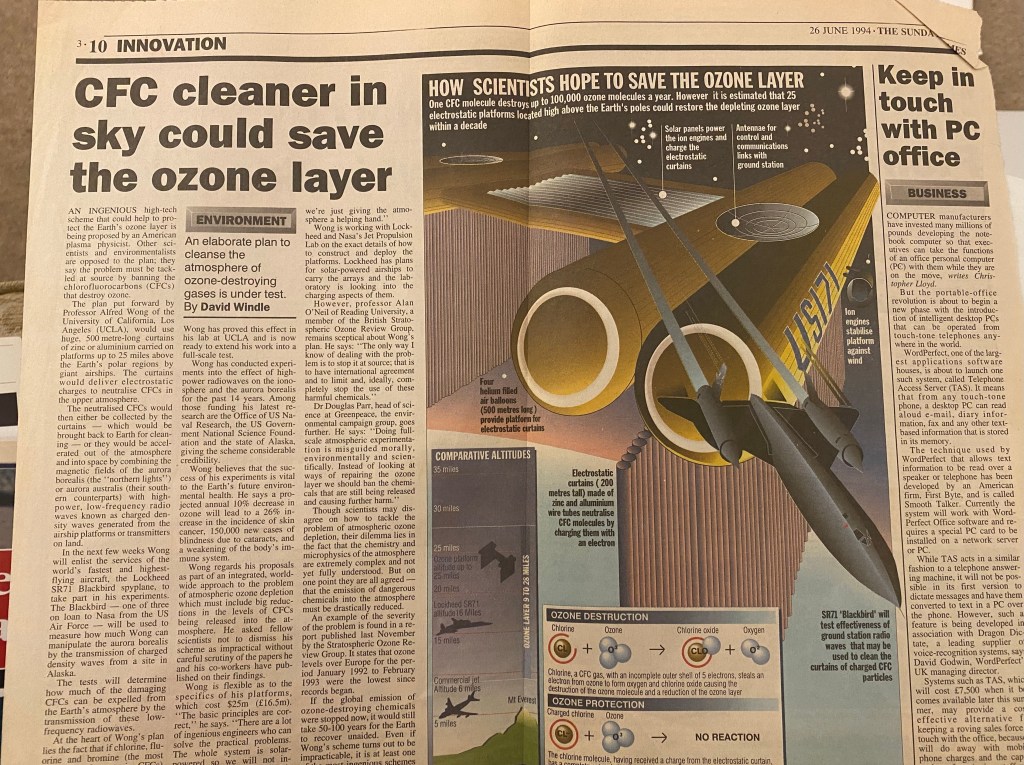
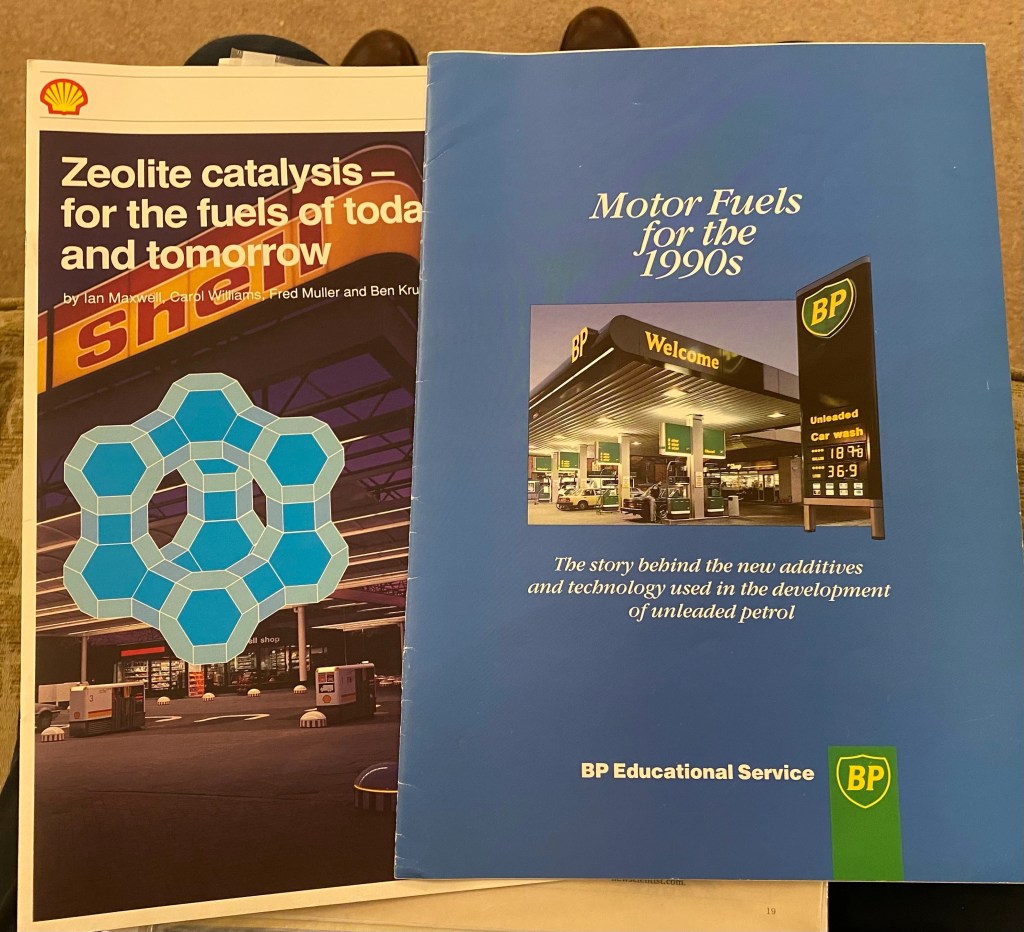
No internet, but also no videos, occasional TV but do you recall 80’s TV Science? “Tomorrow’s world” and well that’s about it. So everywhere I looked it was picking up of booklets and leaflets it was magasine or newspaper articles. If it was a conference then grab as much of their publicity literature…and frankly there were not many conferences but there were ASE events and RSC events as a starter. The joy of my Mother sending me an article carefully cut out of her newspaper folded in a letter “ you might like this?” . How right she was.

Then craft this information into my lesson, there wasn’t much chance to photocopy, maybe the odd expensive OHP but we could read it or share it or at the least I could do what all teachers do well – tell a good story. There were even the odd articles with scientific errors for my pupils to discuss and correct. BUT I had to think – will this help , will it bring more knowledge, better understanding, or maybe we can use this to see if they can apply their knowledge….maybe even might make them do some of that ubiquitous ‘wider reading’ – I sense these questions helped create good lessons, or turn good lessons into great lessons.

Preparing lessons, delivering lessons, getting feedback from marking was and still is, the bread and butter of the basics of good teaching. It was in the 80’s and 90’s and maybe still so. Marking was (and definitely still is) a slog – but the teacher learns what pupils don’t know and what confuses them and what is well understood – but frankly I got that from marking about the first 5 books the other 25 or so just reinforced that. The interesting and challenging part for me was as a new teacher through until I retired as a head still teaching in 2017, the favourite was preparing. I spent hours preparing – as my ITT tutor used to say every good one hour long lesson needs an hour prep and reflection and an hour of marking. In time it doesn’t need an hour my bare bones of a 4th year CSE Lesson in 1981 would be used every time I got to that part of the syllabus for 36 years – but I promise almost every year be it O Level, GCSE, double triple or single that lesson got better and the advent of the internet promised even better and  it delivered a richness and an opportunity to really bring to life to really help understand and apply knowledge and motivate.

Of course this “even better” improvement accelerated as resources improved. The internet brought modelling brought video, 3D images AND access to frontier research therefore does even better than my mission to “Bring Chemistry to life” back in the 80’s and 90’s. In 2017 I was challenging students to look at what Nobel prizewinners wrote and said…..not just the favourites of Chemistry specifications Rutherford and Haber BUT those of modern greats, less well known names but incredible discoveries and my endless challenge -please be the first Nob el winner that I taught! (PS that Nobel site is my favourite!)

This is epitomised for me in a favourite KS4 lesson- the group 1 metals – Lithium, Sodium Potassium. Haz-cards always limited the lump when adding that piece of sodium to water. A sluggish looking soft, cuttable, grey metal, slimily covered in its oil from the bottle. ONLY USE the size of a grain of rice but ask any Chemistry teacher and they’ve been heckled in this lesson “Oh Sir, add a bigger lump” or “show us Rubidium or Caesium” ….and so in 2023 we can. There is a great video of adding Caesium to water and an even better one of the quite wrongful addition of sodium to a lake a huge quantity around 9  tonnes off the back of a lorry, into a lake back in 1947. You can even see Professor Poliakoff explain and show many many elements. Now if that doesn’t bring Chemistry to life! Though I suspect that the live view of a little lump of grey metal fizzing around carrying an orange flame or purple one before exploding  – these are what will be remembered. Sorry Biology colleagues who dipped out and showed a video it’s just not not not the same. BUT then further Lithium we know is in all those batteries and my old tutor – take a look at his discovery and comments – the Nobel winner John B Goodenough. So the joy for me as I annotated my lesson notes and next year might be even more excited to deliver those new ideas even just for a few minutes of a lesson.

In any long career do those lessons we teach year in year out do they improve? Did they find a rich vein of interest and motivate young people?…….or were we driven by assessment results and “just learn this”. Yesterday we did page 45 so today we do page 46 “Yawn”. I really think not. Don’t get me wrong assessment, exam results were important to me and my students. After all qualifications open doors [ and Chemistry opens some significant doors like medicine and scientific research] and opportunities. By contrast with rumours that Primary SAT assessment has led to many pupils who really don’t love reading, I hope my careful planning opened doors to the wonderful world of scientific discovery.

To be honest this is misleading as I rarely wore a lab coat !

So were we old teachers better or just different….I’m beyond appraisal, you be the judge. Comment below.

An explosion helps

In my NQT year I took a 5th year class. Schools don’t like to do that, to give Y11 to a shiny new teacher, but they were short of Chemists (nothing changes). Of all my classes I worried about them most, this was an important year for them, it was their “chance” I would get other chances they wouldn’t. I prepared my lessons well BUT struggled to win them over, it would take time and time we didn’t have. They always arrived slowly, ambled in, took ages to get their books out and coats off – in fact anything to delay learning and there were always niggles – forgotten books, forgotten pens, do I have to wear these goggles? ……teachers know this scenario well.

The timetable didn’t help Friday last lesson and Monday first lesson is effectively a double split over a weekend and I soon learnt to do some practicals and demos Friday and the theory on Monday such was their attention span or lack. I did rely on the lab technician as do all science staff – these folk are unsung heroes, and Kathy was such for us. However her hours changed and she left early on a Friday but diligently left me my materials.

It was one such Friday after demonstrations of the Halogens ( GroupVII) and a class experiment with iodine solution the class left and I was happy, it had gone well after the usual shaninkins. However just as I was locking up this upstairs lab, I realised leaving even respectably small quantities of chlorine and bromine and iodine wasn’t good and no one else was clearing away. No one had told me about Hazcards, or I had already forgotten. These cards have alls sorts of info per chemical…. how to make, use dispose and treat spills or ingestion etc). Still, me a graduate chemist of a fairly prestigious University tried to recall on a Friday after a long week how to dispose of anything too risky. I seemed to think was possible to dissolve the excesses in alkali. Tentatively I did so in the fume cupboard mixing with sodium hydroxide and washing down the sink (chemists forgive me). Just as I left the lab I noticed at the back a load of tubes of Iodine water the class themselves had used to do similar tests to my demo of the other halogens. I had used up all my alkali and so without further thinking I dissolved this into another alkali and swilled down the sink on the teacher’s bench. After all iodine is much less hazardous! [PS DO NOT try this at home!]

Twas on the Monday morning they drifted in after assembly half awake and I greeted them cheerfully cleaning the blackboard with my dusty cloth and then flinging it down the bench with a little much gusto. The cloth slid gracefully into the sink and there followed an incredibly loud bang, a very sharp crack, a significant puff of smoke and a small purple cloud. Even I took cover for a moment. – whence the cloud disappeared I looked out to find not one pupil in my classroom. As I walked from the front bench I found each Y11 cowered on their knees, heads in their hands, behind their bench in total silence.

What had happened was the sink like many an old school facility didn’t drain well and some of my waste solution stayed around the rim of the drain and dried out as the water evaporated over the weekend and out crystallised probably the tiniest amount of Nitrogen tri-iodide – an explosive substance detonated as they say with the touch of a feather, it was used in those devil bangers and I suspect little cap guns when I was little.

Somewhat embarrassed I did explain this to my Head of Chemistry (my Head of Science wanted the recipe – typical Physicist) but any embarrassment was more than made up for by my class. Once they emerged from their defensive positions they worked their socks off and did so with through the year. I never made that chemistry mistake again, whether I used that disciplinary technique is another question

Lab technicians are wonderful folk but they store stuff along with storing knowledge, I learnt that day to double check and do my research carefully.

Discipline is vital in schools, good behaviour in lessons but it need not come from shouting, or serious control or deep sarcasm, or worse, persistent nagging. Preparing something interesting to learn and working hard with relationships was what I always had to do, but I did need the occasional extra hand from a head of year, a head of department or a small explosive.

[Beware, Nitrogen Triodide is a highly sensitive contact explosive, completely unpredictable and the iodine vapour a hazardous gas DO NOT try this at home or work or ….]

You are a b***dy teacher!

In 1981 I started teaching and was that new shiny teacher. At the end of my first year, my head of department who was an amazing teacher I was so glad to learn from, asked me to attend a faculty meeting on his behalf. It was a significant meeting because “set lists” were to be handed out.

Hard to imagine a time before a national curriculum when children still chose the majority of their subjects. You might think they could have chosen any 10 or so in any combination but schools were not stupid, so they had little rules like, one subject from option A, one subject from option B plus maths plus English etc. Remember there was no Ofsted but even then we knew what to do to help children.

However, this meeting was to give out the lists of those children who had decided to do your subject in fourth and fifth year or year 10 and 11 in new money. So I went to collect the list of pupils who had chosen O-level or CSE chemistry . It was a scary meeting for me, this was a comprehensive school that not so long ago had been a secondary modern, the pastoral system was a vertical one with heads of house who were frankly formidable characters and I was privileged to learn so much from them including my own head of house Marian Davis. So the lists were passed around the table, hand written and I looked down the list of names recognising some of those whom I had taught. There were of course pupils you were very pleased to see had chosen your subject, in fact these were probably names that everybody would have been delighted to see on their list. Then there was a moment where you looked down to check certain names were missing and yes there were those pupils who I had struggled with and my wisdom at their parents evening to suggest subject X or Y might be better, well that had worked I was quite pleased they decided not to carry on with chemistry (such naivety and inexperience).

Silence dropped over the meeting as people viewed the lists handed down from the deputy head. Then there was a muttering which came from the head of PE, with a bit of sighing, a bit of umming a bit of ‘somebody not very happy’. As that continued one of those heads of house spoke and we all looked at him:

“What is the matter Tony?” said the head of house, a man who maintained outstanding discipline and who we all knew a majority of children absolutely adored.

“Well”, said Tony “I’m just looking at this list. The first time we’ve tried to get PE as a qualification in this school you all know how hard I’ve worked to get this off the ground and I am so disappointed by the names of people you have allowed to choose PE.”

The head of house looked directly at Tony and said “give me an example”

“Well down here is Richard James … he can’t even swim how am I expected to get him any sort of qualification in PE?” I sat there and thought to myself: that’s a fair comment I wouldn’t really like to have anybody doing a serious chemistry qualification with me, who did not know how to handle basic equipment or understand the basic rules in a laboratory or who had done Ok in those first three years at secondary.

However the room dropped to silence …”Tony” said the head of house “ you’re a bloody teacher, teach him to swim”

This was a phrase which rang so true it lasted with me the remaining 40 years of my teaching career.

I was so glad that somebody nailed it, that day.

Whatever we think about the way young people behave or young people take to our subject, do or don’t conform, we are teachers and it’s our job to find a way to teach them.

There’s a kind of question I and many others are asked at first introduction to a stranger in company…..“Oh what do you teach?” to which the answer is …. geography chemistry English etc though the clever answer is “I teach children”. I think that day seared into my mind was that I teach children wherever they come from, whatever their experience, and my job was to do my best to inspire them and …. teach them, to help them learn my subject it was a deeply profound lesson. Thank you Tony and that extraordinary pithy Head of House.

A slight rant over ‘Textbooks’ which I love*

“…a book that contains detailed information about a subject for people who are studying that subject”

1 I once wrote a Chemistry textbook – with two other great Chemistry teachers –

IMG_1176

Our Foundation level textbook

not examiners, not academics just plain Chemistry teachers. It was for the so-called less able or foundation GCSE pupils, labels I use but intensely dislike and I learned a lot win writing it and it was a fantastic challenge to help lots of pupils access our subject – especially those who find it hard – which is nearly everyone. It didn’t make us a fortune, schools bought lots of texts for the more able ( have a copy at home have a copy in school etc, but this was for the less able who were in small groups and often weren’t allowed to take a book home). Continue reading

Why be a PGCE Student Teacher?

By Chris Hall @chrishall1204


contemplationWhy would you want to do a PGCE? It is often a question that gets put to me by many of my family and friends, as well as people I’ve just met, on an almost daily basis. Many people see the headlines in the newspapers and the media portrayal of the teaching career is one which may scare many potential student teachers out of teacher training. So why should people consider it?

Tutors and Mentors

Over the course of the PGCE you will assigned a university tutor who is responsible for the ‘university side’ of the course, such as delivering lectures, seminars and marking assignments. These wonderful individuals are experienced teachers in their own right and are there to support you over the year. The university tutors will also have the opportunity to come in and observe you at various points throughout the year and see the progress you have made since the previous observation.

During the time at school, a ‘mentor’ will be your point of contact at the school and will observe your lessons and from that, help you improve as a teacher. Approximately two thirds of your time spent on the PGCE course, will be within school and intertwined between these periods will be days spent at university which give you the opportunity to reflect upon your progress and practice as well as share ideas with your peers and experienced tutors. It’s safe to say the personal and professional skills you develop over the year is phenomenal!

Peers

imageAs touched upon earlier, other student teachers will play an important role in your year! The friendships and professional relationships you develop with each other is another exciting element to the course, and by supporting and helping each other, the time spent on the PGCE course will go by even faster, on a course in which the weeks already fly by! Another advantage of developing lasting friendships on the course is the sharing of good resources between each other. This will not only help build up a ‘bank of resources’ which you will find useful for your NQT year, but also help to reduce the time spent on creating resources, helping to create a better working-life balance.


The Children

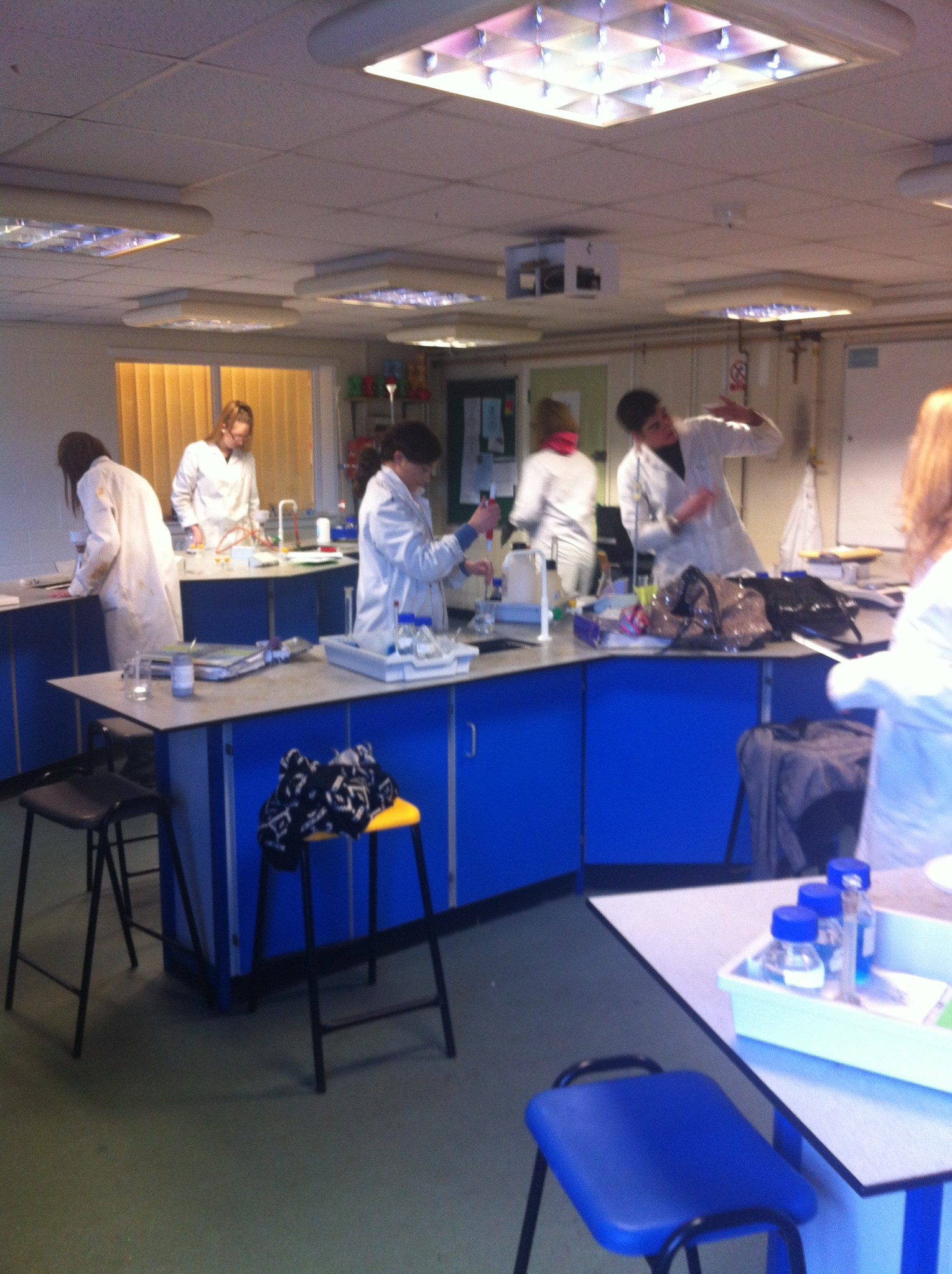
The main reason why people decide to take on a career in teaching is to make a difference to the next and future generations and have the opportunity to share your passion for a subject which you love (and hopefully they students will love too!). It is safe to say that not one day of teacher training has been the same with each day offering a different combination of challenges and rewards. Some of the words students come out with are enough to make roll on the floor laughing out loud and the relationships you build with the students will ultimately determine how involved you get during your school placements.

Surviving

It feels a shame to have to mention ‘survival’ on a post which is littered with positive aspects about doing a PGCE but I feel it should be done, and may give some prospective teacher trainers a few tips!

  1. Leave work at work – try to get into a habit of leaving the majority of your work at school. As a PGCE student you will be on 60-70% of an NQT timetable. This will result in you having an hour or two a day at school as well as time after school in which you can mark, plan or maybe observe a few other teachers. Get a routine, a timetable if you will of work you need to do and make sure it is manageable!image
  2. Don’t try and re-create the world! As a PGCE you are bursting with ideas about how all your lessons are going to be revolutionary in the world of teaching, however, outstanding lessons take a long time to plan and resource and the fact of the matter is you will burn out rather quickly if you have other roles to do on top of that, so as I touched upon earlier, use your peers to come up with resources together, swap them, and make your life (and your friends) lives easier!

I am writing this blog for John after the last day of my PGCE course, and write it with both sadness and excitement! It has been an emotional, tiring and rewarding year in which I have come out the other end a better teacher and a much more resilient person!

So why do a PGCE course? Because there is no other job quite like teaching!

Chemistry Practicals in the new world

There has been an interesting debate on the MyRSC  “Talk Chemistry” and twitter and various blogs which raise an important question for the RSC, for academics teaching and designing courses for Undergraduate Chemists and for schools and teachers.

There is always change – I’m only in touch with the changes to A Level Chemistry, AS Level Chemistry, and around the corner GCSE Chemistry; the profound changes over practical work.

Universities will have changed too, new techniques, scrapping old pracs, developing new skills – I am slightly guessing at this though.

So will new and young teachers in school have the skills to deliver practical work and perhaps more broadly motivate pupils as they once had or actually need in this “new world”? Can they do a good demo? Can they deliver the organic prep the new spec demands? Have they even used the kit they find in a school under financial pressure where Chemistry puts most of its capitation down a drain? Seeing some of the nonsensical practicals suggested for AS and A or at least the slightly odd quantities will teachers (old and new) know where to turn for proper advice – CLEAPSS, RSC, ASE – sure but exactly WHERE – they are busy people?
100
Is it time for the RSC to take a snapshot of practical work at UG level and bring together the skills developed in UG courses and design any necessary training courses for potential and actual teachers in secondary. What role “old hands” like me who should be able to help show how show a good demo ( patter and all) or point out the pitfalls.

Over my career of 34 years in comprehensive school classrooms – the magic, the mystery of Chemistry is delivered through a range of activity but practical activity caught me in school and I daresay caught you – is anyone making sure practical work isn’t sidelined to the side bench?

We know sometimes physics or biology colleagues struggle with doing some of our Chemistry practicals – probably easier and more comfortable to hit youtube – so Chemists let’s stand up and be counted and ensure whether it is assessed, sidelined by exam boards or rubbished – that we maintain experimental Chemistry at the heart of our lessons, our teaching and our future workforce of Chemists.

Meanwhile let’s see just what the score is!

Monday period 3 – Qualified Teachers – What exactly do we mean by qualified?

There has been much discussion about qualified teachers and unqualified teachers in schools. Let me start off by saying I am qualified I have a degree in chemistry from a reasonable RG University (at the start of the river Thames)  and I could probably be a Masters but I never paid my £15. I have a PGCE and I did my NPQH. So I am I qualified I think.

untitled

So does that mean I’m a good chemist? I hope so or at least I was.

Am I a good teacher? I’d like to think so.

Am I a good  headteacher?Well that remains to be seen.

  • There is a distinction between a qualification and the practice and ongoing CPD or training so I was glad to do my PGCE before I got started as a full-time teacher. However it didn’t prepare me for every eventuality. By the time I finished my first year I knew that I could survive in a classroom, I could manage behaviour and yes I could teach pupils some things if not most, but some parts of my subject I could not teach very well. In my second year I taught some things again and inevitably they were a bit better but it was in my third year where I really thought I could do with doing my PGCE again. There were some aspects of Chemistry and some children I just couldn’t manage to teach.

graduation-caps-in-airI hadn’t taught these topics or children successfully  in the first year or the second or third time and I faced up to “I really don’t think the class are going to be able to get this topic and I don’t know what to do about it” – and there was no internet, blogs or twitter.

During my NPQH I quite enjoyed the reading and research it was good to revisit and understand some proper educational research however during the whole of my time I didn’t meet a practising secondary headteacher ( save my own) only a lot of aspiring headteachers. There were aspects of headship I was worried about such as the competency regulations or managing budgets weren’t really touched upon but more than that. I was looking for some inspiration some passionate headteacher who would tell me that the job was better than the job that I was doing, a job which I thoroughly enjoyed .image

Well we aren’t strictly qualified for many things we have to do in school:

  • I have had to do pastoral work in areas that I’m a little uncertain about and whilst quite experienced now (=old) so I have seen most things but in my early days I worried about some of the sessions I had to lead on relationships/news and sone questions were bounced away.
  • Sometimes I had to cover lessons in fact I think I probably covered every subject I’m not really qualified for every subject so some of those cover lessons were not very good. My favourite cover lesson was an English lesson, I went in and the work set was carry on reading the novel. the pupils duly took out copies oftake a copy of the Wolves of Willoughby Chase. imageI sat down to do some marking I looked up all the class was staring at me, what was the matter. One boy said we don’t really read the book on our own. My next suggestion was to read around the class. “Why don’t we start with you Robert you can start reading.” Nothing happened. “OK ” I say so I started reading a little bit of the book with a view to asking them to carry time in due course – “No! Sir, you have to do all the accents.” This polite young teacher “Oh shut up and read quietly!”
  • Sometimes I’ve taught other subjects which for me includes Biology – I have no qualification in Biology. At my school (all boys ) we didn’t do O-Level Biology! Ok so I’ve read it up but it’s just not the same, I’ve no idea how important basics are in fact unsure what basics are. I’m a little better at Physics but when we had a shortage of ICT staff and I taught that I was literally two lessons ahead of my Y8 class. I have an ability to kill interest in any other subject – compared to what I genuinely feel I can do in Chemistry. It’s now 2015 and a long long time since I did my PGCE, so I do hope and so do my pupils- that I have moved on since 1981, after all I only had chalk, blackboard, and a delightful banda machine and a few textbooks – no IWB No internet, mind no data, no microchemistry and little contact with other teachers.image 2(3)
  • Sometimes I’ve spotted a gap in my lessons of a pupil’s literacy knowledge or maths skills; maybe these are not done in the other subjects  or maybe they are done badly maybe not understood or more likely finding it difficult to apply the ideas in a different room with a different teacher. I’m not a qualified mathematician but I sure can teach the Maths my way to help my Chemists. ( Something very important in the new world where we have 20% Maths in Chemistry BOO)
  • Most of my career I’ve been a “head a sixth form” and over some 20 years and many a time I’ve said to myself I think I’ve seen every scrape a post16 person gets into, then just before I finish that sentence a situation will present itself which I’ve probably never had to cope with . No qualifications help but experience, some little wisdom and a good instinct is what we rely on.

So it is more than just qualifications, but dont get me wrong  I’m a headteacher and I want qualified people – those with a subject they love and a passion for young people.

My best teachers were my Mum and Dad they had no formal qualifications and at home we had very few books or resources, I have blogged elsewhere about going to the library weekly with my Dad. So my parents fostered curiosity, integrity, discipline, character, diligence. They set high aims and ambitions – I wish I knew how. They seemed to produce a son interested in Chemistry and Science yet they had no scientific background at all. How? Well I suspect that was about partnership my parents and their attitudes and my teachers with their “expertise”. My classes at school all had 32 boys in – the same 32 every day every year but at home it was just me and Mum and Dad and their questions and interest in me. That made them very special teachers – we can all learn from people like that.

Mr Dexter at the RSC EIC 50th. School chemistry over 50 years

Mr Dexter at the RSC EIC 50th. School chemistry over 50 years

Questions

Q1 As it is obviour we cannot be prepared for every eventuality in a school, do we rely too much on “qualifications” ?

Q2 Are qualifications overrated? The most highly qualified person might not be the best teacher, let alone be able to communicate with the pupil who finds the subject very challenging.

Q3 Design the qualifications necessary for the job? – or get proper investment in CPD?

For those in a Church school

Daniel 1:3,4: Then the king ordered his court officials, to bring into the king’s service some of the Israelites from the royal family and the nobility— young men without any physical defect, handsome, showing aptitude for every kind of learning, well informed, quick to understand, and qualified to serve in the king’s palace. He was to teach them the language and literature of the Babylonians.

Hebrews 5:12 In fact, though by this time you ought to be teachers, you need someone to teach you the elementary truths of God’s word all over again. You need milk, not solid food!

Proverbs 5:13 I would not obey my teachers or turn my ear to my instructors.


You might like to read other posts from my timetable of teaching – each is set out from lesson in the school week, before or after school or at the weekends, appropriate to the time of day. I have also started a  class lists or “set lists” which was to answer the questions: “why be a teacher?”or “why have other responsibilities in a school?” Shortly I am starting a new area about progress from one role or experience in teaching to another with hints and tips about successfully moving on in the job and your teaching career.

Thursday period 3 – UCAS deadline, hey maybe that can change.

ucasThere are some jobs you miss in the profession when you move on (up, sideways or down) and some you don’t. I am ambivalent about missing UCAS references. At my school sixth form tutors do references and do them spot on (pretty well) – another of the sixth form pastoral staff polish, check etc. Over the last 20 years I have done all that, and I enjoyed writing and most of all talking with students about opportunities perhaps not enjoy because some , most are very stressed. I saw it as a bit of a privilige really. So it was always good to add a calm voice, a sensible view but of course not magic wand. It was also a collosal amount of work for me, for tutors and for students and a massive pressure pot for staff, students and parents. I daresay HE might feel the same.

Even with a new job as Head I still did three references and forms this this last week. One of those was a “Please Sir do you remember me, I left years ago but… can you lastminutereference help me out?”. Soft that I am I did – just by hours!

Meanwhile in another Universe I am trying hard with subject leaders and SLT to work out how we manage the ‘dogs dinner’of a curriculum for post 16. Whilst some changes feel bad (please don’t ask I’m a Chemist, we change to new specs, new assessment and no practical assessment but at least the spec for teaching in 6 months is now approved (as of December!). Some specs change so AS does not count in the end but at least remains coteachable, some do not. I think the staff are pretty clear on their own subjects but across the piste? Mmmmm. And what they need to consider, not much chance of that because you politician types forget we aren’t sitting around waiting your latest ideas we are…teaching a generation now.

I have always been bothered to explain to our Y13 that it is harder than Y12 because it brings the sharp end of A Level , stretch and challenge, and final exam chances, but also all those big decisions. I am also convinced those decisions can motivate and if we help students get them right they can achieve well, and aim higher than they might imagine. That has been my experience. Despite this here is my suggestion after 20 years as a Head of Sixth form

  1. Get HE to decide IF they want AS or not ( I do remember working with UCAS predictions before the advent of AS – I can tell readers it isn’t easy!) Maybe it doesn’t matter, we seem to be in a new world already whereby AAA or better gets you into most subjects in most places and probably AAB – and it feels like the rest get that same offer even if we know they may not make it. [don’t scream at me about medicine and English and RG Uni and Oxbridge I know I know]. However have these decisions clear. For example
  2. Give staff time to plan their schemes understand assessment and nuances, get to exam board training and have time to talk with each other to decide the very best way to carve up teaching and learning. Consult with SLT to design a great curriculum offer. Four subjects or three; extended essays or not, and please can someone look at the funding.
  3. Halt the AS/A2 changes now. Get the new specs for all subjects sorted for start in 2016 not 2015. Do AS and let it count or do AS and don’t let it count. Teachers and learners just need the rules ( and preferably the same rules to each subject!)
  4. Be radical on HE entry. I’ve never much favoured PQA ( post qualification application) because of the motivation I mentioned above but try this:

Which way?

Which way?

  • Minimise Y12 AS exams – one paper ( maybe or maybe not cwk) whether it counts or not. Preferably forget them as we are abandoning predictions see below! [Save some time]
  • Start the end of Y13 exams ( A2 +/-AS) at start of May. This drags exams on longer in school but staff can stagger their work in terms of revising with Y11 or 12 or 13 and all that means for schools and Colleges.
  • It takes 6/7 weeks to results, replan this. These exams start May not mid June so can have results early July?
  • After Y13 complete exams maybe mid June schools and colleges start all the practicalities of UCAS PQA. We help look at courses, we have Open days visits and we prepare statements and references BUT no predictions because the button is pressed mid July when we all know results. We will do background stuff but not forcing so many decisions so early on
  • E. do not know need to think “how many will get the grade?” “how reliable is the referee?” The form arrives with grades.
  • Over the summer there can be interviews and if not the time for HE colleagues just start term a bit later for first year UG.

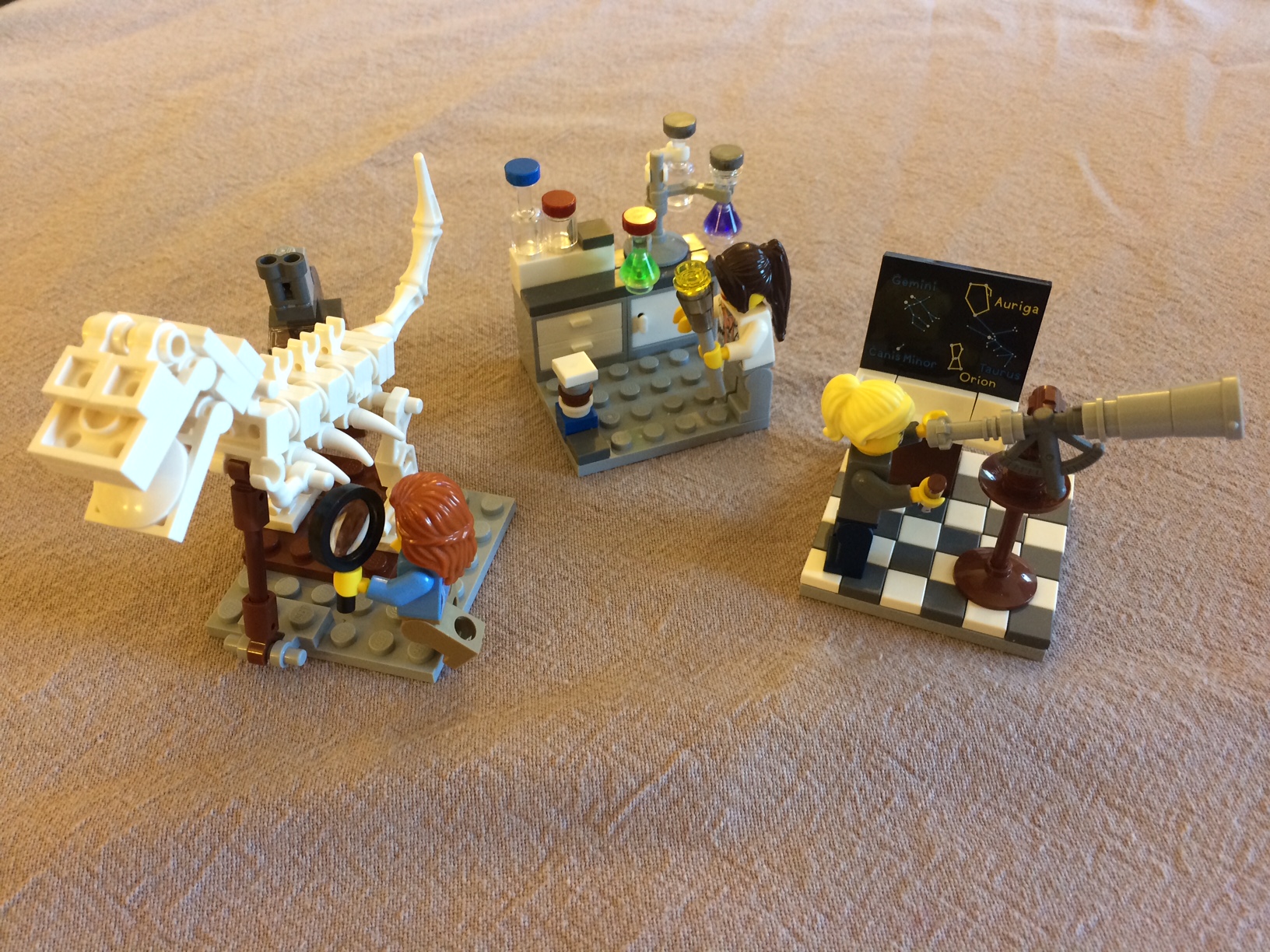
    Maybe a Chemist maybe an astronomer, maybe a paeleantolo Oh hang it. I can't even spell that

    Maybe a Chemist maybe an astronomer, maybe a paeleantolo Oh hang it. I can’t even spell that

I am sure readers will say what about medics etc BUT we all see many students who think they should apply for X or Y but their results make us think they may make it and it’s hard to say a definite you won’t for some. WE also see an element of immaturity at application time, uncertain ideas which is fair enough and we make some decide by October 15th. In this new world, this all evaporates, no student will apply for the AAA course with predicted AAA ( which might mean AAA or AAB ( stats show most grades predictions are correct within a grade or two overall I recall) now they apply with AAA. I can imagine many courses offering a range of grades and I suspect they could, surely they know students with AAA down to BBC do or do not cope with this course etc

As for motivation I do like my students to do some visits in Y12 – well they can do, they can visit and be inspired to aspire, they can be helped to understand the basics by which I mean to get into this course you need….. these grades/this interest/these skills. Entry profiles take on a new highly significant meaning, this is what you aim for. It might benefit a subject like mine Chemistry maybe others where Y12 still feels like we are teaching much basic stuff and some of the more interesting work comes late Autumn and Spring of Y13. As we now stand it’s a bit late for a student who having had few ideas of what to study but been badgered by home and school to decide, and now finds a real interest in Chemistry. In fact we might all have that responsibility in our Y13 work to trumpet our subjects even more with this is what HE looks like and being nearer than a present applicant we might get those choices right and get a few more young people into the right courses and see better progress in HE.

There I’ve said it


You might like to read other posts from my timetable of teaching – each is set out from lesson in the school week, before or after school or at the weekends, appropriate to the time of day. I have also started a  class lists or “set lists” which was to answer the questions: “why be a teacher?”or “why have other responsibilities in a school?” Shortly I am starting a new area about progress from one role or experience in teaching to another with hints and tips about successfully moving on in the job and your teaching career.

Some Questions:

Q1 Might this make an optimistic call over what feels like an unwealdy future for post16?

Q2 HE Univeristy Providers what do you think?

Q3 SChools and FE Colleges what do you think?

Q4 Most important, Students what do you think?


Links
UCAS

Complete University Guide

Push University Guide

Telegraph article on choosing HE

Guardian choosing University – ideas from students

Unistats support data for making informed choices

The Student room advice


For those in a Church school:

Psalm 25:5 Guide me in your truth and teach me, for you are God my Saviour, and my hope is in you all day long.

Psalm 139:10  even there your hand will guide me, your right hand will hold me fast.

Romans 12:6   We have different gifts, according to the grace given to each of us.

2 Timothy 1:6 For this reason I remind you to fan into flame the gift of God, which is in you

1 Peter 4:10 Each of you should use whatever gift you have received to serve others, as faithful stewards of God’s grace in its various forms.

Tuesday period 2 – #LoveChemistry, #LoveSalters’, Love Investigations

imageSo this post is about practical work in science, it’s not a review of the proposed changes to GCSE practical or those already in hand for A Level. It’s just my little world of practical work as a Chemistry teacher, and it is what I will be doing on Tuesday’s period 2 for a few weeks.

There are different types of practical work in science. When I used to plan on a scheme of work, we had various codes : PP pupil class practical; PD Pupils help in a demonstration.TD Teacher demonstration. AP assessed practical. I am so old that when I did my A levels we had science practical exams. In Chemistry this was usually a titration and mostly oxalate /permanganate ( ethanodioate/Manganate VII for the younger reader). We knew what to do, I had after all done one about a dozen times. We also had some analysis to do, a so called unknown and a few simple tests, flame tests and maybe some solubility tests to show this was Potassium Sulphate ( lilac flame, ppt with Barium Chloride). BUT oh how far we have come.

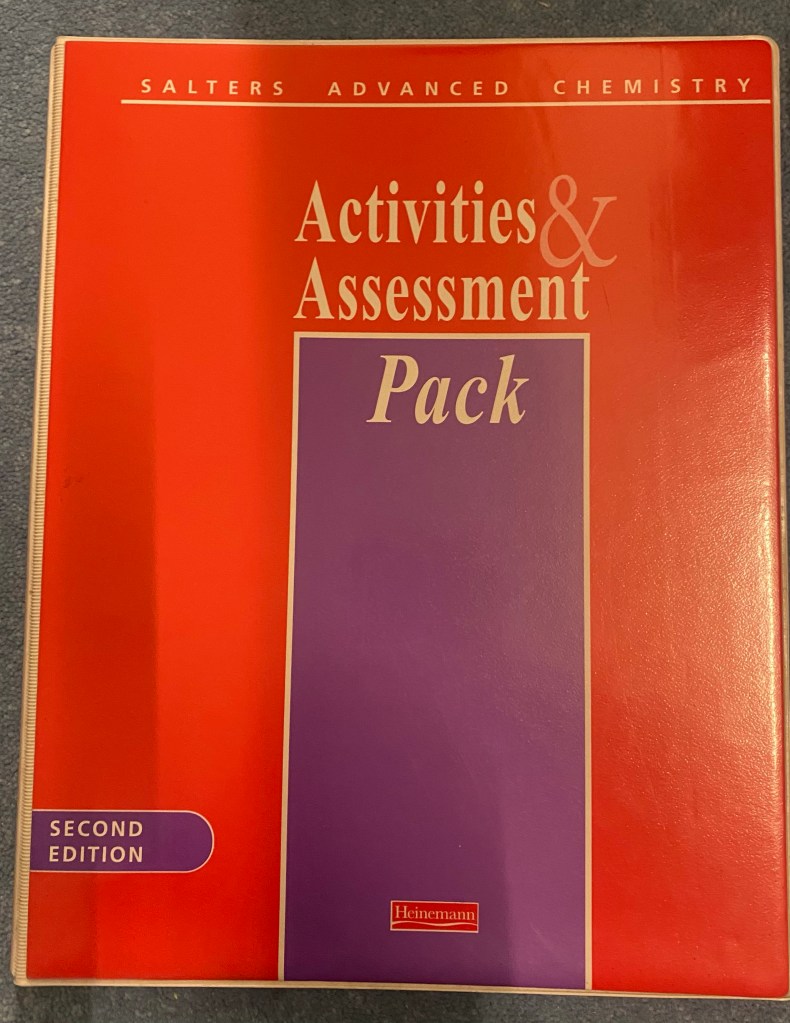
Let me tell you about my Yr 13 who have done practical Investigations now since 1994 and for a good few years of them I was also a moderator for Salters’ Chemistry. They have to choose their investigation, describe it including relevant chemical ideas and then plan the methods. In recent years we have had a new mark her for the difficulty and challenge of the topic, so if they choose an experiment we have done as an activity it scores low down. Modify the practical, use ideas beyond A Level and bring in a series of other skills and you might move to 4/5. Once planned we teachers have to mark the first sets of skills: planning, communicating, researching, risk assessments, references etc. The students work very hard, they score a full range of marks but maybe at the higher end of their grades. Why? Because they are A level chemists and quite good at this. However an Investigation means testing skills they don’t otherwise have

Mr Dexter at the RSC EIC 50th. School chemistry over 50 years

image Mr Dexter at the RSC EIC 50th sharing some differences between Chemistry in 1963 vs 3013 photographs from (c) Royal Society of Chemistry

So then we get going, usually three weeks of lessons and plenty of extra time. Students pop in during their free if staff allow, they come down at lunch or after school and we sometimes do a long twilight and Pizza. They start slowly in fact the first week I always wonder if they will make it but week two sees much progress and week three I see…experts! So now they have some results and observations to report ( and score) and they can analyse them (and score) and finally they do a decent job on what I usually think is the hardest area, evaluating what they have been through – scientifically evaluating that is, not a series of moans!imageBefore you say it cannot be assessed, I disagree the Salters’ mark schemes work. They work because back in the early 90’s teachers and boards worked together. They work because there were trials and developments. They work because there were good Chemistry teachers (who will remain nameless but you know who you are, ensuring marking and moderation worked.) but mostly they worked for being well designed, well thought out and because of the reactions we saw in our students ( not chemical reactions!!)
Why do I like Investigations?

  • It does feel as if this is what proper chemists and maybe research chemists actually do. A mix of researching methods, designing an investigation, carrying it out and persevering when it doesn’t quite do as it’s told.
  • We all learn lots of Chemistry, the students, the staff, the lab technicians but most of all the students. Even those who can just about understand concentration, dissolving, diluting etc get a much clearer understanding by doing it and by doing it AND being assessed.
  • The quality of work can be amazing. I recall in the early days of moderating seeing some truly wonderful investigations, given a relatively free rein it showed just what A level Chemists could do. they were ambitious, clever and often original. I even recall showing Professor David Waddington a project he diligently read it.’ What do you think?’ I hoped he would say it was ‘very interesting’ or’ innovative’, his reply: “probably worth a first”.
  • It’s one of the few bits of assessed work students enjoy. I know they also get stressed about the marks but if they plod on they usually enjoy the experience, usually do quite well and genuinely understand chemistry better.
  • They become mini experts. When we resume ‘normal work’ and revision they can teach their peers on kinetics, on errors, on calculations etc. I often turn to them ” tell us how you solved that”, explain how you worked ‘that’out.
  • It can inspire and motivate. In my day whenever did an A Level practical, let alone an assessed one, persuade me that Chemistry was exciting or innovative or frontier, though to be fair it showed me it was very useful. I have seen young people carry out their practical project and want a rethink on their HE choices. See n many of them get to grips with this fascinating subject in new ways.
  • It builds skills, all sorts from the practicalities of problem solving through to the softer skills of perseverance (though maybe if I say ‘Character building ‘ the politicians will listen). They also work on their own not in a pair or a group but independently – hey a bit like real Chemists?
  • It is perfectly assessable. Our students get a range of marks, from many 4/5 or 5/6 right down to 2 or 3/6. That’s a tribute to a good mark scheme, fairly properly applied, internally moderated and externally moderated. Practical work vital to my subject, should and can be assessed.
  • The hardest aspect back in the early days was researching ideas and practicals, it so often depended on getting the right books or articles, but what a great opportunity to raid the ASE and RSC cupboards. Now of course we can go on the internet. AND sure I know that’s why some people feel the whole of practical work can be cheating but really – have you ever met Chemicals?
  • No one gets a practice. You can’t do a four week project twice, you can’t rehearse, you can’t spend weeks researching and planning and then change your mind. It’s a good test!

imageAnd if Investigations ( let alone practical work) disappear?

I, for one , will be sad, I can’t think any other assessment building skills, showing off Chemistry, motivating and contributing to the student learning experience. ( although I do know learning for an ordinary test or exam does concentrate the mind). Maybe we can still do them, say the end of Y12 (Oh No) the skills won’t be quite so well developed and hey the AS is gone or going or something. Maybe we can do a mini project (Oh No)– you need four weeks, is there really that much spare time or are we refilled with extra content in the new world? Maybe there is after school, the Chemistry club – Oh No – how disappointing that something which should be done in lessons is reduced to ‘after school’ or ‘ in the holidays’.

If you are an examiner, assesor, moderator reading this, don’t worry we Chemistry teachers will make whatever yuou give us work, its what we do, but me, I am still allowed to mourn.

I never did an Investigation when I was at school, and it never did me any harm. I didn’t do one in my three years as an undergraduate maybe that didn’t do me any harm, but I did a part II whole year of research which I adored. That was back in the day without the resources we have now, I think I’ll just be that sad old Chemistry teacher…..”oh in my day”

My plea, please don’t throw out the baby with the waterbathimage

You might like to read other posts from my timetable of teaching – each is set out from lesson in the school week, before or after school or at the weekends, appropriate to the time of day. I have also started a  class lists or “set lists” which was to answer the questions: “why be a teacher?”or “why have other responsibilities in a school?” Shortly I am starting a new area about progress from one role or experience in teaching to another with hints and tips about successfully moving on in the job and your teaching career.