In a way it doesn’t matter if it’s a NEW week or a NEW term or a NEW year – or all three in one!
Schools start the new term with INSET and those slightly odd first days of admin and assemblies, but they will nevertheless ring out with their ‘year group assemblies’ and classrooms and numbers of teachers saying “It’s a new start“.
 It is so good we can give a fresh new clean start, some children really need this, probably some adults need it too. There is something special about the first page of the new book, the new uniform, the new shoes. Almost all the new year 7 will have had a photograph taken at home before they came to school in their new uniform at their new school. Its a new world as well as a new beginning.’
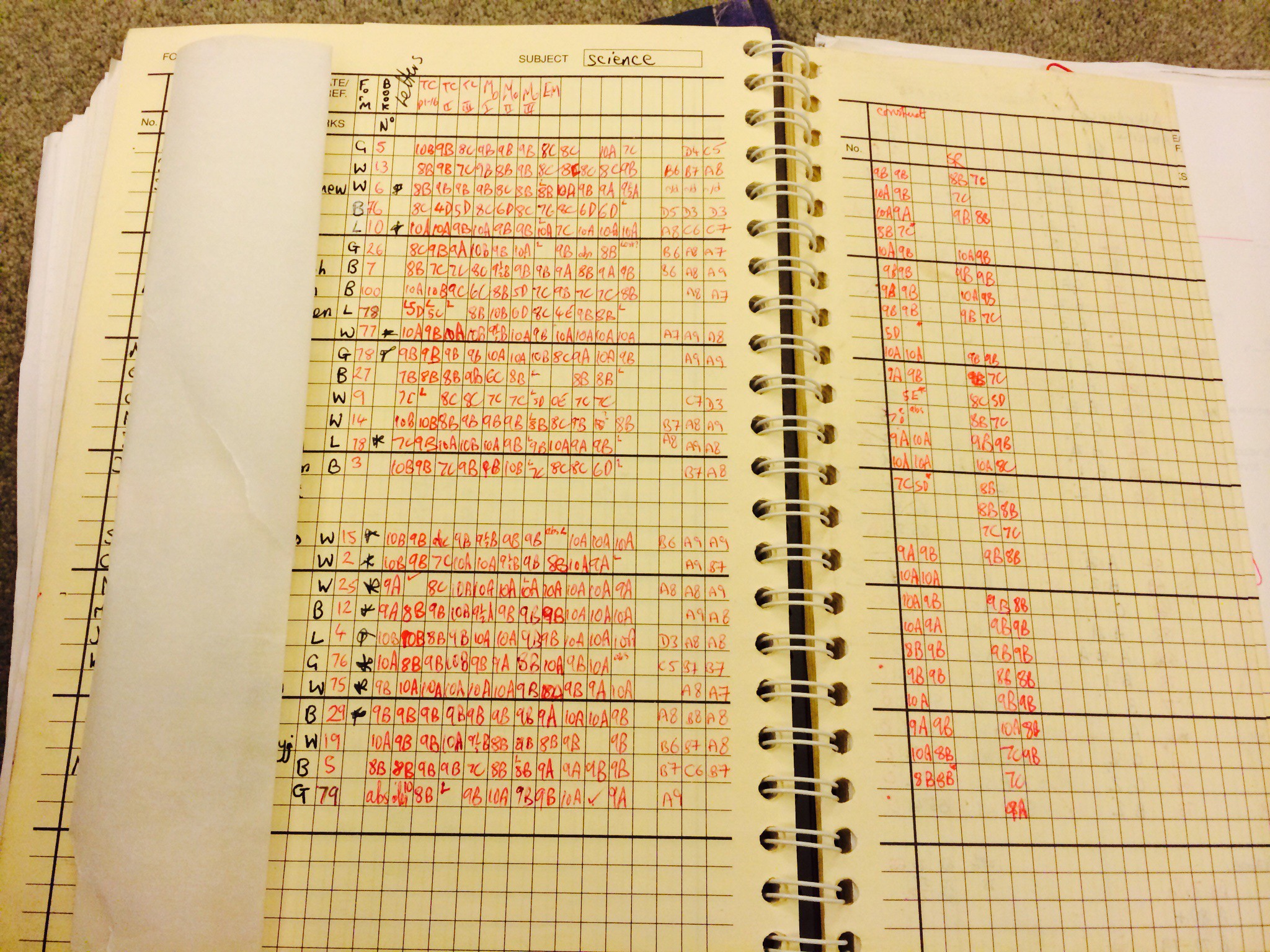
Even staff love their clean, new mark book, new planner and new diary. I wonder when do they become those old tattered friends filled with details of lives? Whilst I appreciate what ICT can do for us, opening a new ‘Word document’ just does not have the same effect. As for my new exercise book – does writing on any page get better than that crisp new page at the front after writing “your name and subject”? In my career two pupils when asked to do this have actually written ‘your name’ and one pupil wrote ‘Fred Bloggs‘ after I actually said don’t write ‘your name’ but write your name for example Fred Bloggs – hey ho I’m such a poor communicator.

Of course it isn’t really a brand new start, unless you are Y7 or a brand new shiny teacher, but it is a new year. It is a chance to start afresh, staff have had a break, and the rhythm of school brings us full circle with a new intake and the school year has rewound to the start once again. I worked outside of education a short while and talking with friends it does not happen so clearly elsewhere, people holiday at different times and the ‘new’ does not happen. I know that some blog readers will not be believers but there is an echo of the church calendar. When a church gathers on a Sunday it’s the first day of the week, and some time is spent reflecting on the last week, seeking forgiveness before looking to the new opportunities in the week ahead. There is no doubt we need to reflect in school. My first teacher planners which I genuinely treasure are hand written with the left column my plan and the right hand column my reflection. A reminder how I sat with my ‘old’ planner to see what had gone well and what had gone badly, to do more of the former and none of the latter. Following the story of my lessons I can see (and still recall) sometimes it worked sometimes it didn’t BUT it was vital in that important aspect: ‘ how can I improve?’

A new journey starts here
Back to the new term, new opportunities, new ideas to try and and meanwhile forget the rotten, bad bits of the past, to an extent putting that behind us. This is also a time when we tend to think a little about what is really important to us as we begin a new year, you probably heard some of it in the head’s ‘Welcome Back‘ speech. Pupils often need a new start, and not always at the start of the new school year, a little bridge back into their school community and a new opportunity, probably not too many if the action plans don’t work but forgiveness might be important for some. They too will embrace the challenge of the new year, maybe the new school for Y7 or the new Y10 curriculum they had a say in choosing for themselves, or a very big shiny new Y12 confidently or with a big dose of trepidation starting those A levels ( hey it’s a big jump this new year). Fear and joy, it is just so exciting, well and scarey. Pupils need support and bags of encouragement – some secretly want to take part in the school play this year, learn a new instrument, take up a new sport, or even make new friends or just make amends. Parent and teachers can help them – or hinder them.
 I always found the first full ‘normal’ week back quite hard, I’m not sure what the next class would bring into the room, I got a bit sick of the sound of my voice, the holiday had no bells and now they ring the lesson start and end. Nevertheless it is the start, it’s the beginning of an exciting new journey. Welcome back to the new term and being in the challenges and opportunities of teaching and learning.
And some questions for you to think about in the nouvou world:
Q1 When we and our pupils are so busy how do we find time to reflect?
Q2 I made my Y12 write themselves a letter about how their revision and Y 12 mock exams went immediately after they were over in the summer. We then opened them this week and reflected. What activities do you use to help pupils (and staff) reflect, in the busy routines?
Q3 Is there a limit to how many times can we give a new beginning before we say that really is enough?
and a bit more thinking about the mundus novus in Church schools:
Genesis 1:1 In the beginning …
2 Corinthians 5:17: Therefore, if anyone is in Christ, the new creation has come: The old has gone, the new is here!
Hebrews 8:13 By calling this covenant “new,” he has made the first one obsolete; and what is obsolete and outdated will soon disappear.
Ephesians 4:24 and to put on the new self, created to be like God in true righteousness and holiness.
You might like to read other posts from my timetable of teaching – each is set out from lesson in the school week, before or after school or at the weekends, appropriate to the time of day. I have also started a class lists or “set lists” which was to answer the questions: “why be a teacher?”or “why have other responsibilities in a school?” Shortly I am starting a new area about progress from one role or experience in teaching to another with hints and tips about successfully moving on in the job and your teaching career.

 After all the UCAS stuff or maybe the searching for the right apprenticeship or even the world of employment, your grades opens that door of opportunity. Still some advice for you: if you are continuing in education you’ll need to carry on with more and improved versions of what got you to here. Ok you might be and should be excited about University or leaving home or having autonomy and independence. More thoughts about the opportunities of student life than the messy sinks of student accommodation. However you are off to study and so whatever you’ve been doing you’ll need to step it up. More reading, more organisation, more independent learning, more work and probably less feedback and support than school or college gave you. The latter matters, you need to be more of your own judge and set your own standards. I recall a good friend excitedly awaiting her first feedback on an essay which got a β+ ( that’s beta plus) and she asked her supervisor what that meant. ‘Well’ he said ‘its not as good as an α- ( alpha minus) but better than a β.’ She asked what she needed to do to improve he took the essay back and said ‘maybe work on the English’. For a young lady with full marks in AS modules for English she realised at that point she had to work out what learning meant in this new world. Vital to success here is to
  read, read, read and to discuss the standard of work with peers and those on your course but a bit older. Heck and start now, yes now, find a book or two on that dreaded reading list and….start…reading. My own two daughters got fed up with me saying “you are reading for a degree in” Of course the new world offers wonderful opportunities but the priority one is your learning because….that gets you to the next step….( but lets leave that for now).
 Think, research and write a few advantages and disadvantages down and talk, talk talk. Talk to peers, talk to family, talk to teachers or talk with local careers officers (
  Take a bit of time but clearing can be mad and busy and you will feel pressurised. Remember you are off to study for 3 or 4 years, you will be doing lots and lots of ( *subject X*) and there is a considerable financial investment from you – it might be a loan but it’s still a loan. You wouldnt buy an expensive new mobile on a quick whim and this is life enhancing, life changing or possibly totally wrong! Remember all the research you did for choice one, do it now to ensure you are making a good decision. If you are doing all this to please great Aunt Ethel and who keeps ringing to ask what you are doing next, just stop, tell her and yourself it’s not that easy and simple. Never make the decision to appease family or friends – they won’t be sat there as you wonder why on earth you ended up studying sand castle building at the University of Little Piddle in the Paddocks. If necessary visit the place, that is visit if you have not already visited, yes that’s right, even if you have a holiday job get some time off, surely you won’t sign up for big expense, big commitment and your next 3 years without doing that, surely! That’s like signing for a big mortgage on a house without seeing the property because you are staying home to watch “Cash in the attic”.

 You might even think about doing one subject again in the summer without attending school or College, you know study in my room stuff …don’t. It’s also a very competitive market in some areas, so if your offer was AAA for a competitive course and you got BBB, don’t assume that if you redo the offer of AAA still stands. You need to talk to the HEI urgently. Reflect on the situation this last two years on your learning, be honest, talk with staff and family and make a plan.
 Planned gap years with mixtures of work experience, earning money, travel, new experiences can all be helpful, though as above they need thinking about. Don’t deceive yourself, the gap year isn’t one big holiday, its work, new people, new experiences, lots of challenge. I really like gap years, I think students get more out of their University experience and are a little wiser, I worked as a lab technician in a gap year so I am a fan. However don’t think you can ring a local company and get a job for six months, or ring the Raleigh Trust and build a health centre in Mongolia…you can but it needs planning and often fund-raising too – it’s all about commitment. If you are serious then find people ( from your school or college or community) who have done the very project. And if you are serious, well you had started some plans anyway, hadn’t you?. Lastly think if you are deciding to reapply, just how that works if you are abroad, not just interviews but that research, how will it be done?

 We began by asking our pupils a series of questions – we did make an important assumption that our community of parents, pupils and teachers see a value in homework so this wasn’t about forgetting or abandoning homework. It was more to pinpoint any stressful areas for each group and see what improvements we might make.
 The following action points came from the pupils:
 The following action points came from parents.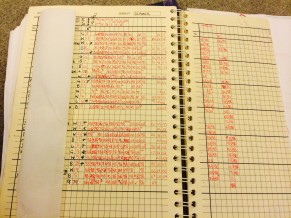
 Why would you want to do a PGCE? It is often a question that gets put to me by many of my family and friends, as well as people I’ve just met, on an almost daily basis. Many people see the headlines in the newspapers and the media portrayal of the teaching career is one which may scare many potential student teachers out of teacher training. So why should people consider it?
 As touched upon earlier, other student teachers will play an important role in your year! The friendships and professional relationships you develop with each other is another exciting element to the course, and by supporting and helping each other, the time spent on the PGCE course will go by even faster, on a course in which the weeks already fly by! Another advantage of developing lasting friendships on the course is the sharing of good resources between each other. This will not only help build up a ‘bank of resources’ which you will find useful for your NQT year, but also help to reduce the time spent on creating resources, helping to create a better working-life balance.
 . You need a big erudite quote talking to a load of PGCE mentors at a prestigious University so I went for a Cloughie quote.
  The school curriculum, the school content never changes hey have in my subject I can tell you a topic like Solubility has come and gone and came back it. The Born Haber cycle was in then out then back in a new form then gone and I’ve not checked the new specs!
 ot just about knowledge. Back in the day when I did a PGCE we had what we called books and if you were asked a question the answer was in a book so you found it there or bluffed. Now you can google it, so can pupils, but learning is much deeper matter and, it’s really all about
 re understanding not teaching to test – PPS (past paper syndrome). No teacher reading this hasn’t had the frustration of a pupil asking “whats in the test?” or doing past papers sometime in January and not doing very well. We need to use our own deep understanding of our subject to show pupils just how to grasp, understand, learn and progress.
 the screen appears the word “pop” what do you think of that? It’s quite nice but I’d rather g
 ep up with our knowledge, we should enjoy that. It will get us excited: a new material anew discovery, scientist on the international space station. I teach my pupils about DNA and the structure and hydrogen bonding and it’s fascinating and actually give them the 1953 article (a single side of A4 paper) that was in nature and I remind them that in








 Mr John Dexter blogs about school