Friday Period 7 – A worthwhile job

Twitter, blogs and some newspaper articles are failing to balance the good things about the job of a teacher as well as the pressures, and I think I’ve done that in my blog too, so this post is to remind me and others what a great job it can be.

This time of the year I seem to be at various events where I come across ex pupils, including some such as parents (who I once taught) of our new Year 7. It’s also a time when emails drop in from those graduating with news of degrees, of firsts, of jobs and “please can you do a reference?”If I had a facebook account I might keep up better but I might never get any work done.

Friday evening and I had an invite to a party – not really me after an exhausting week but out I went. It was to celebrate a local company achieving over 10 years of business, and it’s run by a former pupil. I went with a few other colleagues and could not have anticipated such an uplifting evening, not least the gratitude which greeted us just for being there. During the evening several others ex pupil peers were there and I caught up with their activity but they just wanted to talk about school days, for some almost 20 years ago. Another little generation appeared through a connection and off we went again as they enquired about teachers, reminisced about their time. Spookily it was almost a self assessment reflection : what I did well, what I could have done better, what I am working on….

I was interested that they were still looking for some approval too but it was genuinely lovely to see them, to hear about their families, their work and their lives, and of other ex-pupils too To hear they made business decisions seriously influenced by the ethos we tried to share, was quite significant too. I recently had contact with two others now involved in the media, they still call me Sir, they still laugh about the funny moments and they have a huge pride in their school, oh and they pull my leg. I’m not naive, there will be many ex-pupils not in touch, who hated me, hated school and may or may not have been successful, I might never know, but what I do know is those I bump into remind me of why I do the job I love, even those whose life took them in a different direction.  Oh and I do know it’s not all down to school, schools are complex places, so too are people, the influence of family and friends and their own integrity are often much more important, but we play a part.

Two other ex students are both involved in teaching and they wanted to reminisce but they also wanted to pick brains, each other’s and mine. How sweet I actually thought, you still want to hear my ideas, my thinking, I would have thought you had more than enough of that – not so!

So fellow teachers and especially those starting in the job, or going on as NQT’s or moving into the early years of the job, my post is a bit of an antidote to the Guardian’s “Secret teacher” oft complaining ( sometimes rightly) of the job. Sure there are issues, battles, problems, massive frustrations, stuff out of our control BUT the job is about education – educare “lead out” and meeting older pupils after Uni or after a period of work or after parenthood and seeing them having blossomed and fond of their old school (and their old teachers) does make for a reminder that the job is worthwhile.

My two ex pupils are now in education ( trainer and teacher)  both had sat in A Level Chemistry with me, I can recall both as clear as if it were last week, the marking of their coursework and the stuff they did which annoyed me, and getting them to listen, dragging stuff from them as we always do (don’t we?) feedback and probably a hundred other things I did whilst teaching them hey they are so worthwhile. We often say we look for pupils to ‘fulfil potential’, we have all handed out results at KS4 or KS5 which have seen the pupils dream from Y7 come true ( even when it felt a very long way off in Y7) and to see them now…..well it made sitting down to that work then seem all the more worthwhile, and spurs me on to the next tasks I have to do too.

So the purpose was to remind me and you, reader, what a great job teaching is. Oh I know this is all anecdotal there is plenty more to notice:

  • pupils who manage to learn
  • pupils who progress and achieve
  • pupils who turn things around
  • pupils who take responsibility on
  • pupils uninterested in a subject becoming fascinated or curious
  • pupils who discover and exploit talent
  • colleagues who make ideas work……my list could go on but it’s Friday 7: forget school and enjoy a beer. Except that…..school, well it just never really goes away.

Some questions to ponder

Q1 What are the long term rewards of the job?

Q2 Do we share the better aspects, the philosophical reasons why we do this every day, to encourage the next generation of teachers?

Q3 Give me a child until they are seven……and I will give you the (man) adult. Discuss!

For those of us in a church school

Luke 6:40

The student is not above the teacher, but everyone who is fully trained will be like their teacher.

Ecclesiastes 7:27

“Look,” says the Teacher, “this is what I have discovered: “Adding one thing to another to discover the scheme of things

Proverbs 3:1

[ Wisdom Bestows Well-Being ] My son, do not forget my teaching, but keep my commands in your heart,

Tuesday Period 5 – Accountability, Responsiblity or Pressure?

“Accountability”

1. the state of being accountable, liable, or answerable.

2. a policy of holding public officials or other employees accountable for their actions and results: a need for greater accountability in the school system.

Responsibility

1 .the state or fact of having a duty to deal with something or of having control over someone.

2 .the state or fact of being accountable or to blame for something.

3 .the opportunity or ability to act independently and make decisions without authorization.


I have been doing my round of department audits. These annual meetings are essentially a report from Heads of Department about what they have found in ‘checking’ on the work of their dept. An accountability measure, so it made me wonder again – just who are we teachers accountable to and responsible for? However after writing this I wasn’t so happy with the posting and was pleased when @Chemistrypoet tweeted me about responsibility and accountability and this made a bit more sense. Well you can see if it does so:

1. Pupils. First and most important I am responsible to my pupils. It’s why I took the job, I hoped to help them learn. I think about the class, the schemes of work, the way they learn, what might be interesting or exciting, difficult or straightforward. It’s these people I want to help succeed, to learn, to enjoy to be challenged and to grow. I worry about their exam results. There is some accountability too – depending on exactly what sort of pupils voice we use – smart ones methinks!

2. Parents. I am obviously accountable to parents. I send them reports, I talk to them at parents evening and expect their support if I need to call them over any ‘problems’. They occasionally remind me of my job – in the nicest way of course. There is a big responsibility here, whatever might be said we are in so many senses “in loco parentis”.

3. Myself. Maybe my conscience but accountability to my own aims and standards it sounds a bit grand, maybe pompous but it is true. I chose the job to spend my energy and effort and any talent I might have, delivering learning for pupils, trying to inspire, inspire in Chemistry but sometimes just inspire them to get stuck into life. I often ask myself if I am doing a good job and like most teachers wonder what I might do better. I prepare a lesson but then seem to dream endlessly about how I might improve it, and do much the same the next time I have to teach the lesson.

4. Colleagues. This is just staff in general. We talk about school, classes, pupils, education, Mr Gove, policy and yes about football or gossip. But my talking brings accountability. If I say I will do something in conversation about my classes or the school then I better do it, someone will for sure remind me. No escape (special phrase for Nottingham ppl). This also has its responsibilities because as I said after Friday period 1, much might rest with a class teacher, the world of learning is complex

5. My head of department. Even though I am an SLT member I still feel a loyalty to and expect scrutiny from, my head of department, I expect (and get) support too but I have no problem with my mark book being checked or asked where I am on a scheme of work, or being observed. In fact the conversations about my subject and our pupils is vital, enjoyable and even though occasionally we might disagree about a direction well hey that is the hod job. It’s often a fuel to the process of improving the work we all do. So this feels more like accountability.

6. My head of faculty. A bit like the above I expect to be answerable to my Head of Science. He is allowed to challenge me, and sometimes the boot is on the other foot as together we do a learning walk.

7. A head of year. Pastoral people are crucial people in a school and having been one I do expect tutors to be answerable for delivering the pastoral work, and helping create or maintain the ethos of the school. Let alone stuff like attendance, punctuality, discipline and uniform as well as mopping a good few tears. Whatever your job in school I bet you rely on good HoY, so we have responsibilities for communications with them and we have an accountability too.

8. Results. Exam results In fact not just examinations and assessment lots of other “results”. This includes ‘events’: the end result of planned concerts, sports games, outward bound. I feel responsible for doing my bit to help make the activity run smoothly and successfully and somewhat accountable for the result. Even for the unquantifiable such as morals, showing the pupils they matter, bringing hope. Oh have I lost track on accountability? – “actions and results”. However there is a great joy and reward here, it’s not all doom. Nothing better than seeing the Y7 pupil who dreamed about becoming a journalist given the envelope in mid August with those grades that got them off to Leeds University to start the next step of that journey……………. Really is nothing better

9. SLT. Well that’s me but I think most teachers understand SLT members can ask them questions, seek information about pupils, about work or maybe about things which go wrong or things which go very right. They expect me to take responsibility seriously and give support and challenge and sometimes just kindness. But for me, I do work closely with other SLT colleagues and frankly we are responsible or is it accountable for the decisions we make.

10. Head.  We all answer to the Headteacher. When the head asks us to jump, we just say, jump? Before or after all this teaching?

11. Governors. In many schools the governors are the employers so we expect to bump into them, to be answerable to them. We meet some at interview or informally and we know they are volunteers who help the running of the school, we might work with them in committee or maybe on exclusions, we understand the important role of governors and the systems they have to monitor and challenge, so yes we feel accountable to them.

12. The Press. I realised this was a bit odd but nevertheless the local press and media like to report what is happening in a school, they tell our stories both good and sometimes bad, they tell them straight and just occasionally exaggerate. They sometimes don’t seem to shout the story we tell them but there is an accountability of sorts to the media.

13 The good old DfE. I do just about feel accountable to the DfE, Ofqual etc because they keep sending out stuff, papers, documents, information, statutes, reminders of laws and responsibilities. Policies and in the case of our BSF cancelled policies. So just maybe if I don’t take some notice here I’ll end up in trouble. I have just ploughed through the document ‘the equality act in school’ thank you DfE. My school is accountable on that policy – these documents come fairly often from you. Thanks! You make it quite clear we are accountable. [Actually Ofqual is a different matter, in essence whatever they send me I’ll try to follow but I will try and do the best to make it work for my pupils…watch for another post there.]

14. Ofsted. They seem to want to bring accountability to my teaching or perhaps more subtly the teaching and learning going on in my school.( OK so some other areas too). They may or may not appear often, they may give no notice. They may only watch 40 lessons in a visit and may not watch me BUT they dominate my landscape. I feel acutely accountable to them. I think my own little performance that day might send my school in a downwards spiral. I worry more about what they might see than the 800 odd lessons I teach each year. I also worry because others worry me and even Ofsted themselves seem to change their mind on the ‘best” way to teach. As a professional teacher, can I choose? Or must I fit the bill? Or is it Ok as long as my teaching delivers great results? PS what are great results at the moment? 5A*toC; progress 8; Pupil premium …..

[And there is an argument that spotting a failing school by Ofsted does mean something happens (discuss…oh you have!)]

15. My community. ( A parish, a geographical locality) I do teach in a church school so we are answerable to the community of the parish, the church, the diocese, but I think most schools have a vital part to play in their community. Yes they have a responsibility too. We are the community, we raise money for it, we volunteer in it and we look for jobs and maybe opportunities in it. So we are answerable to local people. In fact we are all aware if we do a good job in our school, and a good job in our community we all benefit. (for example it might be better to persuade pupils to be this side of the law rather than that side.)

Our pupils have just finished a week of work experience, thanks to our local community, we sense we are accountable to you. Just occasionally a member of the local community moans to me, about a bus incident, I feel accountable and I will make sure it is dealt with. Interesting when I have a problem with Amazon I might moan and email and phone but I doubt I’ll bump into someone accountable to complain to.

16. Job description. I have one, I try to fulfil it, it changes and I still try to fulfil it. I earn my pay on the back of fulfilling it. It’s not a check list, it describes the expectations of me and someone will do Performance Management to check up on my meeting those standards (Oh yes talking paper there are the teacher standards out there too). My guess is I am responsible to develop and maintain those standards – we always have done, do we need them written and ticked off?

17. Union Yes I do think I am accountable to my Union. I have occasionally asked for advice and help and received it gratefully, they have fought for some rights for me, and take their responsibility for me very seriously. I recognise that and I owe them some loyalty but in some way I am accountable to them for the hard won ‘rights’. And if not accountable certainly grateful.

18.Law. Statutes. Heck yes now and again in my work I am reminded of a legal duty a statutory task. I am answerable to the Law.

Perhaps people in other jobs are also this accountable and sense this much responsibility, perhaps some of you read this and say no you aren’t really accountable to all that, because accountability in a sense implies we must get stuff right and we don’t always and it means we might change.. for the better ( but who decides what is “better”?

Imagine I am asked to cover a lesson and just don’t turn up, or turn up and sit allowing a fight to happen and say I do this every week – tell me, does: a) nothing happen b) the pupils say something c) a parent calls d) a senior leader asks me to see them e) we feel bad f) the governors get a complaint g) at the ‘school show’ someone else says something h) the colleague teaching this class their next Lesson goes bonkers at me i) a head of year wants to know how we let this happen?

Most or all of the above?

I think most teachers do sense they are answerable to all of these groups at one time or another, we take our responsibilities pretty seriously. They sometimes call this accountability sometimes stress. Or have I muddled accountability with responsibility muddled with professionalism, or is it all a bit of a muddle?

Teachers should be accountable – we are. School should be accountable – we are.

So my questions – can you get some of these accountabilities off my back so I can get on with the job? Some of the way you make me answerable takes time we might be able to use more effectively. Preparing lessons, delivering great lessons, marking work, creating opportunities in and outside the classroom, helping those more vulnerable pupils, those in need ( temporary or permanent). Working with my colleagues to deliver even better lessons, looking after my colleagues….. I am happy to be accountable, I think I am.

Some questions to ponder

Q1 Do those supposed great models of Education (Finland or Singapore) have such accountability? Q2 Does the accountability work? Have our schools got better? Q3 Maybe schools are just complex for a simple accountability?

When I have some clearer answers I’ll pop up a blog on how I think we could be accountable, but meanwhile take a look at this blog by of Stephen Tierney.

And for those of us in a church school

Hebrews 4:13

Nothing in all creation is hidden from God’s sight. Everything is uncovered and laid bare before the eyes of him to whom we must give account.

Hebrews 13:17

Have confidence in your leaders and submit to their authority, because they keep watch over you as those who must give an account. Do this so that their work will be a joy, not a burden, for that would be of no benefit to you.

Romans 14:12

So then, each of us will give an account of ourselves to God.
 

Monday Period 2 – Stuck? Unsung Heroes.

Never overlook unsung heroes, wonderful people who support us in school and I think of every day as unsung heroes. That’s what they are, they are heroes.

As a science teacher I have always relied on science technicians to get my practicals ready but as a busy person at school even more reliant. I know this comes with the territory of being SLT but I still like to teach my classes as well as I can, which is sometimes a tall order. It can sometimes be easier just to say I won’t do a practical I won’t do a demonstration I’ll find a PowerPoint, a video or just tell a few stories, after all I’m the deputy they won’t mess around. Well I guess sometimes I do that, but we have such fantastic understanding lab technicians I’m so fortunate in that I’m able to rely on them getting me all the stuff ready and prepared in time. And not just me the other 17 science staff can rely on these special people.

I recently had a slight problem with my computer, despite my age I’m pretty good with computers, reasonably tech savvy but for some reason my hotmail and my school e-mail got tangled up on my phone after an upgrade, this meant a whole set of my latest school e-mails were being deleted. I did notice and stopped the processing on my phone however I did not know how I could get those recent e-mails back. If like me you’re not someone who deletes an e-mail when you deal with it, then your inbox is a storage system too. How fantastic that our IT technician could just sit down and in 20 minutes find my emails, save them, reset everything and hey presto.

The personal touch is vital in my school, part of our ethos, do the human stuff as well as possible. In fact we are one of the few schools that you can ring up and hear a voice answer and say “Good morning Trinity school” apologies if you prefer telephone bingo – press 1 to report an absence; press 2 if you need a moan; press 3 if we moaned and you wish to moan back; press 4 if you wish to hear a list of excuses to give us as to why your child hasn’t done his homework….Our secretaries are fantastic they do so many jobs even the tricky diplomatic ones with good cheer they tidy up my letters ( SPAG, language etc) and of course act as a line of defence. After we lost bsf and our potential managed service got blown up I seemed to get callers every single day, every single hour I was fortunate that a secretary could politely refuse in the nicest possible way. I didn’t even know so many ICT provders existed.

I sometimes make a mess in my lab and sometimes the lab I work in is left in a mess by others. Sometimes I have to call the caretakers to sort the blocked sink, the lack of gas, the power down. Ours are another part of a dedicated team. I look at the times when we have an event in the evening and guess who is still sitting in the staff room waiting to lock-up, patiently waiting for the last last parent to go home. Support staff who take great pride in the paintwork, the floor polish, and the smell of the school! Last year our site team cleared the two sites and a road of snow taking a whole Sunday afternoon, just so we could open on Monday, and fresh snow came Sunday night so……they came in at 5.00: we opened!

In my first school after a few days the deputy asked me if I had met the most important person in school to which I said “Yes the head had greeted me that very morning.” He said “Not the head, the caretaker, you’ve a lot to learn John.”

Our pupils are pretty good at keeping the place clean and tidy but our cleaners work their socks off in a 70’s building well past it’s sell by date. They keep the building as clean and sparkling as possible. They speak to me almost every day about the school, the children and will update me if there’s a problem in any classroom, toilet or shared space because they take pride in their work. Keeping on top of keeping a school clean and free of graffiti is important. They are proud of their contribution to our success. We recently had a visit from the Pearson Teacher Award people, they wanted to meet children, staff and….’others’, at our school they met the cleaners.

We have an office I consider to be our brain room hosting the examination officer the Sims magician and the senior IT technician or superman as we know him. They are cool and calm and can sort out any problem, why the UN hasn’t enrolled them I don’t know. Then there is the finance back-room staff. Mr Osborne you need these people, they run our school without fault, you know the sort of people we take for granted who ensure orders go through, pay cheques get to us, pensions sorted, budgets work……

I think it was in 1997 when Mr Blunkett as SoS for Ed, gave awards for schools if they got good results. We had a bonus several years running, I can’t remember what it was exactly but maybe about £15,000 and I remember us all thinking how wonderful on hearing the news. Then we had to look at how to divide it up. Which teachers? Just those who taught exam classes? Hang on some classes added more value, some felt the D to C classes deserved more, some felt A Level staff had a harder job, some felt the low ability success should be noted. Next question was ‘how much?’ Proportional to present salary so that the Head gets the biggest? Well you know my view ( Friday period 1) , the success is not simple to allocate to one person, the poor result doesn’t get blamed just on one person. But now another issue, what about the support staff? The chef, the kitchen staff, the secretaries, cleaners etc. Who holds the power? Try running a school without a caretaker, or an ICT tech or the Chef and the kitchen staff.

Surely there’s a test we can apply. Could the school run efficiently without X or Y? If the answer is no then they should have a bit of a reward and if the answer is yes then they probably shouldn’t even have a job. Make sure any school celebration involves support staff. Make sure they get recognised for their contribution. Schools are complex communities and in this rather tired phrase, we really are “all in it together”. Forgive me if I have overlooked you, there are many others in school, heroes and heroines.

As we come to the end of our school year and we thank head teachers, governors, those leaving or retiring, well this summer lets say a big big thank you to unsung servants: support staff who faithfully do their job and help us teachers to do our job just that bit more effectively. Real genuine heroes.

Some questions to think about

Q1 Do you think support staff are heroes or just doing their job?

Q2 How do we show appreciation for the support staff, other than trying to ensure fair pay?

Q3 How do we ensure the support staff are involved in celebrations of success?

For those in a Church school

Matthew 20:26

This, however, is not the way it shall be among you. If one of you wants to be great, you must be the servant of the rest;

Matthew 23:11

The greatest one among you must be your servant.

2 Corinthians 6:4

Instead, in everything we do we show that we are God’s servants by patiently enduring troubles, hardships, and difficulties.

Thursday Period 1- Overlooking the Ordinary. No they are Special.

I was at the gym last Wednesday, I should go more often, my wife thinks I should go a lot more often. My excuse for poor attendance is that I keep on bumping into pupils, ex pupils and parents, it’s all a bit like being at work! But that night I spotted a student I no longer teach who is now in the sixth form. I will be careful in case he read blogs, but I thought, gosh how is this student getting on. I know they aren’t in any trouble, no bad behaviour, no major issues of attitude. So back at school next day, conscience pricked, I did a quick check on sims and 4matrix: showed me “doing well”. Then to be more effective , I asked my colleagues. “Doing really well, doing really really well” – one teacher used my favourite phrase “he has blossomed and is making really fantastic progress, likely to become an excellent….Historian (subjects changed)

This reminded me of a mission I used to have but still too often overlook. The silent majority. doubt it’s just our school but most pupils most of the time are fine, and a Head of Year picks up on issues. Ours are very good : attendance, punctuality, behaviour, slipping effort, matters of special learning need, vulnerable pupils, emotional issues often from home bereavement, divorce, trouble. Heck you are a teacher you know all this. In a class or year group we know all these issues. We know the loud, the outstandingly good ( brilliant written work, great answers, reliable with tip top homework). but my blog is for the ‘ordinary’ the ‘no issues’ (at the moment) pupils. The ‘occasionally overlooked’.

We give prizes awards, praise etc to our best pupils, we watch out and act on our weaker brethren with issues and we call in help ( heads of year….SLT counselling, coaching, mentoring, one2one etc) but what about that silent majority. They come to school, sit and absorb, join in when pushed, do most homework. We talk to their parents at parents’ evening and find ourselves a little surprised when we review their marks. Hey “he’s doing well”

So my plea – don’t overlook the ordinary. Hang it this might be deep in me, wasn’t that me at school, just did my best, quietly got on, never in trouble, but never a glowing star. I enjoyed school, no one coached me etc Pupils who are like that, they deserve their fair share of our time, the interest in their progress, achievement, aspiration and ambition. Data tools are great for analysis, they show up all sorts : those pupils unlikely to get 5 grades and English but not Maths , etc etc But we need to see beyond that data, always for the individual person, I am so glad 4 matrix has a little dot or a x for a pupil but it has their name, theor photo and hence can have a “story” too.

One of my daughters friends many years ago, aged about 13, told me it was their school prize night.

“I’m invited but might not go” she said.

“Why ever not?” I asked.

“Well we know who will get the prizes, the best in the class for achievement (fair, John, very fair but always the same people) and then those naughty pupils who have turned it around in the last few weeks. Those in trouble, bad trouble but who have responded a bit just recently and are now just in a bit of bother.” (Sort of moved from inadequate to requires improvement). We saw her again at the weekend. “Guess what John, I was dead right about who won awards”.

“Have you ever won an award R?”

“No John. I just turn up every day and do my work, not always very well, sometimes I don’t get it but I do generally try – no rewards for me.”

Teachers, Heads of Year, SLT never forget those ordinary pupils who do that, attend, try, work, sit quietly, are a bit reserved, never give you bother, but can be overlooked. Never forget because they are special and need special treatment, they might not get an award but they can still be loved, recognised, noticed, and never overlooked.

You wont be surprised I’ve gone out of my way to congratulate the sixth former for the great things I’ve heard about him. He smiled, and thanked me, as we used to say in the recent past every child matters – make sure those middle roaders really do. It should mark out the true comprehensive.


Some questions to thinks about:

Q1 How do we teachers and perhaps especially SLT make sure we look after the majority , hen the minority can sap time and energy?

Q2 How to reward the ordinary who are really extra ordinary

Q3 Remember those gifted and talented debates? Who is gifted? Answer = Everyone!


For those working in a faith school

Ephesians 4:7

Each one of us has received a special gift in proportion to what Christ has given.

Acts 4:13

The members of the Council were amazed to see how bold Peter and John were and to learn that they were ordinary men of no education. They realized then that they had been companions of Jesus.

1 Corinthians 7:7

I wish that all were as I myself am. But each has his own special gift from God, one of one kind and one of another.

Friday Period 1 – Simple? Not really

Schools are not simple places

There is a cynical view amongst many teachers that there are many experts on education because “we all went to school once”. A particular and probably unfair criticism often made of Secretaries of State, after all they do get to visit schools, just maybe not enough and with a very specific view and not the view from the chalkface. I’m not sure it is true but there is an impression that some Governments and some politicians and maybe others think schools are simple places. Along the lines of:

  • Teachers prepare lessons (same year on year) deliver lessons (to a class) and mark the work produced.
  • Teachers teach to a specification or syllabus.
  • The children learn (or do not) and pass (or do not) exams.
  • The curriculum is clear
  • The best teaching methods are very well known and agreed
  • Assessment models are clear and effective ( oh hang on for all audiences: parents, employers, HE, schools themselves, teacher, Ofsted LA…)
  • The exams are clear ( well a bit too easy or hard here and there).
  • The governors will monitor.
  • Ofsted will double check and publicise but sum up the school in one or two words (Outstanding, Good, Requires Improvement, Inadequate).
  • Parents will support the school because they chose this school for their children.
  • Government can fund (I am talking maintained sector) fairly both revenue and capital works. The end

In the heady days of Bakers national curriculum the government thought a grade could be given to a pupil each year from year 0 to year 11 on a scale from 0 to 10, simple. It would allow parents to see their children progress ( or bring pressure if they didn’t). Anyone can teach, some think, don’t waste time with QTS, in fact a recent idea is to bring in retired people to teach English and Maths. Is it such a simple job?

I’ve just taught a lesson, I did prepare it, despite 30+ years and even several times teaching this lesson it needed preparation. Could I make it better, is there a video an animation , something which helps with this difficult concept? What did my notes from last year say? Can I make the practical work this year? should I do a demo before letting them loose? I’ve also got student work to hand back which, unsurprisingly I’ve marked, and I will go through the common errors and have added a few comments for others who struggled a bit more (this is called feedback). I am looking to see I make enough challenge – push the brightest, stimulate the G&T, support the weaker ones, differentiate, I’ve made sure the pupil premium peeps are getting a fair (or maybe extra fair) deal, oh and looked after those middle of the road pupils who are more tortoise than hare. So after the lesson did the students learn? MMmmm well that depends, some are better Chemists than others, some enjoy my lessons and get it, some enjoy them and don’t and well there are others who hate the lesson but at least try. Some will show they got it in problems they do and in the tests and in their exams. Some I think have grasped concepts today, lose them tomorrow or at least the day before the exam! Some don’t do their work well at home. Learning,it just isn’t linear, it’s just not simple.

Then the learner: some of my students don’t have English as a first language, some have had a difficult time at home, some have recently faced bereavement, and some are distracted, not bad behaviour just stuff on their mind. Some are preoccupied by another subject which has an important test next lesson. Some didn’t understand last weeks build up, some were away ill ….it’s just not simple. I’m not making excuses, I’m in a real world of dealing with learners, learning.

Then there is me, I have already taught this lesson to a different group and whilst I do much the same it goes better. Why? Oh: it’s the morning, oh: it’s a nicer day no wind blowing, Oh: I was more upbeat and smiley as the previous occasion I had a very difficult issue on my mind. Oh I praised them a bit more, no in fact I got cross with them today. [Parents have you tried that spectrum of reactions? Being nice, being mean, being harsh, allowing it, disallowing it and all to see if behaviour might improve –it worked, it didn’t work. Oh it’s complicated being a parent.]

So we come to exam results and those arguments about performance related pay. Great my class did really well. What do you mean? Their progress? Compared to whom? Their achievement? Compared to whom? Their new love of Chemistry? In any case you shared the class. Look at the data – well there is plenty to look at..results, Alps, 4matrix, Raise, FFT..if ever twas true there are lies damned lies and performance data. Hang it this is a person. ( and that rant from someone who tries to use data)

Well that little lad John , he did well in my subject compared to his other grades. Yes but that was his KS3 teacher , no in fact his primary teacher, no in fact the Head of Year who helped him, no his Mum who was keen he did well in Chemistry or damn, it was all down to the private tutor they got for John. No it was his mate in another class who helped him. In fact John hated school but back in Y7 he was in your football team, and he got to like you and because you picked him and gave him a chance he will do anything for you. Pity the other 10 didn’t react like that, I wonder why….oh it’s not simple. Anyway he did meet his target, what target? My target, his FFT target, his DfE target, his EFA target his funding target, our dept target his own target, his families target…… STOP. Wait. He is a person and a complicated little person growing up in a very complex world. I hope someone is keeping an eye on that and not just making him into a simple data point, meeting a target. Is he happy , healthy, outward looking, optimistic, unselfish, knows his moral duty etc ? WHAT? You can’t measure that it’s not simple. Hey and that is one of the 25 in my class! SO shall we discuss the next child along?

So can we measure teachers performance, we have those teacher standards but if I judge myself I hit some targets on some days and ….well it’s a bit complex, some I do but only with help from other people. I have read about what schools are doing since Mike Cladingbowl’s Ofsted article on the use of observations. People seem to be considering lots of factors (as many have written in blogs recently) we can make some judgments about teachers via observations, reputations, results, children’s responses, colleagues response’s but I’d like a lot of evidence because I think it’s complex this teaching and learning. Now don’t misunderstand I’m not arguing against accountability, not at all, nor ambition, nor driving aspiration – I will always do that, I am not comp[lacent< I came into the job to make a difference but please, please, please it’s a complex job.

Schools are complex communities. They aren’t a business, we don’t have clients or customers and a product, we have people. People with all their ups and downs, their hopes and fears, their bad days and good days. We have teachers who are great but human and get ill, or inspiring, or now again we teachers also have a lot to manage in our lives and despite this  I am working hard trying to develop curiosity. We have children who want to learn and some who don’t, we have some who have chaotic lives at home and school presents a consistency and hope. We have some pupils who have very,very difficult times at home – if you are a teacher reading this you know some or many – and we probably only know the half of it. Some pupils need lot of help from EAL staff, SEND staff, pastoral staff, senior staff, tutors and teachers. This is what makes the job a challenge and frankly makes it enjoyable, we can bring hope. Some pupils need to be watched because of their behaviour; some mature and learn some don’t. Yes the learning is not simple. I got cross: my lesson got hijacked by a concert rehearsal, the concert was wonderful. I got cross: my lesson got cancelled because of (competitive sports day) the day was wonderful – some pupils I teach I didn’t know that side of them, they are brilliant, their peers cheer them. I got cross: my lesson got cancelled whilst they set up to raise money for CAFOD – they raised £400 –it makes a difference in the world. AND tomorrow in my lesson they’ll have their heads up in the air and they will actually learn better, I couldn’t achieve that alone in my class. Mmm this taking part, contributing, this extra curricular, this paired reading, this charity fundraising, the time spent prepping our form assembly, hang on where was all that in my training. Ah well schools they aren’t simple they are a community…..of people.

I wonder is it the age? Let’s sum up the complex in a tweet, let’s make the pupil be a data point x on a graph. Let’s sum up in a sound bite, move on. 140 characters, then next? Let’s do it because we can measure, and those we cannot measure let’s give in because that’s complex. Let’s sum up the 80,000 odd formal lessons and maybe another 10,000 extra curricular, outside of lesson hours as…..”good” Ohps sorry “requires improvement”. I agree with Sir MW we make a difference we can bring hope, it’s why I was and still am a teacher but it’s just not simple. There are sometimes simple things some schools need to do and common sense isn’t so common and such changes make a difference, just recognise jobs are often complex.

I am happy to be made accountable, but I resent the media (including some politicians and Ofsted) summing up my work in one word, or summing up our children like that. Most of the time, most of my teaching and most of our children are ……………..sorry it’s a complex world and Iv’e got lessons to prep, staff to support and a school (a complicated living organisation ) to try and look after. BUT if you wish to know about my school, give me an hour and read about us on our website. It’s a little glimpse into our little community of 1200 pupils, and 120 adults, it might not be simple but I reckon it’s great.

Links
Here is a great article from Tom Sherrington (@Headguruteacher) which takes my very basic points into a much more serious arena, and hits the right tone.

Some questions to consider
Q1 What accountability measure should be used for schools?

Q2 How do we reflect the complexity of the job to help policy makers think about Education sensibly?

Q3 When the job in the classroom feels over complicated what are the simple things which keep us going?

Q4 Here is an INSET bug – give four things which would simplify the job>

From someone in a Faith Community:

Deuteronomy 4:9
Only be careful, and watch yourselves closely so that you do not forget the things your eyes have seen or let them fade from your heart as long as you live. Teach them to your children and to their children after them.

Thessalonians 1:3
We remember before our God and Father your work produced by faith, your labour prompted by love, and your endurance inspired by hope

Wednesday Period 6 – Teachmeet Virgin

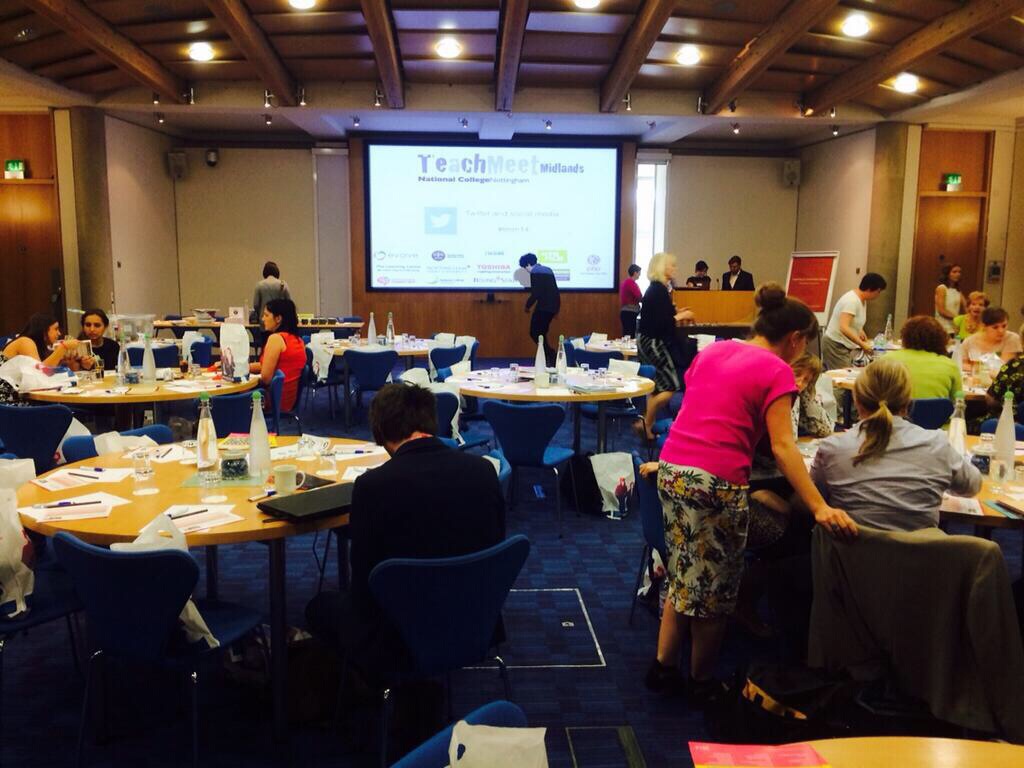
So my first ever teachmeet, 25th June 2014 – sorry to those old hand teachmeet -ers. Tempted as I am to compare it with my blog about meetings, and give a score, this is a very different sort of meeting. No one is compelled to go and it seems only enthusiasts do the presentations, and teaching is blessed with many enthusiasts, truly! Note that carefully any readers who are not teachers!

So what happens is you sign up then turn up – I did so with about 100 others in Nottingham attending the National College. What a great place to meet on a sunny summer evening! I am so jealous, there are many new buildings around the Nottingham City area for education thanks to the investment of two great Universities, and our local FE colleges and lots of bsf investment in many schools. I am deeply jealous as my school lost its £16m BSF as we were deciding the colour of paint at the end of 18 months planning, despite a judicial review Mr Gove took the money back. (So still crossing a road between sites in the rain and loving those 60’s corridors!) Hey but that’s not what my blogpost was about and neither is it what a teachmeet is for, except the building, the room, the hospitality, food and drinks are pretty important when the show runs 5.30 to 9.00. So well done organisers, that was all as it should be. The technology needs to be up to it too, there is swift movement between presentations for laptops/screens etc and twitter seemed compulsory, so accessing wifi and clear screens to read and watch video etc is vital to success.

There were some ‘goody bags’ give aways; some fliers from sponsors, some advertising materials. We sat on tables of up to about 10 people and the most enthusiastic discussions came undoubtedly from tables where there were a number of staff from a school or maybe two schools. Murmurs of excitement during a presentation and enthusiastic chatter afterwards.

Once the show kicks off, if you haven’t been to one, there are presentations lasting 2 minutes, 5 minutes or 7 minutes and some people did keep spot on with time, and there were others! We started with @Hywel_Roberts who was fantastic, definitely stimulating and every point was well made with great (northern) humour, great imagination and creativity. Secondary classrooms might benefit from a good dose of that. I couldn’t help be carried along, drawn in and excited by his challenges. fast moving but uplifting – hey there is the word in my blog about meetings. I was a bit frustrated because there was no overall theme or topic and the evening covered items across all sorts of sectors, however I reminded myself that I am an educator, albeit in secondary and we build on stuff from primary or early years etc [Thank you Primary ppl; Thank you EY ppl]. There were some great ideas shown off, really great – could I use them all, not really in a secondary classroom but seeing beyond that was interesting.

There is also the spin off of the network, I was very pleased to see a number of colleagues and some ex pupils now teachers. Networking isn’t easy though if everyone stays on their own table. Not quite true of course because there is the old twitter hashtag #tmm14 and thanks to @paulyb37 a running commentary and some good work from @MarcWithersey and @PeteBevington. There were supportive tweets when their school colleagues presented (difficult to cheer or whoop but anything goes on twitter!) and commendable comments for good presentations and the usual humorous banter, and I saw nothing critical or nasty- that’s teachers for you. If you wish check out the twitter feeds.

So I am now wondering and pondering where teachmeets fit into the CPD spectre:

Q1 Are themed teachmeets effective CPD ?
Q2 Are they more effective in say a primary sector where a meeting brings together lots of schools and their staff?
Q3 Is the model that is “teachmeet” something we should try within say a big secondary school? A model for a twilight, for an INSET; a way to bring different groups of staff or even different school staff who teach e.g. Science together? [I shall investigate this with my next teachmeet]
Q4 Is there any research about the success of a teachmeet, save the attendance numbers?
Q5 Why do you go?

20140626-224026-81626015.jpg

Thursday Period 6 – Purposefulness or just a meeting

Dictionary definitions ->

“The meeting” = The act of coming together; an assembly or conference of persons for a specific purpose; the body of persons present at an assembly or conference
; a hostile encounter; an assembly for religious worship, especially of Quakers.

Meetings. Do they happen in all work places or are they just a huge part of the mystery of how schools work? I have sat in so many over 30 years and I have even contributed to some, yawned in many, played EduAcronym ( hey and won!) and led some. I can recall teaching many great lessons and frankly a few poor ones but can I remember any meetings…not really. Does it matter? I think it might.

Staff meetings, dept meetings, pastoral meetings, SLT meetings, governor meetings, Ofsted prep meetings, Ofsted feedback meetings. All those initiatives I have long forgotten TVEI, Diplomas,GNVQ Exam Board in fact just writing this I wonder how much time was spent there…….oh its exhausting just thinking of my life and energy ebbing away. I recall an “Excellence in Cities” meeting locally with every school given an extra INSET day whilst the project was launched with “At least you don’t have to teach today”. Just how uninspiring was that to be? No wonder that died a deserved death. After all I am a teacher and I love teaching, school might be different when empty but it’s not what the job is truly about.

I propose two things which I am going to look closely at in my school

Do we have too many? and What quality and impact do they have?

1) Perhaps we can all get rid of as many meetings as possible. It is 2014 and we don’t need to meet as much as we used to in 2004 or 1994 because information can be accessed so many other way and it is! There is email, learning platforms ( meeting platforms), conversation and of course bits of paper. In fact if we are not careful we tell each other the same information in every conceivable way via notices, email, platforms and of course the message in a pigeon hole and then in case people might miss we tell them too. Actually we do this because some colleagues don’t seem to listen or hear or follow the plot. But I am yet to be conviced a plethora of meeetings gets the message through as these people often don’t listen to any forum. In fact, maybe, there is a lot of meeting noise in their lives. We need some meetings, we have profession duties to do so, we share about children, we share what works in our subject. WE have training, its a vital lifeblood : child protection, sims, first aid etc But do we need a meeting about assessment or appraisal or levels or no levels? Did a committee design a camel? Can we find better ways? Evolve stuff, not just bringing in more stuff. Get someone good to design say assessment, talk with other colleagues, maybe pupils, maybe governors and then test those ideas with respected staff, talk informally to people, pilot with a well chosen group, not just the keen staff but representative of all of our views. It’s harder work, has a greater impact but avoids wasting precious time.

We all have busy lives, just becuase someone rushes home at 3.30 does not mean they are not interested, they have other responsibilities and tasks and are under pressure. They fit in work when children are in bed or elderly parents checked up on. hang it we are professionals and as twitter often reminds us: “some people have complicated lives….be nice”

2) Make sure as far as possible we aim for those attending our meetings to leave most of them uplifted, something to encourage us, challenge us, something to think about, something to help us improve. Or having listened to someone who passed on a great idea. Even boring planning can be like that! Many teachers ( at least many of those who are effective in the classroom) worry and bother about their work so the encouragement is pretty vital, and distraction by tedious time wasting meetings is little help. Realistically there is occasionally a meeting with bad news at its heart so we cannot always be uplifting, the meeting is called perhaps with sad news about pupils or colleagues or families or redundancy but lets overlook those exceptional meetings and consider those planned ones. I think even training sessions can bring a lift….”we are going to be able to do  (this) better”

Staff meetings- why? Once per term, 15 mins a week? Check your meetings schedules and ask why? Middle leader meetings, senior leader meetings, are they training sessions and sharing sessions, do people come along vaguely excited or watching their clock ready to leave? How much work goes into agendas and minutes or action points compared to some serious thinking about purpose and impact. Let’s look for a clear reason to meet, and tackle that wholeheartedly. Choose the topic, lets have some of the research on the topic, maybe even read up beforehand. Some briefing from those in the know, those with some wisdom and then a hearty discussion. Pertinent questions asked or raised and some solutions or suggestions created. Some simple actions which we can all trial or pilot and come back and report on – or just blog about or just post a summary on the learning platform. It’s then somewhere we can find it to go back to when we have time or need or both. Much of the recent twitter noise on research ed just shows we are good with endless ideas of what might, should, or ought to work but we just struggle with feedback, lets work that feedback into our school structure if it is important. In fact we might start with some feedback about our meeting’s effectiveness.

We also need to encourage better contributions and show everyone’s views or ideas are valued, from the most experienced to the new colleague, then mash that up and take away something which positively helps. This might help to move us all forward, confirming what we thought was the right direction. I am conscious some of you will think it’s your job to lead, you are HoD etc I am paid to lead, yes you are paid to lead, not to waste time, not to talk all the time, to have impact. So it might be your leadership job to gather the ideas and bring the policy to birth

My favourite meetings aren’t even on the calendar [which I spend so long planning for at our school] they happen spontaneously, often with unlikely combinations of colleagues. They focus on children, often certain individuals, they pick up on general themes but concern a given situation, they end up bringing clarity and thoughtfulness. They drop out of something which happened in a classroom and so bring an added interest. They help me see what sort of teacher, with what sort of philosophy other staff are and help me think what sort I am. They are conversations which usually lift , inspire and show much humour. They make me think. I love this time of the year (summer) when this happens a little more. I love overhearing those conversations, before school lunch or after school or in a free. I love zipping through the staffroom and observing these conversations, or hearing my science colleagues sort out “how to teach this better”. I know many a reader is thinking hey ho typical SLT with their light timetables and time to chat – sure agreed, the job is delivered by you ( well and me) in a classroom. We do need the occasional whinge, the job has many challenges not helped by the beloved SoS or Ofsted or Ofqual or the decision to go to progress 8 or ditch levels, that useless parent..hey this could be a long list….. but we are in the job because for better or worse we all #loveteaching. Establish a culture where these spontaneous chats happen more and more. Maybe I should ask Ofsted to “observe” meetings and grade them? Then count those vital golden nuggets of staff chat.

Classroom teachers do not have a lot of time, there are endless blogs about work/life balance and stress. Can we aim to help with our meeting programme and not worsen that workload? Let’s not waste each other’s time in meetings with endless agenda points which depress but instead clear the decks and get something inspiring, uplifting, purposeful – hang it we are intelligent people. Science meetings could ditch the agenda and in 45 mins do three “classic’ inspiring demonstrations that others might use; English can share new ways to introduce Shakespeare to the weakest learners; Design can show off what pupils have done and look at how they can be pushed to be even better…..there are lots more ideas, I’ll call a meeting to tell you.

image

Some questions to ponder:

Q1 What are the most effective meetings in your school and why?
Q2 How might meetings help in the workload stakes and work life balance for the conscientious teacher?
Q3 What ways can you find to encourage and capture those intimate uplifitng good humoured conversations?

For those (like me) in a faith community
The importance of Christian fellowship for growing th faith and the warning about meeting for a purpose (the Eucharist) without abusing the true reason for the meetings

Hebrews 10:25
do not giving up meeting together, as some are in the habit of doing, but encouraging one another—and all the more……
1 Corinthians 11:17
In the following directives I have no praise for you, for your meetings do more harm than good.

Tuesday Period 4 – Subversive activity

So if, like me, you are a teacher preparing for Tuesday period 4 here is something to help us. Do not be caught out, just be prepared, make sure you have planned and stay calm.

Hang on! For what?

If you are reading this you are a good or outstanding teacher, or you support them or help create them, and sustain them. I want you to imagine you preparing your  most liberated lesson. Yes imagine no Ofsted telling you what to do (in fact I’m not sure they do really). Imagine no governors or Head telling you what to do ( that may not be difficult if they don’t really tell you) and imagine no SLT interference. I am SLT so I know we really do tell you what to do, because each of us often tell you something different.

So this time the only matter to worry about is you and the class. Bet you are smiling, this is what you came into teaching for, this is the dream and vision you had all those years ago (or not so many years ago). Now I want to warn you, want to do so big time because now you are about to discover the subversives, yes now stripping away accountability you spot the subversives.  Not the subversive staff,  the subversive pupils, yes whilst we all worry about all those we are accountable to, there are those cunning individuals preparing disruption on a potent scale. They are in the disguise of older pupils usually matured and effective by Y13 but equally competent in Y12 and mastering the art in years 9 to 11. The art of teacher distraction , played out to avoid….a test, an e=assessment, a topic which feels “hard”

This is not silly behaviour issues, of course not,  they know you and me are good, they won’t mess us around, oh no they have discovered a more subtle approach. Operation Distraction.

I first learnt this at school myself. Back in a Grammar School in Coventry ( note Coventry; bombed, blitzed, historical Cathedrals new and old, Coventry) I was in the first generation to learn German and French not Latin and French (oh Mr Gove where were you?). Our German teacher (strictly our German Master) gave us a mini lecture on the Weimar Republic, the rise of national Socialism, and practical matters such as why the salute was so deeply offensive and why we mustn’t bring any light heartedness about such into the classroom. One occasion when we did, he changed, he halted from being our teacher, he reran his lecture taking almost the full hour. We were stunned, but we noted how he was riled, and whilst one of us had to suffer a Saturday morning detention it was worth it, not for the lecture, but to avoid the planned lesson , especially the vocab or grammar tests. (another blogpost will reveal the results at O Level of such a tactic from a class of 32 boys taught in the same class for every subject every year for 5 years).

So dear reader watch for the subversive, they come in various shapes and sizes

1)    The very personable polite enquirer (PPE), the pupils equivalent to the progressive teacher. These take an interest in the everyday lives of teachers “How was the weekend Sir? How is your sick kitten? Sir we have all been wondering as no one has mentioned her again. The affable subversive

2)    The educational politicist subversive. (EPP) These are able to draw out us to distraction by picking up the debates from twitter or even a quick look at the TES.  “Surely you agree with Mr Gove’s latest idea Sir? Do you really think the GCSE is harder?” “Do you think Ofsted would…?”

3)    The pseudo academic subversive (PAS) shows a more subtle approach, by bringing stuff up during the lesson rather than at the start. Their’s is a distraction tactic. “Miss, didn’t you say we should have all read…. only it made me seriously consider…?” “Miss can you remind me where was that article about what an unpleasant if brilliant man Haber was?” Especially colleagues you must be very aware of the A* grade PAS who can also pick the topics which so much more easily get the teacher riled. Along the lines… “My great Uncle is a Chemist, he says the most important aspect of Chemistry is pH Sir, not atoms and bonding, which you occasionally mention.” (Note the politeness). “This is based on his study of Anfinsen when he won his Nobel prize, stated every young man who wants to be a scientist should study pH, Sir.” This sends you into Wikipedia whilst you set some hurried task to the class, in response to your part embarrassed (Who? Did he? Is this Unlce correct?) and in preparation for the return volley. All of which really deserves a QED because the test you were going to give…well it just doesn’t happen

4)    My last group are the wind up subversives (WUS). I have to say I have a secret admiration for these pupils. They are a mature version of group one. They discover your Achilles heel, for example that you are a Coventry City supporter. Mid lesson as they see you about to announce the test having given a few minutes to “check the notes” they come out with. “Sir, what did you think about Coventry buying back their ground thanks to that huge donation from Qatar?” These comments have enough truth to stun , to stop you in your tracks.


Of course none of us really fall for this, we know how important are relationships with children, we know the delicate balance of getting them involved and getting them thinking outside the box of the classroom, in fact we are actually hoping to create subversives because we come from a PGCE course where we all read…..”teaching as a subversive activity” but from now on colleagues do not allow a single chink on the armour of making those carefully made lesson plans be executed according to your plans, not ever ever distracted by subversive pupils. They are a much bigger problem than Ofsted will ever present.

I once planned a technically challenging and innovative practical for my Y12 Chemists. Like you I then thought long and hard about the students and the lesson and just knew many wouldn’t be able to get it to work with such complex kit. I then face the rare and unusual comment “oh this experiment didn’t work” so my decision was in addition to demonstrate the set up. So after looking over the instructions with them, there it was a demo of how to connect up the kit to make a conducting polymer. “Now just before you get going…are there any questions?” “Yes Sir?” What’s that Anna ?( not her real name she’s a fully qualified Dr now, and you never know…) “Yes Sir……..where did you buy that necktie, in fact where do you buy all your wonderful neckties?” …and by the end of the explanation and the rant…she didn’t get to the practical.


NB for those of you who are outstanding teachers you will have spotted more subversive pupils, click on reply and add their styles – let’s get them back.

By the way Sir “how did you enjoy Warhorse at Bradford Alhambra?”

Some questions to consider

Q1 How do we encourage pupils to “think”, to “question” and “argue” without hijacking our planned lesson, and without it becoming effectively low level disruption?
Q2 Teaching has relationship at it’s heart, we like to take an interest in our pupils, so are we surprised when they take an interest in us? We can say “not now” or “not about this particualr matter” Of course we can, but how do we keep the balance?
Q3 Some points made by pupils bring spark and life to a lesson so how can we foster this to make progress and help support achievement?

For those in a faith community
Moses and Aaron got into trouble in the OT when the suggested to Pharaoh they take a break Pharaoh wanted none of it.
Exodus 5: 4 -5
“Who do you think you are?” Pharaoh shouted, “distracting the people from their work? Get back to your jobs!”
In the NT Jesus wanted a focus on the call people felt was from God. Ultimately Jesus himself had to be fairly single minded in approaching his work on Earth
Luke 9:62
But Jesus told him, “Anyone who lets himself be distracted from the work I plan for him is not fit for the Kingdom of God.”

Friday Period 5 – Perseverence

I doubt any teacher reading this hasn’t stood in silence in the summer term and looked long and hard at THAT piece of paper. The timetable appears in our pigeon hole or active in the new season of sims. We all look to check which classes, how many non contacts, but above all we head in one direction, to Friday period 5. The last lesson of the week, what I am teaching?

I love Friday p5. Except this year when I am free (more later). Friday p5 means the week of formal work is almost over and the weekend beckons. The bigger gap (a weekend) between a period 5 and the next period 1 (Monday) gives a welcome breather to staff and of course pupils. Don’t worry I haven’t forgotten Sunday periods 3, 4, 5……etc but wine O’clock, beer O’clock or frankly just BreakfromSchool O’Clock all beckon.

For several years…

What I have learnt is Friday p5 needs prep like no other lesson. Oh I know some lessons need a lot of attention when difficult concepts or challenging skills have to be delivered, or even when feedback is not going to be easy ( after mocks when we feel we worked harder than our pupils). But Friday p5 is a challenge. Pupils are ready for home, staff can see the light at the end of a tunnel, even the TES ran their articles “Thank God it’s Friday” .
What I have found is:

  • Plan a Friday period 5 lesson well in advance
  • Now prepare that really good lesson (as always) with the fine tuning
  • Take the teaching and learning seriously (no easing up just for Friday p5). It may be difficult for us as teachers to be so challenging on Friday p5. But try, don’t give up
  • Don’t go soft and bring in cakes and biscuits – neither choose that easy lesson, maintain your standards. Do what we say on Monday period 1 > persevere
  • Think all the more carefully how the class and individuals will react
  • Choose activities to suit but keep up your passion and inspirational leading, your pupils usually follow.

I’m a chemist so we have a great subject to deliver and there is an array of weapons for defeating any Friday p5 blues from demo’s, practicals, videos, software as well as the reading, quizzes, worksheets powerpoints and of course for us just great chemical stories. For several years I had a Friday p5 and Monday p1 ‘double’. Yes two lessons split by the weekend. I tried to have a ‘practical Friday’. We (class and me) agreed we were not at our best and so we would take a slower pace and do a practical. This soon turned out to be an error on my part as some pupils sat back, didn’t engage, let others do the practical and then did not learn the skills. The practical did not help the theory. On the Monday when we came to look over the results I faced a spectrum from those who couldn’t remember what we had done to those who had lost results, with little in between. I was tempted to do a rerun demonstration but that sent a message equivalent to ‘forget Friday p5 he’ll do it all again”. I have done tests and assessments Friday p5 too, they don’t bring out the best but they are of course necessary.

But school is more than just that timetable and so as the Friday 3.30 bell rings out school and rings in the weekend it’s farewell. For us, bus duty has an additional ring. “Enjoy the weekend, get a rest, have a break, do your work well” is a great message to pupils getting on the bus but it’s not a bad one for staff.

So this year I am free Friday p5 and find it difficult to be productive – I struggle to do any serious planning for the next week, I am too tired to do marking and it seems to be less books per hour than it does at other times. I try to think what might be happening in the next week and planning that to save time and worry on Sunday period 3, but frankly not much comes very easily. In fact it is my response to a first non contact in 30+ years which has made me think all the more of the importance of lesson prep for Friday p5 and of course all our lessons. Way back in the early 80’s on teaching practice my mentor said to me that every hour long lesson needed an hour planning – he might have been right but I have neglected that, perhaps inevitably as an SLT member. The hour you leave for prep can be hijacked by some crisis, or ‘more important’ task and too often my lesson Friday p5 wasn’t prepped by an hour but by 15 min the night before and 50 metre ( journey from office to classroom). There is a lesson in there and it isn’t an outstanding Friday p5 one.

I’ve done some Friday p5 covers this year, looked at the class on sims and wondered…what mood will they be in? What work has been left? How best do I tackle…. and I have found the solution. Just arrive with the big smile and say it’s Friday period 5 lets get this last hour of learning done really well and then it’s the weekend. So with an enthusiasm covering  my state of mind we crack on together.

One last thing though. Friday p5 has a little gem of a bonus. Possibly six times a year it is swallowed up in an end of half term event. In my school we never finish a half term early, school time is too valuable….well and we can’t get buses any other time! My lesson prep planner says: Christmas liturgy, Easter, Sports awards, Summer farewell. As a younger teacher this meant nothing to do save escort my class or tutor group, and reflect with them the term passed and the holiday ahead. Or as I recall in my first school keep my y11 tutees from being rude about the Heads final assembly ‘ the best part of the holiday can be likened to the first bite of the cherry, after which a little has been lost”. Same words every year. As part of our SLT there are now the arrangements to be made for a whole school activity; logistics to plan, and the cajoling and supporting of others leading those occasions. Some planning as to what should be celebrated, in what appropriate manner and by whom.

image

Over the course of a year I think these 40 Friday period 5 sessions epitomise a lot of what schools are about:

  • Teaching and learning at the sharp end of making the very best of the time in a classroom;
  • Of enthusiasm and passion in the face of personal and pupil fatigue
    Of what might be important in the wider community and family, well and frankly in life -ours as teachers, for our pupils and for our community
  • A reminder of the work life balance and that rhythm of life for pupils and staff
    the reinforcing of ethos – what a school, a school leader, a teacher and a pupil think are important and expect.

I think there is a special magic about Friday period.

Oh hang on – Friday period 5 finished and Friday period 6 mean it’s the deputy head detention night……oh well let’s see if anyone is waiting, even that’s all part of the magic too.


Some questions to consider

Q1 How do we help our pupils to learn about perseverance, can it only be modelled? Or can we teach it, mark it and inwardly digest it?

Q2 What about when we feel like giving up or giving in, what is it makes us persevere?

Q3 Is perseverance too difficult a concept, it’s not a proper skill, just get back to teaching facts? Hey….. Employers want them to be able to write a decent letter, not interested in perseverance? Hmmm


For those in a faith community

The NT is full of references to perseverance, even the classic reading for the wedding day in the character of true love. Paul seems to realise it’s pretty necessary and commends the Roman Church for showing such.

1 Corinthians 13:7

Love always protects, always trusts, always hopes, always perseveres

James 1:4

Let perseverance finish its work so that you may be mature and complete, not lacking anything.

2 Peter 1:6

and to knowledge, self-control; and to self-control, perseverance; and to perseverance, godliness;

Rev 2:2

I know your deeds, your hard work and your perseverance.


Wednesday Period 0 – Literacy

I must confess I haven’t ever taught anyone to read, even my own children just (did) – thank a teacher there oh and Biff and Chipp. At times in my career I have wished I could really do that. It is so difficult for a poor reader in Y7 to access some parts of a curriculum and I’ve not got much idea how to help them improve reading. As a Y7 Science teacher I’ve got a load of things I want to do with them and for them and they are ssooooo keen, but I have spotted the odd struggler, especially when we read aloud. I do my bit for literacy but I sense I might be a bit late arriving at the party. I am pretty useless at teaching to read and must sound to them like my Dad did to me when he taught me to ride a bicycle “just balance it John, pedal and balance” – as I fell off for the nth time. Dad just could not explain the concept of balancing to a child. I too just seem to say to those Y7…..read, just read, and read more. I think this is also the nearest I got to teaching my own children to read. We read together and I echoed read read read. It can work though, one of my children did read, read, read to the extent I had to persuade her there was more to life than reading (sorry English colleagues) Whilst her SATs and GCSE and AS Levels showed the benefits, that was a mere flicker of what a true love of reading and literature brought to her and can bring whatever any of us “do” for a job.

Kansas State Library

Kansas State Library

I have therefore always sensed literacy skills and reading ability was much more than just accessing school, it’s about all the lovely, wonderful things literature can bring to us. As a child we had very few books at home, an old encyclopaedia (remember them?) and a few dusty ‘Jennings’ books, and the odd ‘Swallows and Amazons’. I have to say that I made up for that once I had some money. But don’t be misled I wasn’t deprived, my Dad took me every week to the local library ( not by bicycle), we took 3 books out for the week. Yes we did, he took three and I did too. I was never very good at English though, I never could see how my own teachers could draw such conclusions from a narrative, to me it was a story, to them there was allegory, moral, message – I was heading for Science. BUT a strange thing happened on the way. In the sixth form (Y12) I found my timetable said Maths, Physics, Chemistry and “English for Scientists“. The first lesson was a difficult one, as Mr Cecil Scholar arrived and asked us what we wanted to do; after all we all had Language and Lit O-Level. We didnt need a qualification, his duty was to help continue to improve our English. On balance I think he wanted to be in that room slightly less than us, he probably had a slightly light timetable and got pushed our way. His eyes did though light up when we made a suggestion. “Sir just come in and tell us about your favourite books, the poems that inspired you, tell us about the plays on at the Coventry Belgrade or the Hippodrome, or even at Stratford (though not the big serious stuff)”. He did, and for the first time in my life I really enjoyed reading; I knew where to start, I could see some sense, even some morals, some hidden meanings. I began the journey into a whole new world. I was destined for Chemistry but I was on track with what we tweeter people would describe as a geniune #lovereading.

image

There was all the noise on twitter over the Gove decisions about ‘To Kill a Mocking Bird” and “Of mice and men”. Opinion may be split – ‘what is he doing?’ vs ‘It never did anything for me’. In the 70’s I had few distractions, little on TV and a life of sport and studlibrary on t beachy, today the activities are endless but we neglect giving children the love of reading at our peril. Long might our school keep it’s literacy sessions, stopping only occasionally for a tutor group or a year group (and a teacher) to share what they are reading and why, to encourage the window to be thrown open yet wider. We might need all the tools we can find, so I hope teachers will still use those books and plays and poems and tricks that they know work, and on occasions when they don’t work for a learner, they try something else from the canon. I hope the introduction to a library treasure trove continues. I liked that poster below from the Chicago library about the letters, there really can’t be anything more magical.

In the near future we might be trying to get ‘more Maths” for all those post 16 not doing Maths, I do hope we never neglect the mission to inspire the learner to read, read, read, and #lovereading. Oh and if you are still around Mr Scholar, thank you – the school got no points, no inspection comments but this little scientist was genuinely grateful. As they say if you can read this, thank a teacher.

20140525-163251-59571380.jpg

Some questions to consider:

Q1 Knowing how important reading is and our desire to foster a genuine love of reading, but do we have to do some forcing when pupils are younger, and older?

Q2 What ways have you found to encourage reading, what works , what doesn’t work for you; for your classes and for your school?

Q3 what got you into reading?

Q4 Should we discipline ourselves to reading an hour a day of fiction, or Educational research, or is a scan over the TES and a bag full of tweets enough?

For those in a Church school:

I’m not Bible scholar but I do note in the New testament Jesus says at least ten times…”haven’t you read?”
reading cartoon